Maddy summaryThis bill seeks to block a specific rule issued by the Department of Education that affects the William D. Ford Federal Direct Loan Program. If passed, it would prevent the rule from taking effect, meaning the proposed changes to federal student loans would not be implemented. The measure uses a legislative process known as a joint resolution of disapproval to override agency regulations. It directly impacts students, families, and institutions that rely on federal student loans by stopping the Department of Education from enforcing the new policy.
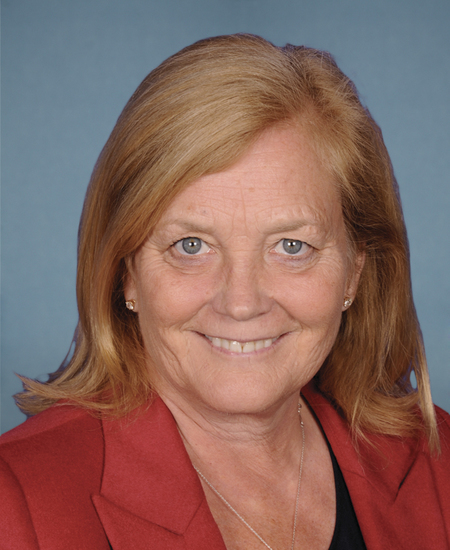
Rep. Chellie Pingree
Sponsored bills
Maddy summaryThe Power for the People Act of 2026 requires the Federal Energy Regulatory Commission to create a special approval process for data centers, which are defined as facilities using more than 50 megawatts of electricity. Under this system, data centers must offset their energy consumption by bringing their own clean power sources to the grid or agreeing to flexible power usage that can be reduced when needed. The bill also directs states to establish separate electricity rates for data centers so these facilities pay their full share of grid upgrade costs rather than spreading those expenses across all customers. Additionally, the legislation mandates that data center construction use prevailing wages and registered apprenticeship programs, while requiring greater transparency in how data center energy demands are forecasted and approved.
Maddy summaryThis bill amends the Federal Crop Insurance Act to expand education and risk management assistance for agricultural producers, crop insurance providers, and other stakeholders. It requires the USDA to offer language translation services and update training programs to include diverse conservation practices like soil health improvements, sustainable water management, and agroforestry systems. The legislation increases funding limits, allowing producers to receive up to $200,000 over five years for these activities, while also authorizing $20 million annually in new appropriations. Additionally, it clarifies that payments for these programs do not count toward existing federal fund limits, ensuring producers can access multiple sources of support.
Maddy summaryThis bill directs the Secretary of Agriculture to create a grant program that provides financial stabilization payments to organizations representing farmworkers, meat processing workers, and grocery workers. The funding is specifically intended to support these workers in the event of natural disasters or other emergencies as determined by the Secretary. The program would be administered through the Agricultural Marketing Service and is authorized for up to $50 million. Additionally, the bill requires a report on the program's outcomes to be submitted to congressional committees within four years of enactment.
Maddy summaryThis bill is a House resolution that expresses support for designating the weeks of March 29 through April 11, 2026, as National Young Audiences Arts for Learning Week. It directly affects the nonprofit organization Young Audiences Arts for Learning and its network of affiliates across the United States, which provide arts education programs to students in schools and community centers. The resolution honors the contributions of these programs to student development and encourages communities to observe the designated week with ceremonies and activities promoting arts education. The bill does not create new laws or funding but serves as a formal recognition of the organization's work in integrating arts into education nationwide.
Maddy summaryThis concurrent resolution formally recognizes the ongoing disparity between wages paid to men and women in the United States and reaffirms Congress's commitment to supporting equal pay. It highlights statistical data showing that women earn approximately 81 cents for every dollar earned by men, with significant variations across racial and ethnic groups, and notes that the gender wage gap has widened over the past two years. The document also identifies contributing factors such as occupational segregation, lack of family-friendly workplace policies, and workplace harassment, while emphasizing the economic impact on women's retirement security and family incomes.
Maddy summaryThis concurrent resolution formally recognizes Congress's duty to protect the rights and economic security of working women, who make up nearly half of the U.S. workforce. The document highlights concerns about wage gaps, workplace discrimination, and recent policy changes that have weakened protections for women, particularly women of color. It calls for Congress to support equal pay, workplace safety, access to healthcare, paid leave, and the right to unionize, while also condemning actions that undermine civil rights enforcement and workplace protections. The resolution serves as a statement of principle rather than a law that creates new legal requirements.
Maddy summaryThis bill establishes a new annual wealth tax on individuals with net assets exceeding $50 million, requiring them to pay a percentage of their total asset value each year. The tax applies a 2 percent rate to assets between $50 million and $1 billion, with a higher rate of 3 percent or 6 percent on assets above $1 billion depending on whether a universal health insurance program is enacted. Married couples are taxed as a single unit, and certain assets like primary residences and small personal items are excluded from the calculation. The legislation also mandates enhanced reporting requirements for asset values, requires the IRS to audit at least 30 percent of taxpayers subject to this tax annually, and authorizes $100 billion in funding over ten years to support enforcement and administration of the new tax system.
Maddy summaryThe PREDICT Act prohibits federal government officials, including Members of Congress, their spouses and dependents, high-ranking executive branch employees, and political appointees from trading on prediction markets tied to political events. This restriction applies to any agreement or transaction where payment depends on whether a specific political event occurs, does not occur, or happens to a certain degree. If a covered individual violates this rule, they must pay a 10% fee and forfeit any profits from the transaction, with penalties paid from personal funds rather than government salaries or allowances. The Office of Government Ethics will issue guidance on undefined terms and publish details of any fines on a public website.
Maddy summaryThis bill would eliminate interest on all existing and future Federal student loans starting in 2026, directly affecting current borrowers and future students. It requires the Department of Education to automatically modify eligible Federal Direct loans to stop interest accrual and allows borrowers to refinance other Federal loans into zero-interest consolidation loans without origination fees. The legislation also creates a new Education Affordability Trust Fund that would use loan repayments to fund these interest-free loans and potentially provide additional Pell Grants, while establishing a six-member board to oversee investments in government bonds.