

Maddy summaryHR 2955, the Stop Institutional Child Abuse Act, establishes a Federal Work Group to improve data collection and best practices for youth in residential programs (like therapeutic schools, treatment centers, and group homes). The Work Group, composed of federal agency representatives and diverse stakeholders, must develop national data standards, create risk assessment tools, and issue biennial reports with recommendations to enhance safety, reduce restraints, and expand community-based alternatives. It directly affects youth with mental health, substance use, or disability needs placed in these facilities, as well as agencies overseeing them. The bill also mandates a National Academies study to examine funding, oversight, and barriers to community care. These mechanisms aim to standardize data tracking and promote less restrictive, trauma-informed care for youth in residential programs.
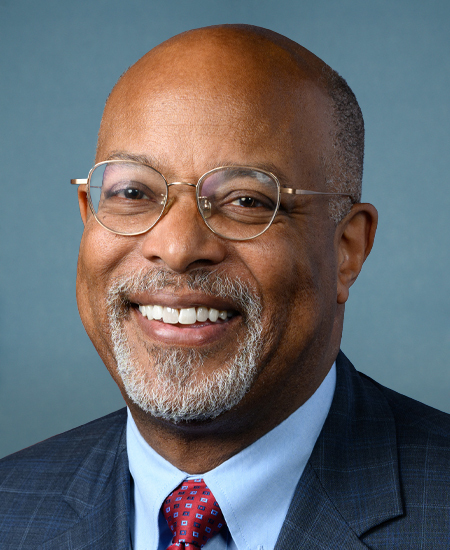
Rep. Glenn Ivey
Sponsored bills
Maddy summaryHR 2904, the Anti-Racism in Public Health Act of 2023, establishes a National Center on Antiracism and Health within the CDC. The center will declare racism a public health crisis, conduct research on how structural racism affects health outcomes, and develop data systems to track health disparities across race, ethnicity, gender, and other factors. It will fund regional centers in minority communities, create public health interventions, and require CDC to report annually on antiracist efforts. This bill directly affects public health agencies, researchers, and communities of color by mandating systemic analysis of racial inequities in healthcare and public health policy.
Maddy summaryHRES 335 is a symbolic resolution condemning two mass shootings in Louisville, Kentucky: one at the Old National Bank on April 10, 2023 (killing 5 people), and another at Chickasaw Park on April 15, 2023 (killing 2 people). It honors the victims' memories, expresses condolences to their families and the affected community, and reaffirms the House's commitment to supporting all gun violence victims. The resolution does not propose new laws or policies but serves as a formal statement of condemnation and solidarity. It directly affects the victims' families, Louisville residents, and the broader community impacted by these tragedies.
Maddy summaryHR 2985, the HEAR Act of 2023, makes it generally illegal for most people to possess firearm silencers or mufflers (devices that reduce gun noise), while creating specific exemptions. It allows law enforcement officers (including campus police at eligible colleges), federal/state agencies, and nuclear facility personnel to legally possess them for official duties. The bill also requires the federal government to establish a nationwide buy-back program using Byrne grant funds to purchase silencers from the public, with implementation starting 90 days after enactment. This law directly affects the general public by restricting silencer access, while exempting authorized law enforcement personnel and enabling voluntary surrender through the buy-back program.
Forced Arbitration Injustice Repeal Act of 2023 or the FAIR Act of 2023 This bill prohibits a predispute arbitration agreement from being valid or enforceable if it requires arbitration of an employment, consumer, antitrust, or civil rights dispute.
Maddy summaryHR 2918, the Fair Housing for Survivors Act of 2023, amends the Fair Housing Act to explicitly protect survivors of domestic violence, sexual assault, and sex trafficking from housing discrimination. It adds "survivor of domestic violence, sexual assault, or severe forms of trafficking" as a protected class under the law, prohibiting landlords and housing providers from refusing to rent, evicting, or charging more based on this status. The bill also clarifies that discrimination based on survivor status - including denial of housing due to protective orders, shelter stays, or prior incidents - is illegal. This directly affects survivors who face barriers like denied rentals, evictions, or higher costs when seeking safe housing, addressing documented discrimination reported by 67% of survivors in New York studies. The law preserves survivors' ability to pursue other discrimination claims under the Fair Housing Act.
Raise the Age Act of 2023 This bill establishes new restrictions on the sale or transfer of certain semiautomatic firearms to individuals under 21 years of age. Specifically, this bill makes it unlawful for a licensed gun dealer, importer, manufacturer, or collector to sell or deliver a semiautomatic center-fire rifle or semiautomatic center-fire shotgun that has (or has the capacity to accept) an ammunition feeding device with a capacity of more than five rounds to an individual who the licensee knows or has reasonable cause to believe is under age 21. The prohibition does not apply if the individual under age 21 is a full-time law enforcement officer or active-duty member of the Armed Forces. The bill also requires the Federal Bureau of Investigation to report on the operation of its public access line, including a description of information sharing protocols and recommendations for improving such protocols.
Secure Background Checks Act of 2023 This bill extends federal restrictions on the receipt, possession, shipment, and transportation of firearms and ammunition to two new categories of persons: persons who fail to meet the minimum age requirements imposed by federal law and by the law of their resident state; and persons who are out-of-state residents and do not qualify for an exception, such as the temporary loan or rental of a firearm for lawful sporting purposes. Additionally, the bill imposes criminal penalties—a fine, a prison term of up to 10 years, or both—on an individual who ships, transports, or receives a firearm or ammunition while under indictment for a crime punishable by imprisonment for a term exceeding 1 year.
Maddy summaryHR 2825, the Prison Libraries Act of 2023, establishes a federal grant program to fund library services in state and territorial correctional facilities. It directly affects incarcerated individuals by providing access to books, digital resources, educational programs, and staff support, with funds requiring states to submit detailed plans demonstrating need and measurable goals like improving literacy or job skills. Key provisions include funding for modern library infrastructure, hiring qualified librarians, and programming such as job training, digital literacy, restorative justice, and cultural activities - all while prohibiting use for food, general prison operations, or unrelated staff costs. The program authorizes $10 million annually for six years (2024-2029), prioritizing grants that align with library standards, prioritize post-secondary education, and show clear impact on reducing recidivism.
Ending Qualified Immunity Act This bill eliminates the defense of qualified immunity in certain civil actions for deprivation of rights. Qualified immunity is a judicially created doctrine that protects government officials from being held personally liable for constitutional violations. The bill provides that, under the statute allowing a civil action alleging deprivation of rights under color of state law, it shall not be a defense or immunity to any such action that (1) the defendant was acting in good faith or believed that his or her conduct was lawful at the time it was committed; (2) the rights, privileges, or immunities secured by the Constitution or federal laws were not clearly established at the time of their deprivation; or (3) the state of the law was such that the defendant could not reasonably have been expected to know whether his or her conduct was lawful.