

Maddy summary# Department of the Interior, Environment, and Related Agencies Appropriations Act, 2025 - Summary This document is a comprehensive appropriations bill for the Department of the Interior, Environmental Protection Agency, and related agencies for fiscal year 2025. It contains numerous specific funding allocations, restrictions, and prohibitions on how federal funds may be used. ## Key Restrictions and Prohibitions The bill contains extensive prohibitions on using funds for specific environmental regulations, policies, and executive orders: - **Climate Change Restrictions**: Prohibits funding for implementing numerous climate-related regulations and executive orders, including: - The Clean Power Plan (Section 472) - Executive Orders related to climate change (Sections 449) - The "Good Neighbor" rule for ozone standards (Section 470) - The "NEPA Phase 1" and "NEPA Phase 2" regulations (Sections 479-480) - The "National Emission Standards for Hazardous Air Pollutants" rule (Section 491) - **Regulatory Restrictions**: Prohibits funding for numerous EPA regulations, including: - Clean Water Act Section 401 rule (Section 476) - Greenhouse gas reporting rule (Section 483) - Methane fee regulations (Section 490) - Disposal of coal combustion residuals (Section 485) - Risk Management Programs (Section 482) - The "Steam Rule" (Section 468) - Ethylene oxide regulations (Section 473) - **Policy Restrictions**: Prohibits funding for: - Using "social cost of carbon" in regulatory analysis (Section 454) - Developing guidance on valuation of ecosystem services (Section 450) - Implementing the "Interagency Working Group on Social Cost of Greenhouse Gases" (Section 477) - Promoting or advancing "Critical Race Theory" (Section 445) - The Climate Justice Alliance (Section 460) - The "American Climate Corps" (Section 448) - **Specific Program Restrictions**: Prohibits funding for: - Certain EPA guidance on "Waters of the United States" (Section 466) - Implementing pesticide labeling changes (Section 467) - The "Small Off-Road Engine Waiver" (Section 469) - The "Meat and Poultry Products" rule (Section 484) ## Key Funding Provisions - **Wildfire Management**: Includes significant funding for wildland firefighting with specific provisions: - Special pay rates for wildland firefighters (Section 456) - Incident response premium pay (Section 457) - **Land Management**: Funds for: - National Parks and Public Land Legacy Restoration Fund (Section 429) - Land and Water Conservation Fund (Section 429) - Forest Ecosystem Health and Recovery Fund (Section 428) - **Water Management**: Specific provisions for water rights (Section 458), but restrictions on certain regulations. ## Other Notable Provisions - **Firefighter Pay**: Specific provisions for special base rates and incident response premium pay for wildland firefighters (Sections 456-457) - **State Permit Programs**: Approval of Florida's permit program for dredged or fill material (Section 492) - **Land Conveyance**: Provisions for conveyance of National Forest System land in Riverside County, California (Section 459) - **Prohibition on Certain Regulations**: Includes prohibitions on implementing specific regulations like the "FAST-41" rule (Section 463) This bill represents a highly restrictive approach to federal environmental regulation, with numerous specific prohibitions on using funds for climate change policies, environmental regulations, and certain types of policy development. It emphasizes limiting the regulatory authority of the Environmental Protection Agency while providing specific funding for land management and wildfire response programs.
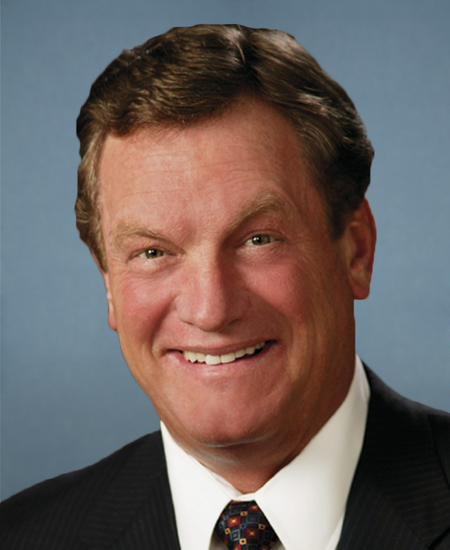
Rep. Michael K. Simpson
Sponsored bills
Maddy summaryHR 3507, the "Yes In My Backyard Act," requires local governments receiving certain federal Community Development Block Grants (CDBG) to report on their progress toward adopting specific housing-friendly land use policies. It directly affects cities and counties that administer CDBG funds by mandating they submit plans tracking 22+ policy changes, such as allowing duplexes in single-family zones, reducing parking requirements, or streamlining permits. The bill does not require local governments to adopt these policies but requires them to document their current status and plans for implementation. This reporting mechanism aims to identify barriers to affordable housing without binding local governments to specific actions. The requirement applies to CDBG recipients starting one year after the bill's enactment.
Maddy summaryThis is a commemorative resolution (HRES 1369) honoring Corey Comperatore, a volunteer firefighter, U.S. Army Reserves veteran, and community leader from Sarver, Pennsylvania, who died on July 13, 2024. The resolution formally mourns his passing and celebrates his life, noting he left behind his wife, Helen, and two daughters, Allyson and Kaylee. It recognizes his service to the Buffalo Township Volunteer Fire Department, his military service, and his role as a devoted member of Cabot Methodist Church. As a ceremonial resolution, it has no policy impact or direct effect on legislation or constituents beyond this formal acknowledgment.
Maddy summaryThis bill requires the U.S. Department of Defense and State Department to immediately deliver all previously approved military equipment and services to Israel within 15 days, reversing any pauses on arms transfers. It prohibits using federal funds to withhold, halt, or cancel defense article deliveries to Israel and mandates that unobligated security assistance funds for Israel must be spent by the end of 30 days. The bill also requires monthly reports to Congress detailing all security assistance provided to Israel since October 7, 2023, including specific items delivered and funding sources. The law directly affects U.S. agencies responsible for military aid and Israel as the recipient of the security assistance.
Maddy summaryHR 8231, the James Earl Jones Congressional Gold Medal Act, authorizes a Congressional Gold Medal to be awarded to actor James Earl Jones in recognition of his distinguished career in theater and film, and his role in advancing inclusion and equal opportunities for people of all backgrounds in the entertainment industry. The Treasury will strike the medal with an image and inscription of Jones, and may produce and sell bronze duplicates to cover costs, with proceeds deposited into the U.S. Mint's public enterprise fund. This bill serves as a ceremonial honor with no new legal requirements or policy changes.
Maddy summaryHR 3397, the WEST Act of 2024, requires the Bureau of Land Management (BLM) to withdraw its 2023 proposed rule titled "Conservation and Landscape Health" (published at 88 Fed. Reg. 19583). The bill mandates that the BLM Director must immediately withdraw this specific proposed rule and cannot take any action to finalize, implement, or enforce it or any substantially similar rule. This bill directly affects the BLM agency by halting the regulatory process for this conservation-focused rule. It is a procedural measure that prevents the rule from moving forward, without creating new policy or impacting other entities.
Maddy summaryThis bill creates a national network of State judicial threat intelligence and resource centers to enhance safety for State and local judges and court staff. It directs the State Justice Institute to fund eligible nonprofits with expertise in judicial security to establish these centers, which will provide safety training, conduct security assessments, monitor threats, coordinate with law enforcement, and develop standardized reporting systems. Centers must also create a shared database for tracking threats and incidents across jurisdictions. The bill requires an annual report to Congress detailing the number and types of threats faced by judges and court staff. It directly affects State and local courts, judges, and court personnel by strengthening security protocols and information sharing.
Maddy summaryHR 8061, the Crime Victims Fund Stabilization Act of 2024, ensures stable funding for the Crime Victims Fund by directing certain False Claims Act collections into it from 2024 through 2029. Specifically, it adds a provision requiring that amounts collected under the False Claims Act (excluding whistleblower rewards and government reimbursement for damages) be deposited into the fund during this period. This directly affects crime victims who rely on the fund for services like counseling and emergency aid, as it prevents potential shortfalls in funding. The bill makes a concrete policy change by redirecting specific federal civil penalties into the fund, rather than altering the fund's existing purposes or eligibility rules.
Maddy summaryHRES 1148 is a resolution passed by the U.S. House of Representatives that condemns the Iranian government for supporting terrorism, regional proxy conflicts, and internal suppression of dissent - including its crackdown on protests following Mahsa Amini's death in 2022. It specifically calls for maintaining sanctions against Iran, supporting the Iranian Resistance's Ten-Point Plan (which advocates for a democratic, secular, nonnuclear Iran), and protecting Iranian political refugees in Albania. The resolution also affirms the Iranian people's right to self-determination under international law and urges the U.S. to recognize their struggle for freedom. As a non-binding resolution, it does not create new laws but formally expresses congressional stance.
Maddy summaryThe TERRA Act (Tribal Environmental Resiliency Resources Act) allows Indian Tribes to integrate funding from multiple Federal environmental and disaster-related programs into a single comprehensive plan to address threats like flooding, erosion, wildfires, and sea level rise. It streamlines processes by reducing administrative burdens through consolidated reporting requirements, enabling Tribes to create one annual report instead of multiple reports for individual programs, and allowing reallocation of funds for community-driven relocation or environmental remediation without additional approvals. The Act establishes the Department of the Interior as the lead agency with sole authority to approve these plans and integrate Federal programs, while providing mechanisms for Tribes to request waivers of certain statutory requirements and expedite land trust acquisitions for relocation purposes. Tribes can use integrated funds for infrastructure development, environmental remediation, and community-driven relocation, with reduced requirements for separate recordkeeping and reporting for each Federal program.