

Restoring Integrity to America's Elections Act This bill revises provisions regarding the Federal Election Commission (FEC), including to change FEC membership. Specifically, the bill reduces the number of appointed members of the FEC from six to five and permits no more than two members to be affiliated with the same political party. Further, it removes the Secretary of the Senate and Clerk of the House as ex officio members. Next, the bill establishes the Blue Ribbon Advisory Panel to recommend to the President individuals for nomination to the FEC. The President shall appoint the FEC chair, subject to Senate confirmation. The bill distributes the FEC's powers between the chair and the other FEC members. Further, it requires the FEC to ensure that its forms allow for the use of an accent mark as part of an individual's identification. The bill modifies the process for (1) the FEC to initiate an investigation, and (2) a party aggrieved by the FEC's dismissal of the party's complaint or the FEC's failure to take action on the party's complaint to seek judicial review in federal court. Additionally, individuals who submit written comments regarding requests for advisory opinions must be given an opportunity to appear at FEC hearings on those requests. The bill also permanently extends the FEC's administrative penalty authority. Finally, the bill provides statutory authority for limitations on ex parte communications as applied to FEC members and employees. It also specifies that FEC attorneys may represent the FEC before the Supreme Court.
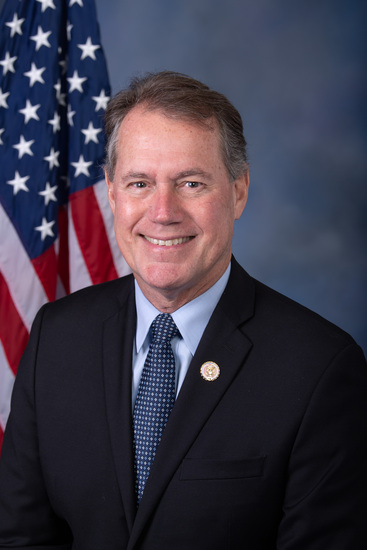
Rep. Ed Case
Sponsored bills
Telehealth Modernization Act This bill modifies requirements relating to coverage of telehealth services under Medicare. Specifically, the bill extends certain flexibilities that were initially authorized during the public health emergency relating to COVID-19 (i.e., coronavirus disease 2019). Among other things, the bill allows (1) rural health clinics and federally qualified health centers to serve as the distant site (i.e., the location of the health care practitioner); (2) the home of a beneficiary to serve as the originating site (i.e., the location of the beneficiary) for all services (rather than for only certain services); and (3) all types of practitioners to furnish telehealth services, as determined by the Centers for Medicare & Medicaid Services.
This resolution supports the goals and ideals of National Engineers Week to increase understanding of, and interest in, engineering and technology careers. The resolution recognizes that engineering education is a critical component of STEM (science, technology, engineering, and mathematics) education.
This resolution reaffirms the United States' commitment to supporting democracy and human rights both domestically and internationally. The resolution also calls on the U.S. government to uphold all relevant international human rights agreements ratified by the United States.
This resolution recognizes the roles that development and diplomacy play in advancing American interests and national security, and it expresses support for a substantial U.S. international affairs budget.
This bill provides for the presentation of a Congressional Gold Medal to the Freedom Riders, in recognition of their contribution to civil rights by fighting for equality in interstate travel.
Hospitality and Commerce Job Recovery Act of 2021 This bill extends existing and establishes new tax credits that assist the hospitality and restaurant industry. Specifically, it allows a conventionand trade show restart tax credit; extends the employee retention tax credit through 2021; suspends for taxable years 2021 through 2022, the limitation on entertainment expenses related to a trade or business, allows a restaurant and dining restart credit for businesses closed or forced to reduce services due to COVID-19 (i.e., coronavirus disease 2019); allows a 50% tax credit for travel expenditures; and allows a tax credit for unmerchantable inventory for the period between December 31, 2019, and before April 1, 2021.
Living Donor Protection Act of 2021 This bill prohibits certain insurance carriers from discriminating against, and provides other protections for, living organ donors. Specifically, carriers may not deny, cancel, or otherwise impose conditions on policies for life insurance, disability insurance, or long-term care insurance based on an individual's status as a living organ donor. The bill also expressly specifies that recovery from organ-donation surgery constitutes a serious health condition that entitles eligible employees to job-protected medical leave. In addition, the Department of Health and Human Services must update educational materials on live organ donation to include information about the benefits of live organ donation and about access to insurance for living organ donors.
Direct Interstate Retail Exemption for Certain Transactions Act or the DIRECT Act This bill allows meat and poultry products inspected by State Meat and Poultry Inspection programs to be sold by retail stores, restaurants, or similar retail-type establishments over the internet and shipped by a carrier in commerce (other than for export to a foreign country), provided the meat and poultry products so inspected are shipped directly to household consumers and in normal retail quantities. (Under the inspection programs, the Department of Agriculture Food Safety and Inspection Service allows states that meet certain requirements to inspect meat and poultry. The state-inspected products are currently limited to intrastate commerce, unless a state opts into a separate Cooperative Interstate Shipment Program.)
Rural Equal Aid Act This bill requires the Department of Agriculture (USDA) to pay the principal, interest, and any associated fees owed on loans made under certain rural development loan programs for a nine-month period. A single monthly payment of principal, interest, and associated fees with respect to a loan in the last three months of the nine-month period must not exceed $9,000. USDA must also encourage the Federal Deposit Insurance Corporation, the Office of the Comptroller of the Currency, and state bank regulators to not require lenders to increase their reserves on account of receiving such payments made by USDA. USDA must waive statutory limits on maximum loan maturities for certain loan durations where the lender provides a deferral and extends the maturity of such loans and, when necessary to provide more time because of difficulties during the COVID-19 (i.e., coronavirus disease 2019) pandemic, extend lender site visit requirements.