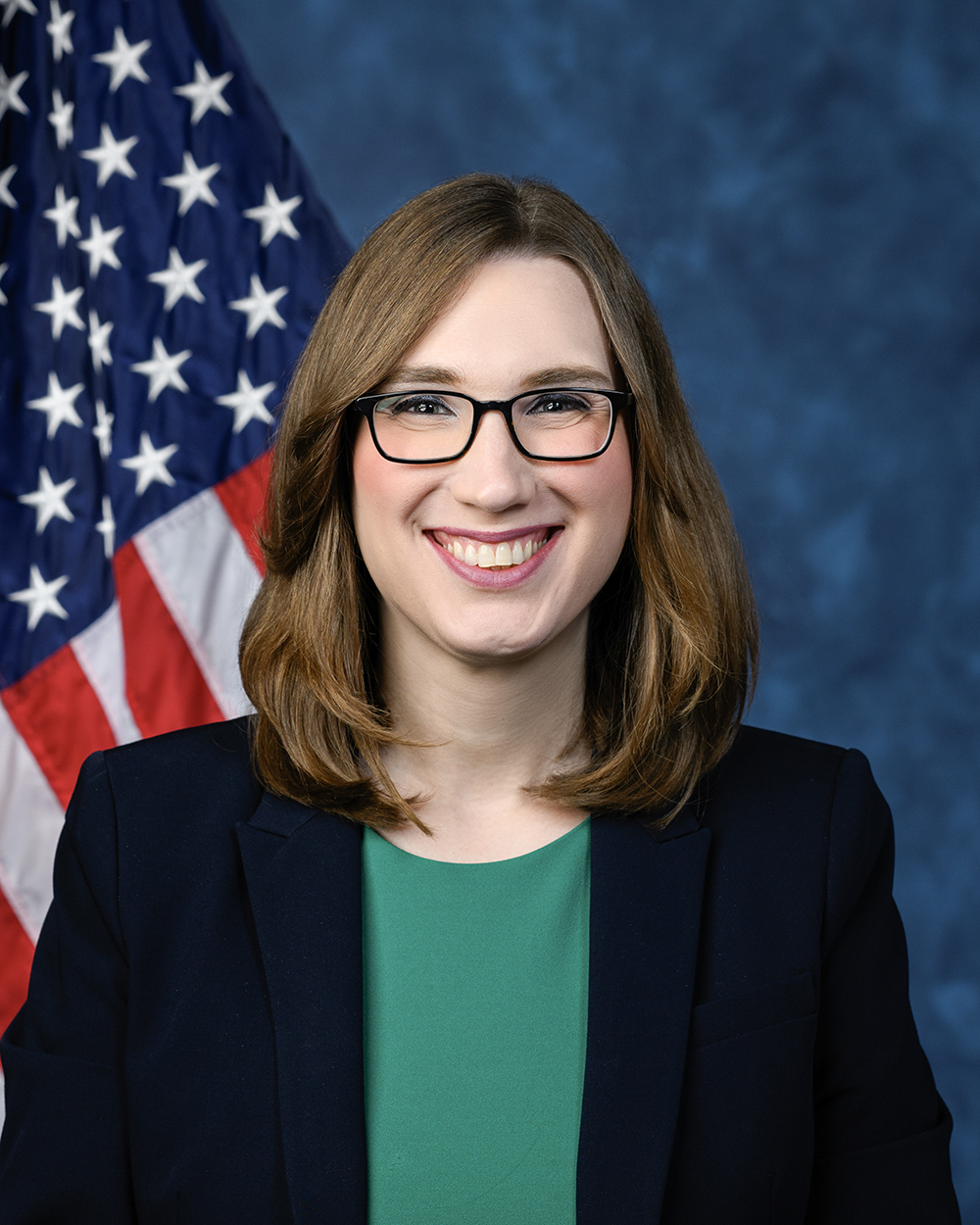
Photo of Sarah McBride
D United States House · District At-Large · Delaware On the 2026 ballot

Rep. Sarah McBride

Compare
Total votes
669
all sessions
Attendance
99%
4 missed
Higher than 82% of chamber peers
With party
96%
of cast votes
Near the chamber average
Bipartisan score
2%
crosses aisle rarely
Near the chamber average
Sponsored
679
bills & resolutions
Higher than 94% of chamber peers
Committees
5
assignments
679 bills and resolutions

Sponsored bills

Total
679
Primary
10
Co-sponsor
669
This page
679
matching current filters
Co-sponsor HR 999
In committee · Utah House · Co-sponsor
Right to Contraception Act

Maddy summaryThis bill establishes a federal right to access contraception, protecting individuals' ability to obtain contraceptives and health care providers' ability to offer them without government interference. It prohibits states from banning or restricting contraceptive services, products, or information, including laws that force providers to deny care based on personal beliefs or limit access to specific methods. The law immediately overrides conflicting state regulations and ensures that contraception remains available regardless of factors like race, income, disability, or location. It applies to all individuals and providers, building on existing federal protections like the Affordable Care Act's coverage requirements.

In committee Feb 5, 2025 1 co-sponsor
Co-sponsor HR 1002
In committee · Utah House · Co-sponsor
Caring for All Families Act

Maddy summaryThe Caring for All Families Act expands family medical leave eligibility under the FMLA to include domestic partners, adult children, children of domestic partners, and extended family members such as grandparents, grandchildren, siblings, and in-laws. It also adds new "parental involvement and family wellness" leave allowing employees to attend school activities for their children/grandchildren or meet routine medical needs for themselves, their children, spouse/domestic partner, or elderly individuals with family-like relationships. Employees may take up to 4 hours per 30-day period or 24 hours per year for these purposes, with the leave being in addition to existing FMLA protections. This bill directly affects private sector employees covered by the FMLA and federal employees, broadening who qualifies for leave and expanding leave purposes to include family wellness activities.

In committee Feb 5, 2025 1 co-sponsor
Co-sponsor HRES 100
In committee · Utah House · Co-sponsor
Expressing support for the continued value of arms control agreements and negotiated constraints on Russian and Chinese strategic nuclear forces.

This resolution condemns Russia's nuclear escalatory rhetoric and implied threats on the potential use of nuclear weapons in the context of its invasion of Ukraine. The resolution also (1) condemns Russia's purported suspension of participation in the New START Treaty, (2) emphasizes the value of arms control agreements between the United States and Russia, and (3) calls on the administration to continue pursuing nuclear arms control and risk reduction with Russia and China.

In committee Feb 4, 2025 1 co-sponsor
Co-sponsor HR 930
In committee · Utah House · Co-sponsor
Stop the Wait Act of 2025

Stop the Wait Act of 2025 This bill phases out the initial waiting period for Social Security Disability Insurance (SSDI) benefits and eliminates the waiting period for certain disabled individuals to become eligible for Medicare.  Under current law, individuals generally must wait five months after the onset of disability to begin receiving SSDI benefits. The bill would gradually reduce this waiting period before eliminating it entirely in the year 2030.  Further, the bill would eliminate the 24-month waiting period for certain disabled workers and other individuals to become eligible for Medicare. Under current law, individuals under the age of 65 may generally enroll in Medicare after they have been eligible for SSDI or Social Security child’s, widow’s, or widower’s benefits by reason of disability for 24 months. The bill would eliminate this waiting period for individuals for whom the annual cost of certain medical insurance would exceed a specified percentage of their household income (i.e., those who cannot afford minimum essential coverage). Medicare eligibility for these individuals must be available retroactively to the first month that an individual qualified for SSDI or Social Security child’s, widow’s, or widower’s benefits by reason of disability.

In committee Feb 4, 2025 1 co-sponsor
Co-sponsor HR 942
In committee · Utah House · Co-sponsor
Banning SPR Oil Exports to Foreign Adversaries Act

Maddy summaryHR 942, the "Banning SPR Oil Exports to Foreign Adversaries Act," prohibits the export of petroleum products drawn from the U.S. Strategic Petroleum Reserve to China, North Korea, Russia, Iran, and any entity owned or controlled by these countries or the Chinese Communist Party. The Secretary of Energy may grant a waiver for such exports if certified as serving U.S. national security interests, but must issue implementing rules within 60 days of enactment. This policy directly affects U.S. energy exports and entities seeking to purchase SPR oil from the listed adversaries.

In committee Feb 4, 2025 1 co-sponsor
Co-sponsor HR 929
In committee · Utah House · Co-sponsor
Dr. Lorna Breen Health Care Provider Protection Reauthorization Act

Maddy summaryThis bill reauthorizes the Dr. Lorna Breen Health Care Provider Protection Act, extending mental health support programs for healthcare professionals through 2030 (previously ending in 2024). It requires funded programs to specifically address reducing administrative burdens on healthcare workers while continuing to promote access to mental health and substance use disorder services. The legislation directly affects healthcare providers across the U.S. who may access these federally supported resources. Key provisions include extending funding periods and mandating that grant recipients focus on easing workplace administrative tasks, alongside maintaining existing awareness initiatives. The bill does not create new programs but continues and refines existing mental health support for the healthcare workforce.

In committee Feb 4, 2025 1 co-sponsor
Co-sponsor HR 944
In committee · Utah House · Co-sponsor
Access to Counsel Act

Maddy summaryHR 944, the Access to Counsel Act, requires U.S. immigration officials to provide certain immigrants a meaningful opportunity to consult with legal counsel during key immigration processes. It directly affects U.S. nationals, lawful permanent residents returning from travel, visa holders, refugees, asylees, and parolees subject to secondary or deferred inspection at ports of entry. The bill mandates that officials ensure access to counsel (including via phone) within one hour of inspection starting, allow counsel to present evidence, and accommodate in-person meetings when possible. It also requires officials to provide counsel access before accepting Form I-407 abandonment forms from lawful permanent residents, unless waived in writing. The law takes effect 180 days after enactment and preserves existing rights to counsel under other immigration laws.

In committee Feb 4, 2025 1 co-sponsor
Co-sponsor HR 960
In committee · Utah House · Co-sponsor
Protect Our Clothes from PFAS Act

Maddy summaryThis bill is procedural and modifies a tariff classification note. It amends U.S. Note 2 to Chapter 62 of the Harmonized Tariff Schedule by removing the second sentence regarding water-resistant garment requirements. The bill does not create new regulations or directly affect consumers, manufacturers, or PFAS chemicals. Its sole purpose is to adjust the wording in the tariff schedule for administrative clarity. (1 sentence as it is procedural)

In committee Feb 4, 2025 1 co-sponsor
Co-sponsor HR 897
In committee · Utah House · Co-sponsor
Aviation-Impacted Communities Act

Maddy summaryHR 897, the Aviation-Impacted Communities Act, makes communities located near airports but outside the current FAA noise standard (65 DNL) eligible for noise mitigation funding and establishes a process for these communities to formally seek designation. It requires the FAA to partner with the National Academy of Sciences to study aviation impacts at major airports, develop a diagnostic tool for community assessments, and create community boards to represent residents. These boards can request assessments, collaborate on action plans to address noise or emissions, and access grants for solutions like sound insulation, air filtration, or flight path changes. The bill authorizes $750 million for noise mitigation funding over 10 years, targeting residential areas, schools, hospitals, and other facilities affected by aircraft noise and emissions.

In committee Feb 1, 2025 1 co-sponsor
Co-sponsor HR 869
In committee · Utah House · Co-sponsor
Keep Our PACT Act

Maddy summaryHR 869, the Keep Our PACT Act, mandates specific annual funding levels for two key education programs: Title I of the Elementary and Secondary Education Act (ESEA) and the Individuals with Disabilities Education Act (IDEA). For Title I, it requires funding in fiscal years 2026-2035 that equals the difference between the 2025 funding level and set annual dollar targets (e.g., $20.5 billion for 2026). For IDEA, it sets mandatory annual funding levels that gradually increase to reach 40% of the national average per-pupil expenditure for students with disabilities by 2035. The bill directly affects public school districts and students, particularly those with disabilities, by guaranteeing these funding levels rather than relying on annual appropriations.

In committee Jan 31, 2025 1 co-sponsor
Showing 641 to 650 of 679 bills
Previous 1 … 64 65 66 … 68 Next