

Maddy summaryThe Legacy Mine Cleanup Act of 2025 establishes a new Office within the Environmental Protection Agency (EPA) to coordinate cleanup efforts at abandoned hardrock mine sites, with special focus on sites on tribal lands like the Navajo Nation's uranium mines. It requires the EPA to annually identify priority mine sites for cleanup, develop interagency plans (including with tribal governments and agencies like Interior and Energy), and create a 10-year plan for Navajo Nation uranium mine sites by 2028. The bill mandates technical assistance for tribes and states, coordination on best practices for cleanup technologies, and regular reporting to Congress on progress. It does not create new regulatory authority but aims to improve existing cleanup coordination under current laws.
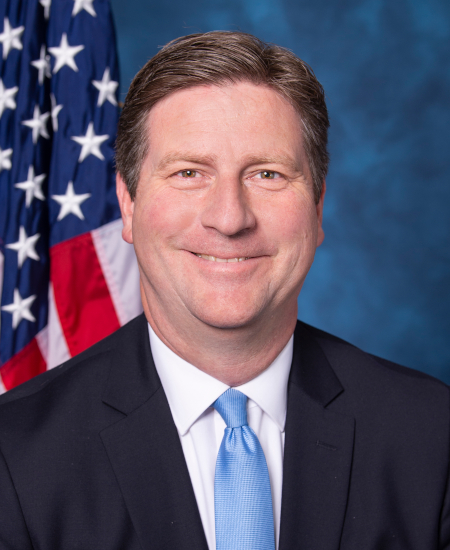
Rep. Greg Stanton
Sponsored bills
Maddy summaryThe HMAG Act of 2025 creates a new FEMA grant program to help state and local governments prepare for and respond to extreme heat events, such as heatwaves causing health risks or infrastructure damage. It requires applicants to submit assessments of past heat-related life loss, revenue impacts, and infrastructure vulnerabilities before receiving aid. FEMA must coordinate with NOAA to establish a formal temperature/duration threshold for qualifying heat events within 90 days of the bill's passage. This program allows funding for mitigation and emergency assistance without requiring a formal disaster declaration, directly supporting communities facing climate-driven heat risks.
Maddy summaryThis bill directs the National Oceanic and Atmospheric Administration (NOAA) to conduct a study on the financial costs of extreme heat events. The study will quantify economic impacts including health costs (emergency care, hospitalizations), property damage, insurance claims, labor productivity losses, infrastructure disruptions, energy expenses, and agricultural losses. NOAA must coordinate with multiple federal agencies (like Health, Agriculture, and Energy Departments) and publish findings on HEAT.gov within 4 years. The bill does not create new regulations or directly affect citizens; it solely authorizes a data-gathering study to inform future policy.
Maddy summaryThis bill establishes a federal interagency committee within NOAA to coordinate heat-health response across 15+ departments (including HHS, EPA, and FEMA) and requires a 5-year strategic plan to improve data sharing, research, and public communication about extreme heat. It creates the National Integrated Heat Health Information System (NIHHIS) to centralize heat-related data and forecasts, making it openly available for public use. The law mandates $5 million annually for 2025-2029 to fund these efforts, directly affecting federal agencies, state/local governments, Tribal nations, and communities facing heat risks. Key provisions include standardizing heat definitions, requiring agency coordination, and building public health preparedness tools to reduce heat-related illness and death.
Maddy summaryThe Excess Urban Heat Mitigation Act of 2025 creates a federal grant program to fund heat-reduction projects in communities most affected by urban heat islands, primarily low-income neighborhoods (defined as census tracts with ≥20% poverty rate) and areas with higher heat exposure for communities of color. It authorizes $30 million annually for grants to states, cities, tribes, or nonprofits for projects like planting native trees, installing cool roofs/pavements, building shaded transit stops, and creating community cooling centers. Grants require community engagement plans to ensure equitable participation and prioritize projects in underserved areas (75% of funds must target "covered census tracts"). The program mandates annual reporting to Congress and includes oversight to evaluate project success in reducing heat impacts.
Maddy summaryThe FBI Animal Cruelty Taskforce Act of 2025 establishes a dedicated FBI unit to investigate federal animal cruelty crimes, specifically targeting dogfighting, cockfighting, and "crush videos." This taskforce will create training materials for local law enforcement to help them detect and investigate these offenses. It also requires the taskforce to coordinate with agencies like the Department of Agriculture and U.S. Customs, and to submit annual reports to Congress detailing filed charges, convictions, and unresolved investigations. The bill directly affects local police departments through new training resources and federal agencies through mandated coordination and reporting.
Maddy summaryThis bill designates the federal building at 300 West Congress Street in Tucson, Arizona, as the "Raúl M. Grijalva Federal Building." It updates all official U.S. references - such as laws, maps, and documents - to use the new name for this specific building. The bill has no policy provisions or impact beyond this naming change. It is a procedural resolution honoring Raúl M. Grijalva, a former U.S. Representative from Arizona.
Maddy summaryHR 3623, the Horse Transportation Safety Act of 2025, prohibits transporting horses between states in motor vehicles with two or more stacked levels. This directly affects horse transporters, including owners and carriers moving horses across state lines. The bill defines "motor vehicle" to exclude rail vehicles but requires compliance with the multi-level ban, imposing civil penalties of $100-$500 per horse transported in violation. Violations are enforced through separate penalties for each horse transported illegally, in addition to other applicable laws.
Maddy summaryHR 3661, the Extreme Weather and Heat Response Modernization Act, requires FEMA to review and update how it defines "incident periods" (timeframes for disaster response) for extreme weather events. Within one year, FEMA must form an advisory panel with diverse emergency management representatives to assess current procedures, particularly for slow-onset, compound, or cascading disasters, and submit findings to Congress. The bill also mandates FEMA to issue new guidance on community cooling centers, resilience centers, and extreme heat/cold mitigation projects within a year, and conduct a study on impacts to vulnerable communities, infrastructure, and emergency alerts. These changes directly affect FEMA, state/local emergency managers, and communities facing extreme heat or cold events by modernizing response protocols and funding eligibility.
Maddy summaryHR 3634, the Interactive Federal Review Act, requires the U.S. Department of Transportation to encourage highway projects receiving federal grants (like INFRA, RAISE, or Mega program funds) to use digital platforms and 3D models for environmental reviews under the National Environmental Policy Act (NEPA). It mandates the DOT to publish guidance within 90 days, select at least 10 projects to test these tools, and prioritize grant applications that plan to use them for public engagement and environmental analysis. The bill also requires reports to Congress within 180 days detailing efficiency metrics and examples of digital workflows, plus public examples of digital environmental documents within a year. This aims to speed up reviews and improve public understanding of project impacts, directly affecting federally funded highway projects.