Prohibiting IRS Financial Surveillance Act This bill prohibits the Department of the Treasury from requiring a financial institution to report the transfers into and out of a financial account. This prohibition does not apply to laws or regulations in effect on October 1, 2021.
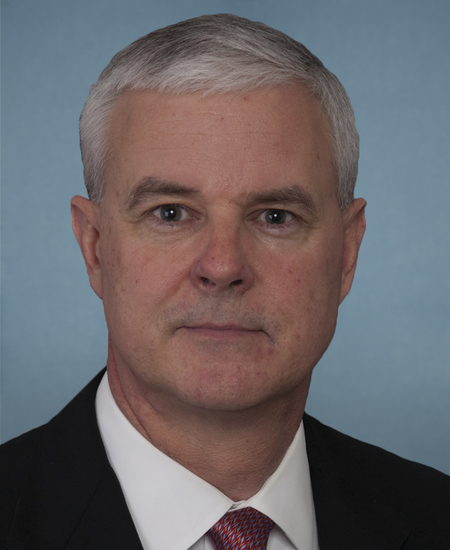
Rep. Steve Womack
Sponsored bills
Foreign Adversary Risk Management Act or the FARM Act This bill places the Secretary of Agriculture on the Committee on Foreign Investment in the United States, and it requires the committee to review any investment that could result in foreign control of any U.S. agricultural business. Further, it includes agricultural systems and supply chains in the definitions of critical infrastructure and critical technologies for the purposes of reviewing such investments. The Department of Agriculture and the Government Accountability Office must each analyze and report on foreign influence in the U.S. agricultural industry.
Protecting Financial Privacy Act of 2021 This bill prohibits a federal agency from creating, implementing, or administering a program that requires financial institutions or individuals to report on the balances of, transactions involving, or transfers into and out of financial accounts. This prohibition does not apply to laws or regulations in effect on September 1, 2021, or to the Bank Secrecy Act (laws that require financial institutions and other entities to report on certain financial transactions to prevent money laundering, the financing of terrorism, and other criminal activity). This prohibition does apply, however, to regulations issued under the Bank Secrecy Act after September 1, 2021.
Israel Relations Normalization Act of 2021 This bill requires the Department of State to take certain actions promoting the normalization of relations between Israel, Arab states, and other relevant countries and regions. Specifically, the State Department must develop a strategy on expanding and strengthening the Abraham Accords (the term used to refer collectively to agreements between Israel and the United Arab Emirates and between Israel and Bahrain marking the public normalization of relations between the two Arab countries and Israel). The strategy must include a description of how the U.S. government will encourage further normalization of relations with Israel. In addition, the State Department must report on options for U.S. international efforts to promote the strengthening of ties between Israel, Arab states, and other relevant countries and regions. The State Department must also report on the status of the normalization of relations with Israel, including information on (1) laws that punish individuals for people-to-people relations with Israelis (i.e., anti-normalization laws), and (2) evidence of steps taken by Arab governments toward permitting or encouraging normalized relations between their citizens or residents and Israeli citizens.
Intergenerational Financial Obligations Reform Act This bill requires the Congressional Budget Office, the Office of Management and Budget, and the Government Accountability Office to provide various reports that include a fiscal gap analysis and a generational accounting analysis. Under the bill, the fiscal gap generally refers to the sum of (1) the total amount of Treasury liabilities outstanding on the last day of the budget year, and (2) the discounted present value of the projected difference between federal spending and revenues during the period of the budget year and at least the next 75 fiscal years (excluding spending for net interest and principal payments on Treasury liabilities). A generational accounting analysis addresses the fiscal impact that projected federal spending and tax burdens will have on various generations of individuals.
This concurrent resolution expresses the sense of Congress that the men and women who undertook efforts in Afghanistan over the years have provided heroic service to the country and the peace experienced by our country is a direct result of the actions of our service members, diplomats, and humanitarians. The concurrent resolution also expresses that veterans who feel stress, anger, or disappointment over the end of operations in Afghanistan should seek resources and reach out to friends, mentors, and caregivers.
Preventing Overdoses and Saving Lives Act of 2021 This bill establishes a grant program for states, Indian tribes, and territories to respond to the opioid crisis. In awarding the grants, the Department of Health and Human Services (HHS) must give priority to recipients with the highest opioid dispensing rates. Recipients must use at least 20% of grant funds to implement a program that requires a prescription for an opioid overdose reversal drug along with an opioid prescription if (1) a patient is prescribed benzodiazepines, medication-assisted treatment, or high-dose opioids; or (2) the prescriber has reason to know of the patient's history with substance use disorders. As part of this program, recipients must also require continuing education on opioid-prescribing practices for prescribers and on recognizing opioid overdose fatalities for coroners. Recipients must use the remaining funds to develop a strategic plan for the jurisdiction's response to the opioid crisis.
Working Dog Commemorative Coin Act This bill directs the Department of the Treasury to mint and issue 50,000 $5 gold coins, 500,000 $1 silver coins, and 750,000 half-dollar clad coins in commemoration of the service that working dogs provide to society. The designs of the coins minted under this bill shall be emblematic of the contributions of working dogs to society, including in detection, military service, therapy and assistance. Treasury may issue coins only during the one-year period beginning on January 1, 2023. All sales of coins shall include a surcharge, which shall be paid to America's VetDogs for general expenses associated with the fulfillment of its mission.
Afghanistan Withdrawal Oversight and Liability Act or the AWOL Act This bill prohibits using federal funds appropriated for FY2021 to provide support to the Taliban. The bill also requires reports and certifications related to Afghanistan. Specifically, no FY2021 funds may be used to (1) make payments or contributions of material support to the Taliban, or (2) provide relief from sanctions against the Taliban or its leaders. The bill requires the President to report to Congress on efforts to evacuate U.S. citizens and lawful permanent residents from Afghanistan. The President must also certify to Congress when all such individuals seeking evacuation from Afghanistan have been evacuated. The Department of State must periodically report to Congress on any agreements between the United States and the Taliban. Within seven days of the United States reaching an agreement with the Taliban, the State Department must provide to Congress all materials relevant to that agreement. The bill also requires the Office of the Inspector General of the State Department to report to Congress about the State Department's compliance with legal requirements in connection to agreements with the Taliban. Specifically, the office must assess compliance with a law that requires the State Department to provide certain information to Congress when the United States enters certain international agreements. The Department of Defense must report to Congress concerning U.S. equipment, property, and classified material that was destroyed, surrendered, or abandoned in Afghanistan during a period starting from February 29, 2020.
Puppies Assisting Wounded Servicemembers for Veterans Therapy Act or the PAWS for Veterans Therapy Act This bill implements a program and a policy related to service dog therapy for veterans. Specifically, the bill requires the Department of Veterans Affairs (VA) to implement a five-year pilot program to provide canine training to eligible veterans diagnosed with post-traumatic stress disorder as an element of a complementary and integrative health program. Eligible veterans are those who are enrolled in the VA health care system and have been recommended for participation by a qualified mental health care provider or clinical team. The VA must seek to enter agreements containing specified elements with accredited nongovernmental entities that have demonstrated ability to provide canine training. Veterans who participate in the program are authorized to adopt the dog they assisted in training if their health provider determines it is in the best interest of the veteran. The VA must establish processes to document and track the progress of participating veterans with respect to health benefits and improvements. The Government Accountability Office must brief Congress and submit a report on the program. The bill also authorizes the VA to provide service dogs to veterans with mental illnesses, regardless of whether they have a mobility impairment.