

Maddy summaryHR 1835 (MERIT Act) provides reinstatement or compensation to federal employees who were terminated during a specific mass layoff period (January 20, 2025, through the bill’s enactment date). Affected probationary employees - newly hired workers on a trial period or not yet permanent - can choose to return to a similar position with matching benefits or receive a lump-sum payment covering the pay difference between their terminated role and any new federal job they held during the layoff period. Agencies must notify affected employees within 30 days and offer reinstatement or payment within 90 days, with employees required to accept or decline within 30 days to avoid losing eligibility. The bill defines "mass termination" as 15+ separations in a 30-day period by a single agency.
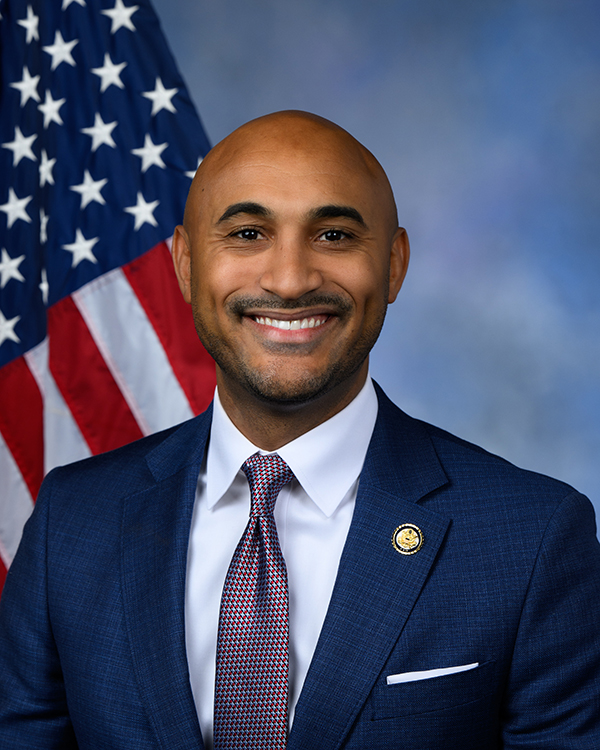
Rep. Shomari Figures
Sponsored bills
Maddy summaryHJRES 67 designates August as Slavery Remembrance Month to commemorate the arrival of enslaved Africans in 1619 and honor freedom fighters who opposed slavery. The resolution condemns slavery and its lasting impacts - including convict leasing, Jim Crow laws, and systemic racism - while encouraging public remembrance through ceremonies. It requests the President issue a proclamation urging Americans to observe the month with appropriate activities. The resolution also posthumously recognizes 15 Black Congress members from the Reconstruction Era as honorary cosponsors. This is a symbolic commemorative resolution with no binding policy changes.
Maddy summaryHRES 181 is a symbolic resolution recognizing Black History Month by highlighting the historical and ongoing contributions of Black labor to the U.S. economy and society. It commemorates Black labor from slavery through modern times, including agricultural work, unionization efforts (like A. Philip Randolph’s Brotherhood of Sleeping Car Porters), and contemporary issues like the racial wage gap (where Black workers earned $878 weekly vs. $1,059 for others in 2023). The resolution does not create new laws or policies but formally acknowledges these contributions to raise public awareness. It is sponsored by 70+ House members and aligns with the 2025 Black History Month theme focused on "African Americans and Labor." As a commemorative resolution, it has no direct effect on individuals or legislation.
Maddy summaryThe American Apprenticeship Act (HR 1783) provides federal grants to states to fund pre-apprenticeship programs that prepare individuals for registered apprenticeships in industries with low apprenticeship participation (less than 10% of available roles). States must apply with detailed plans for partnering with employers, aligning with existing workforce laws, and prioritizing underserved groups like minorities, veterans, and people with disabilities. Grants cover tuition, materials, and related instruction costs for these preparatory programs, with federal funding covering 20-50% of costs, and $15 million authorized annually for 2026-2031. The bill directly affects state workforce agencies, community organizations running pre-apprenticeship programs, and workers entering targeted sectors like healthcare and advanced manufacturing.
Maddy summaryHR 1787 authorizes the U.S. Mint to produce commemorative coins honoring baseball legend Roberto Clemente, including $5 gold, $1 silver, and half-dollar coins, with specific specifications for weight, size, and metal content. The bill requires the coins to feature Clemente's image and commemorative inscriptions, and mandates a surcharge ($35 for gold, $10 for silver, $5 for half-dollar) paid to the Roberto Clemente Foundation for its educational, youth sports, and disaster relief programs. All coins must be minted in 2027, sold at face value plus surcharge and production costs, and will be legal tender. The bill focuses solely on the coin program, not broader policy changes.
Safe Schools Improvement Act This bill requires states to direct their local educational agencies (LEAs) to establish policies that prevent and prohibit bullying and harassment of elementary and secondary school students. In particular, these policies must prohibit bullying and harassment based on race, color, national origin, disability, religion, or sex. Sex includes sexual orientation, gender identity, and sex characteristics (including intersex traits). Further, LEAs must provide (1) students, parents, and educational professionals with annual notice of the conduct prohibited in their disciplinary policies; (2) students and parents with grievance procedures that target such conduct; and (3) the public with annual data on the incidence and frequency of that conduct at the school and LEA level. The Department of Education must conduct and report on an independent biennial evaluation of programs and policies to combat bullying and harassment in elementary and secondary schools. The National Center for Education Statistics must collect state data to determine the incidence and frequency of the conduct prohibited by LEA disciplinary policies.
Maddy summaryThis bill amends Section 5(e)(6) of the Food and Nutrition Act of 2008 by removing a reference to "subparagraph (B)" and renumbering the following provisions. It does not change SNAP eligibility rules or benefits; it only adjusts the internal numbering of existing provisions. The change takes effect January 1 following enactment. As a procedural amendment, it directly affects how the law is cited but does not alter policy or impact beneficiaries.
Maddy summaryHR 1718 would establish the Justice Thurgood Marshall National Historic Site at Public School 103 in Baltimore, Maryland - the elementary school attended by Justice Thurgood Marshall - making it an affiliated area of the National Park System. The bill specifies that the Beloved Community Services Corporation, which currently owns and operates the building, will continue as the site's management entity. It requires the National Park Service to provide technical assistance and enter cooperative agreements for interpretation and preservation, but explicitly prohibits federal acquisition of the property or assumption of operational costs. This designation preserves the site for public education about Marshall's early life and legacy without altering ownership or federal financial responsibility.
Maddy summaryThe Keep Americans Safe Act (HR 1674) restricts the sale, transfer, and possession of large capacity ammunition feeding devices (LCFDs) - defined as magazines or similar devices holding more than 15 rounds of ammunition - for most individuals. Exceptions allow law enforcement officers (including campus law enforcement), retired officers, and nuclear security personnel to possess LCFDs under specific conditions. The bill requires new LCFDs to have serial numbers and manufacturing dates, permits federal seizure of violative devices, and authorizes federal grant programs to fund buy-back initiatives for LCFDs. It directly affects gun owners and manufacturers while preserving access for covered law enforcement and security personnel.
Maddy summaryHR 1657, the Humane Cosmetics Act of 2025, prohibits cosmetic companies from conducting or contracting animal testing for products sold in the U.S. beginning one year after the law takes effect. It also bans the sale or transport of cosmetics developed using such testing after that date, with limited exemptions (e.g., for foreign regulatory requirements or when no non-animal safety alternatives exist). The bill directly affects cosmetic manufacturers, retailers, and distributors by requiring them to shift to non-animal testing methods. The Food and Drug Administration (FDA) will enforce the law, including reviewing records and imposing civil penalties for violations.