

In committee Sep 24, 2026
0 co-sponsors
Total votes
447
all sessions
Attendance
99%
6 missed
Near the chamber average
With party
99%
of cast votes
Higher than 84% of chamber peers
Bipartisan score
0%
crosses aisle rarely
Lower than 86% of chamber peers
Sponsored
412
bills & resolutions
Near the chamber average
Committees
9
assignments
412 bills and resolutions
Sponsored bills
Total
412
Primary
77
Co-sponsor
335
This page
412
matching current filters
In committee Sep 24, 2026
0 co-sponsors
Crow Tribe Water Rights Settlement Amendments Act of 2025
Maddy summaryThis bill amends the 2010 Crow Tribe Water Rights Settlement Act to clarify and update funding mechanisms for water infrastructure projects on the Crow Tribe reservation in Montana. It replaces outdated references to "MR&I System" with "MR&I Projects" and establishes a new "MR&I Projects Account" to fund water production, treatment, delivery, and wastewater infrastructure, as well as land purchases with water rights. The Tribe retains full ownership and control of infrastructure built with these funds, while the federal government assumes no responsibility for operation, maintenance, or replacement costs. The bill also extends the Yellowtail Dam timeline from 15 to 20 years and adds cost-indexing adjustments for inflation.
Passed Sep 24, 2026
1 co-sponsor
A resolution honoring the life, service, and legacy of the Honorable Jon Llewellyn Kyl, former Senator for the State of Arizona.
Maddy summaryThis resolution formally honors the life, service, and legacy of Jon Llewellyn Kyl, a former U.S. Senator from Arizona who passed away at age 84. It details his career highlights, including his time in the House of Representatives, his long tenure in the Senate, and his work on issues such as water policy, national security, and crime victims' rights. The bill directs the Secretary of the Senate to share this tribute with the House of Representatives and Kyl's family, while also ordering the Senate to adjourn for the day as a mark of respect.
Passed Sep 23, 2026
1 co-sponsor
In committee Sep 23, 2026
1 co-sponsor
GRACE for Military Survivors Act
Maddy summaryThe GRACE for Military Survivors Act extends the deadline for surviving family members to deposit military death benefits into Roth IRAs or Coverdell education savings accounts from one year to three years. This change directly affects the spouses, children, and other dependents of deceased service members who are eligible for these tax-advantaged contributions. The bill applies to benefits received after enactment, while also allowing a transition period for amounts received between October 7, 2001, and the date the law is passed.
Budget & TaxesSupports Budget & TaxesThe bill extends the deadline for depositing military death benefits into tax-advantaged accounts, providing a benefit to military survivors which can be seen as a form of tax relief or fiscal support.
VeteransSupports VeteransThe bill extends the deadline for military survivors to deposit death benefits into tax-advantaged accounts, directly supporting their financial well-being.
In committee Sep 22, 2026
1 co-sponsor
Connected Vehicle Security Act of 2026
Maddy summaryThe Connected Vehicle Security Act of 2026 restricts the importation, sale, and use of connected vehicles and related technology from China, Russia, Iran, and North Korea to protect national security. Starting in 2027, the bill generally bans these vehicles if they originate from or are controlled by these countries, with separate restrictions on software and hardware taking effect in 2030. The Secretary of Commerce is authorized to issue specific exemptions for items that do not pose a security risk and must publish a list of approved products. The law also requires companies to submit declarations confirming their vehicles comply with the rules and imposes heavy fines for violations.
TechnologyOpposes TechnologyBill restricts importation, sale, and use of connected vehicles and related technology from specific countries, limiting market access and technological availability.
TransportationOpposes TransportationBill restricts importation, sale, and use of connected vehicles from specific countries, limiting vehicle availability and technology access.
In committee Sep 22, 2026
1 co-sponsor
Terrorism Risk Insurance Program Reauthorization Act of 2026
Maddy summaryThe Terrorism Risk Insurance Program Reauthorization Act of 2026 extends the federal terrorism insurance program through 2034, ensuring continued government support for insurance companies facing large losses from terrorist attacks. The bill also updates the schedule for recouping federal funds, shifting the timeline for when insurers must repay taxpayer money to later dates ranging from 2029 to 2036. These changes directly affect insurance carriers and policyholders by maintaining the program's availability for a longer period and adjusting the financial obligations tied to it.
In committee Sep 22, 2026
1 co-sponsor
Wildland Firefighter Health and Safety Act
Maddy summaryThe Wildland Firefighter Health and Safety Act establishes a dedicated federal program to improve the long-term health outcomes of wildland firefighters by addressing occupational exposures to smoke, hazardous chemicals, and heat. The bill creates an interagency Task Force and an Advisory Panel to develop a comprehensive health strategy, while also mandating that the Occupational Safety and Health Administration issue new standards requiring respiratory protection, medical surveillance, and decontamination procedures. It provides federal employees with paid duty time for personal hygiene and gear cleaning after shifts and requires the installation of decontamination infrastructure at fire stations. Additionally, the legislation creates a specialized unit within the Department of Labor to process workers' compensation claims for firefighters and authorizes over $49 million annually in appropriations for these initiatives through fiscal year 2032.
Budget & TaxesSupports Budget & TaxesThe bill establishes a dedicated federal program for wildland firefighter health, implying federal funding and resource allocation, which supports the 'Budget & Taxes' topic through increased government spending for a specific program.
HealthcareSupports HealthcareThe bill establishes a federal program to improve the long-term health outcomes of wildland firefighters, directly impacting healthcare access and quality for a specific group of professionals.
Labor & EmploymentSupports Labor & EmploymentThe bill directly improves workplace safety and health outcomes for wildland firefighters by mandating new OSHA standards, respiratory protection, and medical surveillance, clearly advancing worker protections.
In committee Sep 17, 2026
1 co-sponsor
Western Wildfire Support Act of 2026
Maddy summaryThe Western Wildfire Support Act of 2025 aims to improve wildfire management across western U.S. landscapes by focusing on preparation, detection, suppression, and post-fire recovery. The bill requires federal land managers to create strategic fire management plans for high-risk areas, establish transparent reporting on firefighting costs, and reimburse states for wildfire suppression caused by military training. It promotes new technology through provisions for wildfire detection equipment, slip-on tanker units, and research on unmanned aircraft systems, while also creating a dedicated Long-Term Burned Area Rehabilitation account for ecosystem restoration. These provisions primarily affect federal agencies (Interior and Agriculture Departments), state and local fire departments, and communities in wildfire-prone regions. The bill includes specific reporting requirements and funding mechanisms to support these new approaches to wildfire management.
In committee Sep 17, 2026
1 co-sponsor
Ask Maddy
·
AI policy assistant
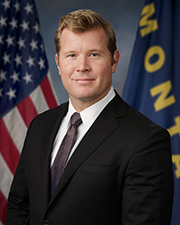
Ask Maddy about Tim Sheehy
Scope: united-states
Hi! I can help you understand Tim Sheehy's legislative record. What would you like to know?
Try one of these
i
Maddy answers using official bill text and legislative records. Always verify before sharing.
Sources cited inline