Maddy summaryThe WATER for Farmers Act establishes a system to enforce the 1944 Water Treaty by requiring Mexico to deliver a minimum of 350,000 acre-feet of water annually to the United States. If Mexico fails to meet this delivery target, the bill mandates the imposition of import duties on specific goods from Mexico, with rates increasing for consecutive years of non-compliance. Revenue generated from these duties is placed in a trust fund to provide direct financial compensation to agricultural producers in South Texas who suffer economic losses due to water shortfalls. Additionally, the legislation creates a new requirement for the government to collect and publicly report real-time data on water deliveries and compensation payments.
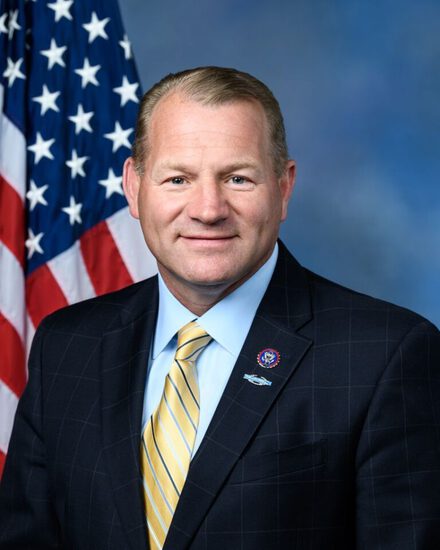
Rep. Troy E. Nehls
Sponsored bills
Medal of Sacrifice Act of 2025 This act directs the President to issue a medal of sacrifice for eligible law enforcement officers and first responders who are killed in the line of duty. The act also directs the President to establish a commission on the medal of sacrifice and appoint its members. The act sets forth responsibilities of the commission, including to advise on the design of the medal and determine how the medal will be presented. Under the act, eligible law enforcement officers and first responders include federal, state, local, tribal, or territorial law enforcement officers or first responders who are not subject to an official act of wrongdoing (e.g., a determination that the officer or first responder acted outside the scope of their duties or in a manner that was not in accordance with official policies or procedures). A law enforcement officer or first responder who is subject to an official act of wrongdoing is generally not eligible for the medal of sacrifice. However, in the case of such an officer or first responder, the act requires the commission to investigate the circumstances surrounding the officer or first responder's cause of death and issue a final determination on their eligibility.
Maddy summaryThis bill directs the Federal Aviation Administration to upgrade its system for submitting Form 337, which is used to record major aircraft repairs and alterations. The key changes allow authorized users to voluntarily submit these forms digitally and enable third-party software to connect securely to the FAA's filing system. To protect privacy and security, the law mandates strict data controls, prohibits the use of personal information for commercial purposes, and ensures that no new reporting requirements are added for aircraft owners or mechanics.
Maddy summaryHRES 1314, the America 250 Commemorative Flag Act, designates a special flag featuring the number 250 within the circle of stars as an official United States flag for the 250th anniversary of the Declaration of Independence. This resolution authorizes the America 250 flag to be flown alongside the national flag and POW/MIA flags at all government buildings, embassies, and official U.S. locations worldwide during the commemoration year. The bill serves as a ceremonial measure to honor the nation's history and the sacrifices made by patriots, without altering any existing laws or policies.
Maddy summaryThe Monitor Accountability Act of 2026 directs the Administrator of the Administrative Office of the United States Courts to establish new rules for federal courts appointing monitors to oversee State or local governments. The bill limits monitor fees, caps their service to one monitorship for a maximum of five years, and prevents reappointments under the same court order. It also requires courts to allow public comment before appointing a monitor and mandates annual public accountings of services and fees. Additionally, cases with monitorships lasting six years or more must be transferred to a different judge. These provisions, including the appointment of new monitors and case transfers, apply retroactively to existing monitorships that have been in effect for six years.
Maddy summaryHR 5625, the Cashless Bail Reporting Act, requires the Attorney General to publish and regularly update a public list of all states and local governments that allow cashless bail (release without requiring money bonds). This list must be available within 30 days of the bill's enactment and updated quarterly. The bill does not change existing bail laws but increases transparency by making it easier for the public to see where cashless bail is used. It directly affects individuals seeking information about bail practices in different jurisdictions. The key mechanism is a mandatory, publicly accessible database maintained by the federal government.
Maddy summaryThe Patients Before Monopolies Act aims to break up large health care companies that currently own both insurance or pharmacy benefit management services and physical pharmacies. It directly affects major health care conglomerates by making it illegal for them to own pharmacies while also managing drug pricing or insurance, requiring them to sell off their pharmacy operations within one year. The bill empowers federal agencies like the FTC and the Department of Justice to enforce these rules, impose financial penalties for non-compliance, and block future mergers that would recreate these conflicts of interest.
Maddy summaryThis bill would amend federal law to strengthen penalties for organized retail crime by expanding definitions of theft to include digital goods, gift cards, and setting a $5,000 aggregate value threshold for charges over a 12-month period. It would establish a new "Organized Retail and Supply Chain Crime Coordination Center" under Homeland Security to coordinate Federal, State, local, and Tribal law enforcement efforts against cross-jurisdictional theft groups. The Center would share information with retailers, transportation companies, and law enforcement agencies, track crime trends, and produce annual reports on organized retail crime. This legislation directly affects retailers, supply chain businesses, and law enforcement agencies, while targeting organized crime groups responsible for a 93% increase in larceny incidents and rising safety concerns for retail employees. The bill aims to address significant financial losses and supply chain disruptions noted in the National Retail Federation's 2023 data.
Save Our Shrimpers Act This bill prohibits federal funds from being made available to international financial institutions (e.g., the International Monetary Fund) for financing activities related to foreign shrimp farms. The bill also requires an annual report on compliance by U.S. leadership of international financial institutions with policies to oppose financing for certain commodities or minerals. Specifically, the bill requires the Department of the Treasury to condition any provision of federal funds to an international financial institution on the requirement that the funds not be used to finance any activity related to shrimp farming, shrimp processing, or the export of shrimp in any foreign country. Under current law, Treasury must instruct U.S. leadership of international financial institutions to oppose providing financial assistance for the production or extraction of any commodity or mineral for export if (1) the commodity or mineral is in surplus on world markets, and (2) the export of such commodity or mineral will cause substantial injury to U.S. producers of a competing commodity or mineral (or of the same or a similar commodity or mineral). This bill requires the Government Accountability Office to investigate and annually report to Congress on the extent to which U.S. leadership at these institutions have carried out Treasury's instructions.
Maddy summaryThis concurrent resolution expresses Congress's support for law enforcement officers and honors those who have died or been injured while performing their duties. The document highlights the dangers officers face, noting high rates of assaults and suicide, as well as current staffing shortages compared to pre-2020 levels. It calls for increased measures to improve officer safety, including more personnel, better training and equipment, stricter penalties for assaulting officers, and expanded mental health resources. This non-binding measure does not create new laws or allocate funding but serves to formally recognize the contributions of police professionals and urge government bodies to provide necessary support.