

Maddy summaryThe 9-8-8 Implementation Act of 2026 expands federal funding and mandates insurance coverage for behavioral health crisis services, directly affecting individuals experiencing mental health or substance use emergencies as well as the providers who serve them. The bill authorizes grants to upgrade local lifeline call centers, build new crisis stabilization facilities, and train a larger workforce of behavioral health professionals. It requires Medicare, Medicaid, private group health plans, TRICARE, and other federal insurance programs to cover crisis response services with financial terms no more restrictive than standard medical care. Additionally, the legislation establishes a federal panel to develop training protocols for 9-1-1 dispatchers to better connect callers to appropriate crisis care rather than law enforcement responses.
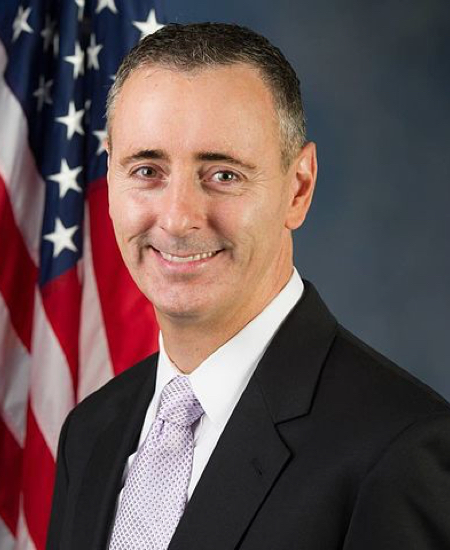
Rep. Brian K. Fitzpatrick
Sponsored bills
Maddy summaryThe Edgely Community Protection and Transparency Act amends the National Environmental Policy Act to impose new requirements on federal agencies that plan to acquire private property, including through eminent domain. Agencies must estimate the amount of land expected to be taken for each proposed project and alternative in their environmental impact statements. If a preferred alternative is selected, the agency must state whether it minimizes property acquisition compared to other options and explain how public comments influenced that decision. These changes directly affect federal agencies and private property owners by increasing transparency regarding government land acquisitions.
Maddy summaryThis bill prohibits the Department of Education from transferring specific program functions to other federal agencies, focusing on offices that manage special education, postsecondary education, Indian education, and elementary and secondary education. It blocks new interagency agreements for these areas but allows existing contracts in place as of February 1, 2025, to continue or be renewed with similar terms. The legislation also requires the Secretary of Education to submit quarterly cost reports to Congress detailing the financial impact of any new interagency arrangements made after that date. Finally, it restricts the use of certain administrative travel funds for the Secretary until these required cost analyses are provided.
This bill designates the facility of the United States Postal Service located at 6 Pennsylvania Avenue in Matamoras, Pennsylvania, as the "PFC Edward Kuhn Memorial Post Office".
Maddy summaryThe End Tuberculosis Now Act of 2026 amends the Foreign Assistance Act to designate ending the global tuberculosis emergency as a major objective of U.S. foreign policy and authorizes the President to provide funding for prevention, diagnosis, and treatment programs worldwide. The bill sets specific targets to be achieved by 2030, including an 80 percent reduction in new infections and a 90 percent reduction in deaths compared to 2015 levels, while also requiring that 30 million individuals receive preventive treatment. Key provisions mandate the use of innovative diagnostic tools, support for drug-resistant TB care, and coordination with private sector partners to develop vaccines and lower treatment costs. The legislation requires annual reports to Congress detailing program progress and expenditures, and it includes a sunset clause that terminates these specific authorities on January 1, 2033.
Maddy summaryThe Nitrous Oxide Safety Act of 2026 would classify consumer products containing nitrous oxide as banned hazardous items under federal law, except for specific exceptions. The bill prohibits the sale of nitrous oxide products for recreational use while allowing continued sales for medical and dental treatments, food production in commercial kitchens, research and development activities, and food propellant applications. This legislation directly affects manufacturers, retailers, and consumers by restricting access to nitrous oxide in consumer products after 180 days from enactment. The law defines nitrous oxide as the gas known as laughing gas or whippits and specifies which entities and activities are exempt from the ban.
Maddy summaryThe Chip EQUIP Act restricts federal funding for semiconductor manufacturing equipment made by foreign entities designated as security concerns (or their subsidiaries). It prohibits the use of such "ineligible" equipment - defined as completed, fully assembled tools like etching, lithography, or inspection machines - in projects receiving federal financial assistance for 10 years. The bill requires federal agreements to include this ban, with limited waivers allowed only if the equipment is unavailable from U.S. or allied sources, was refurbished by a foreign entity of concern but originally made by a non-concern entity, or meets export rules and national security criteria. This directly affects companies receiving federal funds for semiconductor manufacturing facilities.
Maddy summaryHR 5967 establishes a federal task force led by the FTC and DOJ to combat scams. The task force, including agencies like the FBI, SEC, and Social Security Administration, will develop a national strategy using existing tools such as the Consumer Sentinel Network and Internet Crime Complaint Center. Key actions include public education, coordination with industry (like banks and social media platforms), and enforcement using current laws against fraud and money laundering. The task force must report to Congress within one year and dissolve after 10 years.
Maddy summaryThis House resolution formally recognizes Overdose Awareness Day in the United States and calls for strengthened efforts to combat the opioid crisis. It directs the House of Representatives to pursue bipartisan legislation aimed at reducing the stigma associated with substance use disorders and drug overdoses. Additionally, the bill commits lawmakers to work with state and local governments, businesses, and health care providers to build a comprehensive system that supports prevention, treatment, harm reduction, and recovery for individuals affected by opioid use disorder.