Maddy summaryThis bill requires credit reporting resellers to use reasonable procedures to ensure the accuracy of consumer information they transmit to other agencies or end users. It limits reseller liability when they accurately pass on data obtained from another consumer reporting agency without making changes. The law defines resellers according to existing Fair Credit Reporting Act definitions and focuses on maintaining data integrity during the transfer process. These changes directly affect companies that sell consumer credit reports to other businesses or individuals.
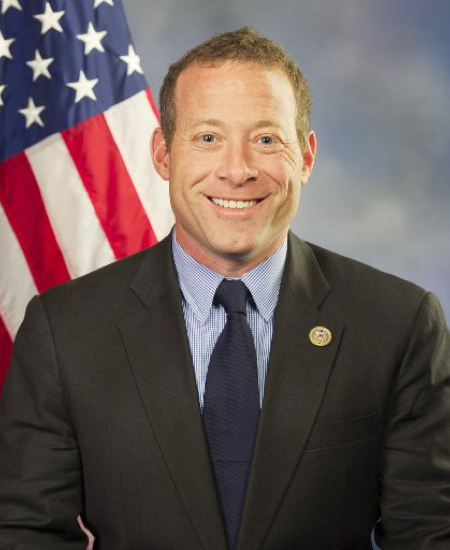
Rep. Josh Gottheimer
Sponsored bills
Maddy summaryThis bill extends existing whistleblower protections to workers on all contracts funded by the Department of Housing and Urban Development (HUD). It applies Section 4712 of U.S. law - which prohibits retaliation against employees reporting fraud or waste - to every HUD contract, subcontract, grant, or personal services agreement, regardless of when the contract was signed. This means employees working on HUD-funded projects can now seek legal protection if they face retaliation for raising concerns about misconduct. The law directly affects HUD contractors and their employees by ensuring they have the same legal safeguards as other federal contract workers.
Maddy summaryHR 1869 creates a new DOJ task force within the Criminal Division to investigate and prosecute international trade crimes, such as customs evasion, smuggling, and trade-based money laundering. It requires the DOJ to hire specialized prosecutors, coordinate with agencies like U.S. Customs and Border Protection, and focus on specific violations covered under statutes like 18 U.S.C. §§ 541-546 and 21 U.S.C. § 331. The bill authorizes $20 million in funding for fiscal year 2026 (with 80% dedicated to criminal prosecutions), mandates annual reports to Congress on enforcement activities, and requires the DOJ to develop multi-agency partnerships to address these crimes. This directly affects federal prosecutors, border enforcement agencies, and industries impacted by trade violations.
Maddy summaryThe MANNARINO Act requires states to ban the sale of scented or flavored nitrous oxide products and other non-exempt nitrous oxide items in order to receive certain federal public health grants. The law allows exemptions for nitrous oxide used in medical, veterinary, dental, food manufacturing, industrial, or automotive applications. If a state fails to implement these sales prohibitions, the Secretary of Health and Human Services can reduce its federal grant allotment by up to 10 percent. These requirements would take effect starting in the third fiscal year after the bill is enacted.
Maddy summaryThe EXIM Bank Continuity in Competitiveness Act modifies the rules for the Export-Import Bank of the United States to ensure the institution can continue operating when its board lacks a full complement of members. It reduces the required waiting period before a temporary board can be formed from 120 days to 60 days if the main board loses its quorum. Additionally, the bill clarifies that this temporary board will automatically end when a new President takes office or when the original board regains a full quorum. These changes are set to take effect on December 31, 2026.
Maddy summaryHR 2555, the Freedom of Association in Higher Education Act of 2025, protects students who join or form single-sex social organizations (like fraternities or sororities) at colleges. It prohibits colleges receiving federal funds from taking negative actions against these students or organizations solely because they limit membership to one sex - such as denying housing, financial aid, leadership roles, or recognition. The bill ensures students can join such groups without coercion and stops colleges from imposing unfair recruitment rules on single-sex organizations compared to others. It does not require colleges to recognize single-sex groups, allow organizations to set their own membership rules, or override Title IX protections.
Maddy summaryThis bill restricts states from taxing the income of individuals who live in one state but work remotely for employers located elsewhere. It establishes that a state can only tax an individual's compensation if they are physically present within that state during the time the work is performed, preventing taxation based on where the employer is headquartered. The legislation specifically prohibits states from using "convenience of the employer" tests to claim taxing rights over workers who are physically located in another jurisdiction. These rules apply immediately upon enactment and affect nonresident employees and independent contractors, while leaving corporate taxes and unearned income regulations unchanged.
Maddy summaryThe NO PROFIT Act prohibits social media platforms from selling or providing paid, early access to posts made by federal government officials and their immediate family members. It also makes it illegal for any person to buy or sell securities, commodities, or prediction market contracts while possessing this non-public information before it is available to the general public. The bill targets a wide range of officials, including the President, members of Congress, executive branch employees, and judges, as well as their spouses and dependent children. Violations by social media platforms result in civil penalties equal to the revenue earned from the unauthorized early access, while individuals who trade on this information face enforcement actions by the Securities and Exchange Commission or the Commodity Futures Trading Commission.
National Law Enforcement Officers Remembrance, Support and Community Outreach Act. [ sic ] This bill temporarily directs the Department of the Interior to award a grant to the National Law Enforcement Officers Memorial Fund for the expenses associated with operating and enhancing the community outreach, public education, and officer safety and wellness programs of the National Law Enforcement Museum.
Maddy summaryThe Empowering States to Protect Seniors from Bad Actors Act authorizes the Securities and Exchange Commission to distribute competitive grants to state securities commissions and insurance departments to combat financial fraud targeting individuals aged 62 and older. These funds can be used to hire staff for investigations, purchase technology and training equipment, develop educational materials for seniors, and strengthen state laws against exploitation. Each eligible entity may receive up to $500,000 annually, or $1,000,000 if the state agency handles both securities and insurance regulation. The bill appropriates $10 million per year from fiscal years 2025 through 2030 and requires the Commission to conduct annual audits and submit effectiveness reports to Congress at two and five-year intervals.