

Maddy summaryThis bill authorizes Congress to award a Congressional Gold Medal to individuals who fought for or with the United States in the Pacific theater during World War II and subsequently became prisoners of war. The legislation specifically recognizes the service and sacrifice of those who defended locations such as Bataan and Corregidor, including Filipino soldiers and civilians who served alongside U.S. forces. To implement this award, the Speaker of the House and the President pro tempore of the Senate will arrange for the creation of a gold medal by the Secretary of the Treasury, which will be presented to the Smithsonian Institution for display. The act also allows for the production of duplicate bronze medals to cover the costs of the original gold medals, with any proceeds from these sales deposited into the United States Mint Public Enterprise Fund.
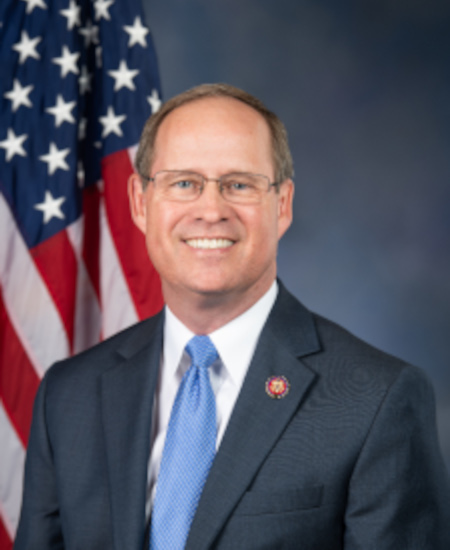
Rep. Gregory F. Murphy
Sponsored bills
Maddy summaryThis resolution formally congratulates the Carolina Hurricanes on winning the 2026 Stanley Cup, recognizing their 4-2 victory over the Vegas Golden Knights. It highlights key achievements such as the team's 16-3 playoff record, Captain Jordan Staal winning the Conn Smythe Trophy, and the franchise's 20-year anniversary of its first championship. The text also acknowledges the contributions of the coaching staff, management, and individual players, as well as the team's community support efforts.
Maddy summaryThe Stop Lawmakers From Predicting Act prohibits Members of Congress, their spouses, and their dependent children from trading on prediction markets regarding government policies, actions, political outcomes, or any events related to their congressional duties. This restriction applies to any purchase, sale, or agreement dependent on these specific outcomes while the individual is in federal service. If a covered individual violates these rules, they must pay a fee equal to the greater of $2,000 or 10% of the transaction value, plus any net profit made from the trade. The law also forbids paying these penalties using personal allowances, campaign funds, or other official accounts, and it requires the supervising ethics office to issue guidance on how to interpret the new restrictions.
Maddy summaryThis bill redesignates the existing National Parks and Public Land Legacy Restoration Fund as the America's Legacy Restoration Fund to address deferred maintenance on federal lands. It directs revenue from recreation fees and a portion of energy development income into the fund, which must be used primarily for repairing critical infrastructure like roads, trails, and buildings managed by agencies such as the National Park Service and the Forest Service. The legislation establishes strict rules requiring that most funds go toward non-transportation projects, mandates transparency through public dashboards tracking project status, and sets aside a small percentage for matching private donations. Additionally, the bill increases entrance fees for foreign visitors to ensure they contribute to the fund, while prohibiting the use of these specific funds for land acquisition or employee bonuses.
Maddy summaryThe Disaster Loan Accountability and Reform Act (DLARA) requires the Small Business Administration (SBA) to improve transparency and accountability for disaster loans. It mandates monthly reports detailing loan funding status, new budget requests with historical cost comparisons, and strict limits on loan obligations when funds fall below 10% of a 10-year average. The bill also requires GAO and SBA Inspector General reviews of funding shortfalls, cost impacts of recent policy changes, and enhanced forecasting for disaster loan budgets. These provisions directly affect the SBA’s operations and its reporting to Congress, aiming to prevent future funding crises through better data and oversight.
Repealing Big Brother Overreach Act This bill repeals the Corporate Transparency Act. The act requires existing companies and newly created companies to report beneficial ownership information to the Department of the Treasury’s Financial Crimes Enforcement Network for purposes of addressing the financing of terrorism and money laundering.
Maddy summaryThis bill establishes a new Precision Oncology Program for Prostate Cancer within the Department of Veterans Affairs to provide specialized care and research for veterans diagnosed with prostate or related genitourinary cancers. The legislation authorizes the creation of at least 21 designated Centers of Excellence across the country, each required to offer genetic sequencing, clinical trials, and specialized medical staff to treat eligible veterans. A dedicated leadership team will coordinate these centers, maintain a national data registry, and develop uniform tools to standardize care and research efforts. The program includes a five-year funding authorization of $15.5 million annually and mandates that existing prostate cancer resources at these facilities remain protected until 2030. Additionally, the bill requires the Secretary of Veterans Affairs to submit detailed implementation plans and annual performance reports to Congress to ensure accountability.
Legislative Branch Agencies Clarification Act This bill revises the procedures for appointing and removing the Librarian of Congress, the Director of the Government Publishing Office (GPO), and the Register of Copyrights. The bill also establishes an Office of Inspector General within the Copyright Office and requires GPO to establish a human management system. Specifically, the bill requires the Librarian of Congress and the Director of GPO to be appointed by a bipartisan congressional commission, based on procedures outlined by the bill and without regard to political affiliation. (Currently, these positions are appointed by the President with the advice and consent of the Senate.) The Librarian of Congress and the Director of GPO may only be removed from office by a majority vote of the majority and minority leaders of the House of Representatives and the Senate. Additionally, the bill requires the Librarian of Congress and the Director of GPO to each appoint a deputy within a set time frame and outlines related procedures. The bill removes the Library of Congress's (LOC's) supervisory authority over the Copyright Office and instead transfers those powers directly to the Register of Copyrights. LOC and other legislative agencies may provide support services to the Copyright Office. The bill requires the Register of Copyrights to be (1) a U.S. citizen with a background and experience in copyright law, and (2) appointed by the President with the advice and consent of the Senate. (Currently, the Register is appointed by the Librarian.) Before the President makes the appointment, the chair and ranking minority member of each specified committee must jointly recommend three individuals whom the President may consider in making the appointment. The bill limits the term of office for the Register to 10 years, but the individual may be reappointed. The bill requires subordinate officers and employees of the Copyright Office to be appointed by the Register. Further, the bill requires the Register (instead of the Librarian) to appoint the three administrative judges of the Copyright Royalty Board. The bill also establishes an Office of Inspector General within the Copyright Office to, among other duties, conduct and supervise audits and investigations (excluding incidents involving violence and personal property) relating to the Copyright Office. The Register must appoint an Inspector General to head this office without regard to political affiliation. The Register may remove or transfer the Inspector General with prior congressional notification. The bill also requires GPO to establish and maintain a human capital management system and outlines the requirements for the system.
Maddy summaryHR 1041, the Veterans 2nd Amendment Protection Act, prevents the Department of Veterans Affairs (VA) from automatically sending veterans' personal information to the national background check system (NICS) solely because a court has appointed a fiduciary (like a guardian) to manage their benefits. This directly affects veterans who have a fiduciary appointed due to mental health or cognitive challenges but are not deemed a danger to themselves or others. The bill requires a court order finding the veteran poses a danger before any such information can be shared with the NICS. It changes VA procedures to block unnecessary barriers to firearm ownership for veterans who qualify for fiduciary support without a judicial determination of danger.
Maddy summaryThis bill, the Provider Reimbursement Stability Act of 2026, aims to create more predictable payment adjustments for physicians and other healthcare providers under the Medicare program. It directly affects medical practices and providers who receive reimbursement for services through the physician fee schedule. The legislation increases a threshold for certain budget neutrality calculations from $20 million to $54.3 million in 2027, with automatic increases every five years thereafter. It also requires the government to correct payment estimates when actual service usage differs significantly from projections, mandates regular updates to cost calculations for practice expenses, and limits how much Medicare payment rates can change from year to year to a maximum of 2.5 percent.