Maddy summaryThis House resolution expresses support for designating the week of September 11 through September 17, 2026, as "Patriot Week." The bill encourages citizens, educational institutions, and government agencies at all levels to participate in activities that honor American history, founding documents, and national symbols. It specifically acknowledges the victims of the September 11, 2001, attacks while linking the commemorative period to Constitution Day on September 17.
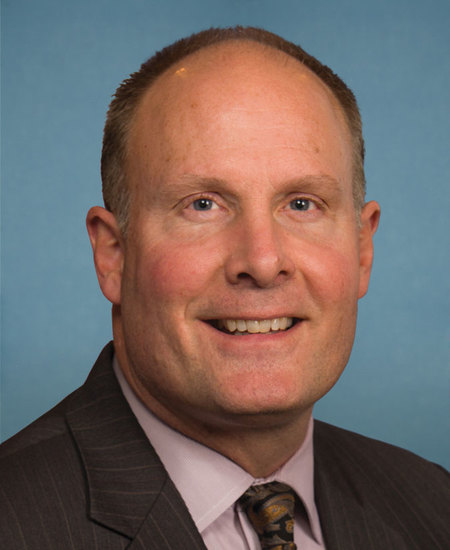
Rep. John R. Moolenaar
Sponsored bills
Maddy summaryThis bill, known as the Ratepayer Protection Act, modifies federal energy laws to ensure that large industrial customers pay for the specific infrastructure upgrades needed to serve their high electricity demands. It directly affects non-residential facilities with a peak power usage of 100 megawatts or more, requiring utilities to charge these customers the full incremental cost of any necessary generation, transmission, or distribution improvements. Under the new rules, large customers must also provide financial guarantees or contributions before such upgrades are made, ensuring utilities can recover costs even if the customer leaves the contract early. State regulators have two years to implement these standards, though the bill exempts utilities in states that have already enacted similar measures or are actively considering them.
Maddy summaryHR 5267, the American Franchise Act, clarifies when franchisors can be considered joint employers of franchisee employees under federal labor laws. It defines "substantial direct and immediate control" over essential employment terms like wages, benefits, hours, hiring, and discipline - requiring franchisors to actively set these terms to be deemed joint employers. The bill explicitly excludes routine brand standards, training, or minimal safety requirements from constituting such control. This directly affects franchisors and franchisees by limiting joint employer liability to cases where franchisors exert significant, ongoing influence over core employment decisions. The law applies prospectively to new cases after enactment, not past disputes.
Maddy summaryThis bill amends the Fair Labor Standards Act to clarify that direct sellers and qualified real estate agents (as defined under IRS rules) are not considered "employees" under federal labor law. It directly affects these workers by excluding them from FLSA protections like minimum wage and overtime pay. The key provision inserts a new definition into the law, changing how these professions are classified for labor rights purposes. This is a technical definitional change, not a new policy or program.
Maddy summaryThis House resolution marks the 25th anniversary of the September 11, 2001 terrorist attacks by formally honoring the memory of the nearly 3,000 victims and recognizing the sacrifices made by first responders, military personnel, and the passengers of United Airlines Flight 93. The bill acknowledges the ongoing health challenges faced by survivors and responders, highlighting the role of the World Trade Center Health Program in providing long-term medical support. It also credits charitable organizations and community groups that have continued to assist victims' families and veterans over the past two decades. Finally, the resolution urges the American public to observe the anniversary with ceremonies and reaffirms Congress's commitment to remembering the events and lessons of that day.
Maddy summaryThe GUARD Act of 2026 requires U.S. national security agencies to evaluate whether humanoid or quadruped robots made by foreign entities pose a risk to national security. If a robot is determined to be unsafe or comes from a country of concern, the Federal Communications Commission will add it to a banned list, preventing its use in U.S. communications networks. The law mandates that agencies report their findings to Congress within specific timeframes, ensuring transparency about these security assessments. Importantly, the rule does not apply to allies such as NATO members or designated Major Non-NATO Allies.
Maddy summaryThe Chip EQUIP Act restricts federal funding for semiconductor manufacturing equipment made by foreign entities designated as security concerns (or their subsidiaries). It prohibits the use of such "ineligible" equipment - defined as completed, fully assembled tools like etching, lithography, or inspection machines - in projects receiving federal financial assistance for 10 years. The bill requires federal agreements to include this ban, with limited waivers allowed only if the equipment is unavailable from U.S. or allied sources, was refurbished by a foreign entity of concern but originally made by a non-concern entity, or meets export rules and national security criteria. This directly affects companies receiving federal funds for semiconductor manufacturing facilities.
Maddy summaryHR 1869 creates a new DOJ task force within the Criminal Division to investigate and prosecute international trade crimes, such as customs evasion, smuggling, and trade-based money laundering. It requires the DOJ to hire specialized prosecutors, coordinate with agencies like U.S. Customs and Border Protection, and focus on specific violations covered under statutes like 18 U.S.C. §§ 541-546 and 21 U.S.C. § 331. The bill authorizes $20 million in funding for fiscal year 2026 (with 80% dedicated to criminal prosecutions), mandates annual reports to Congress on enforcement activities, and requires the DOJ to develop multi-agency partnerships to address these crimes. This directly affects federal prosecutors, border enforcement agencies, and industries impacted by trade violations.
Maddy summaryThe CCP Fentanyl Sanctions Act codifies existing executive sanctions and authorizes the President to impose new financial penalties on foreign persons, including Chinese government entities, ports, online marketplaces, and companies that contribute to the global spread of illicit synthetic narcotics. The bill targets specific activities such as producing or selling precursor chemicals, facilitating drug shipments, and providing material support to sanctioned government bodies, with the primary penalty being the blocking of all property and transactions within the United States. Additionally, the Treasury Department is empowered to restrict access to U.S. banking accounts for foreign financial institutions that knowingly facilitate significant transactions for these designated individuals or entities. The legislation includes provisions allowing the President to waive sanctions for up to 180 days if deemed in the national interest and requires the administration to consider information from congressional committees and international human rights monitors when making determinations.
Maddy summaryThe Protecting Local Control of Data Centers Act prohibits federal agencies from overriding state or local authority over the zoning, siting, and permitting of data centers built on non-federal land. The bill also prevents federal agencies from conditioning financial assistance on a local government's agreement to limit its regulatory power in this area. This legislation directly affects state and local governments by ensuring they retain full control over decisions regarding where data centers can be located within their jurisdictions.