

No Congressional Gun Loophole Act This bill prohibits the Capitol Police Board from allowing Members of Congress or their staff to carry firearms on the grounds of the U.S. Capitol or in its buildings. Members and their staff may store firearms in their cars in Capitol complex garages if their possession complies with the firearms laws of the District of Columbia and the firearms are locked with gun locks while on the complex. Current board regulations allow Members of Congress to keep firearms in their offices; the regulations also allow Members and their staff to transport unloaded and securely wrapped firearms within the Capitol grounds. Firearms are prohibited inside the chambers of the Senate and the House of Representatives, as well as in adjacent lobbies and cloakrooms, the galleries, the Marble Room of the Senate, and the Rayburn Room of the House, unless approved by the Sergeants at Arms for security purposes.
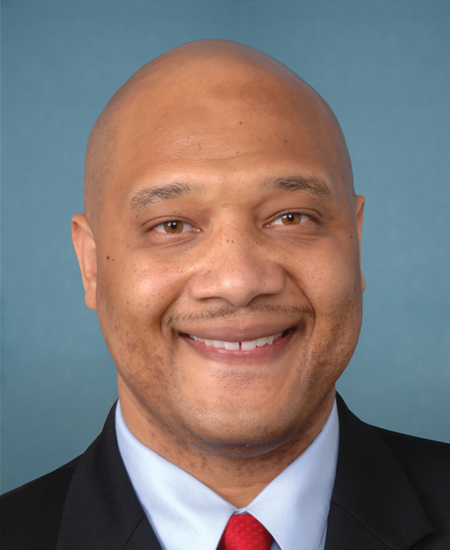
Rep. André Carson
Sponsored bills
Aviation Manufacturing Jobs Protection Act of 202 1 This bill makes available payroll assistance to eligible aviation employers impacted by the COVID-19 (i.e., coronavirus disease 2019) public health emergency. Specifically, aviation employers demonstrating at least a 15% decline in revenues and economic conditions that justify assistance may enter an agreement with the Secretary of the Treasury to receive up to 50% of the amount of total compensation for the 25% of its workforces most at risk of permanent reduction or furlough, excluding senior executive and highly-compensated employees. Assistance under this program is available through April 30, 2023, and Treasury must establish an application process and minimum eligibility requirements for participation in the program not later than 10 days after the enactment of this bill.
Safe Routes to School Expansion Act This bill expands eligibility under the Highway Safety Improvement Program to include certain safety projects related to safe routes to school infrastructure improvements such as sidewalks, crosswalks, signage, bus stop shelters or protected waiting areas. The bill increases the federal share for the Department of Transportation (DOT) to fund improvements for pedestrian or bicyclist safety, safety of people with disabilities, and safe routes to school infrastructure. DOT must also carry out a safe routes to school program for the benefit of children in primary, middle, and high schools.
Build America Act of 20 21 This bill directs the Department of Transportation (DOT) to carry out a national infrastructure investment grant program for capital investments in surface transportation infrastructure. Projects eligible for funding under the program include, at a minimum, highway and bridge projects, public transportation projects, passenger and freight rail transportation projects, and port infrastructure investments. In distributing grants under the program, DOT shall ensure an equitable geographic distribution of funds, an appropriate balance in addressing the needs of urban and rural areas, and investment in a variety of transportation modes. At least 20% of grant funds must be set aside for projects in rural areas. The bill also establishes a National Infrastructure Investment Trust Fund and increases the excise tax on gasoline other than aviation gasoline and on diesel fuel or kerosene.
Medical Debt Relief Act of 2021 This bill modifies requirements related to the reporting of medical debt. Specifically, a consumer reporting agency is prohibited from adding medical debt information to a consumer credit report if the debt was fully paid or settled, or is less than a year old. Additionally, a debt collector must notify the consumer prior to reporting medical debt to a consumer reporting agency.
Unconscionable Pricing Act This bill makes it unlawful for any person to sell, rent, or lease an emergency supply at an unconscionable price during a federally-declared emergency. A price is unconscionable if (1) it exceeds 10% of the average price for the same or similar emergency supply during the 30 days before the emergency was declared, and (2) such price increase is not related to the reasonable costs incurred to sell or rent the supply. The bill provides authority for the Federal Trade Commission and state attorneys general to enforce the requirements of this bill.
COVID-19 Testing, Reaching, And Contacting Everyone (TRACE) Act This bill authorizes the Centers for Disease Control and Prevention to award grants for testing, contact tracing, monitoring, and other activities to address COVID-19 (i.e., coronavirus disease 2019). Entities eligible for these grants include certain clinics and hospitals, nonprofits, and schools.
This resolution expresses support for a National Day of Mourning for the lives lost as a result of COVID-19 (i.e., coronavirus disease 2019).
This resolution supports the designation of Hazel M. Johnson Environmental Justice Month. It also honors her work and the work of other environmental justice advocates.
Essential Pay for Essential Workers Act This bill requires employers to pay essential health care employees a premium amount in addition to their regular rate of pay during an emergency period. It also allows employers a payroll tax credit for the payment of such enhanced wages to essential employees.