

Maddy summaryThe Patients First Act of 2026 modifies how Medicare reimburses physicians and primary care providers to improve access and stabilize payments. It establishes a new hybrid payment model for primary care services from 2027 to 2031, which pays a monthly fee per patient to eligible independent practices while covering specific services like care management and telehealth without cost-sharing for patients. The bill also updates the formula for calculating reimbursement rates to account for high inflation years and requires more frequent updates to the costs used in calculating payments. Additionally, the legislation reforms the performance-based payment system by adding care efficiency measures, creating a task force to recommend new quality metrics, and adjusting penalties for providers who fail to report on certain data.
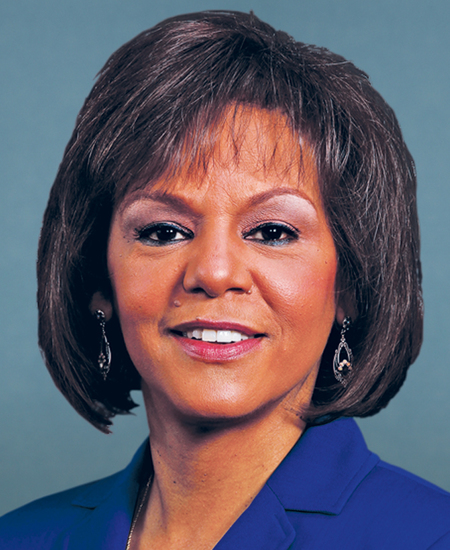
Rep. Robin L. Kelly
Sponsored bills
Maddy summaryThis bill requires Medicare Advantage plans to implement electronic pre-approval systems for medical services by 2028 and meet transparency reporting standards starting in 2027. Plans must publicly report data on approval/denial rates, appeal outcomes, response times, and technology use for pre-approval requests, including details on how denials relate to clinical criteria. It establishes a 24-hour response timeframe for certain requests and mandates annual reviews of pre-approval requirements based on data and input from seniors and providers. The law directly affects Medicare Advantage plans, seniors enrolled in these plans, and healthcare providers who submit pre-approval requests. These changes aim to make the pre-approval process faster, more transparent, and more accountable for seniors seeking covered medical services.
Maddy summaryThis resolution commemorates the fourth anniversary of the July 4, 2022, Independence Day Parade shooting in Highland Park, Illinois, which resulted in seven deaths and over 40 injuries. It formally honors the seven victims by name and acknowledges the bravery of the numerous law enforcement officers, first responders, and medical personnel who assisted during the attack and in the aftermath. The document also recognizes the ongoing efforts of volunteer counselors supporting the community and expresses continued support for Highland Park as it marks this tragic milestone.
Maddy summaryThe LIFT the BAR Act aims to restore access to federal benefits for lawfully present noncitizens by repealing several restrictions imposed by the 1996 welfare reform law and a 2024 reconciliation bill. Specifically, it would allow eligible noncitizens to receive SNAP food assistance, Medicaid, CHIP, and child nutrition programs, while also updating legal terminology to refer to "noncitizens" rather than "aliens" in relevant statutes. The legislation includes provisions to ensure these individuals can qualify for premium tax credits and would require federal agencies to issue implementation guidance within 180 days of enactment.
Maddy summaryThis bill creates a federal grant program to help states and tribal governments improve their licensing systems for firearms dealers. To qualify for funding, a state must have laws requiring dealers to hold licenses valid for no more than three years, complete an application process, and allow for inspections with penalties for noncompliance. The Attorney General will award up to $2.5 million per year on a competitive basis to eligible applicants who submit detailed plans for developing or improving their programs. Recipients must provide annual reports on inspection numbers, violations, and license status, while the Attorney General must report grant details and denial reasons to Congress.
Maddy summaryThe FAST Repairs for Wheelchairs Act prohibits Medicare Advantage plans from requiring prior authorization, prescriptions, or medical documentation for repairs to complex rehabilitation wheelchairs and their accessories. This change directly affects individuals who use these devices, allowing them to get necessary maintenance without waiting for plan approval. However, the law still permits plans to review the initial medical necessity of the equipment or approve replacements when the device is lost, damaged, or has been used for five years. By removing these specific barriers for repairs, the bill aims to ensure faster access to essential maintenance services for wheelchair users.
Maddy summaryThis resolution expresses support for designating June 2026 as Black Music Month to honor the historical and cultural significance of Black contributions to American music. It acknowledges the wide-ranging influence of Black music across various genres and its central role in the nation's history, including the civil rights movement. The bill calls on the public to celebrate this month by promoting diversity, performing Black music, and spreading awareness of its legacy.
Maddy summaryThe All in For Attendance Act aims to reduce chronic student absenteeism by requiring schools to implement specific support strategies for students missing 10 percent or more of school days. It mandates the creation of data systems to track attendance reasons, establishes advisory programs to engage families, and requires schools to partner with community organizations to remove barriers like transportation or health issues. The legislation also prohibits schools from using suspensions, fines, or academic penalties as punishment for student absences. Additionally, it directs funds toward evidence-based interventions such as social and emotional learning programs, restorative justice, and high-impact tutoring to improve student engagement and attendance.
Maddy summaryThe PRIDE Act of 2026 expands the Office of Minority and Women Inclusion to include LGBTQI+ individuals and businesses. It amends existing financial and housing laws to require the office to consider gender identity and sexual orientation when enforcing regulations and supporting small businesses. The bill formally defines LGBTQI+ as lesbian, gay, bisexual, transgender, queer, or intersex and sets a standard where more than 50 percent of a business's ownership and profits must accrue to LGBTQI+ individuals to qualify as LGBTQI+-owned. This change directly affects the Department of the Treasury's oversight of financial institutions and the Small Business Administration's lending programs. By updating the legal definitions within the Dodd-Frank Act and related housing legislation, the bill ensures that federal support and compliance measures explicitly cover the LGBTQI+ community.
Maddy summaryThe Keep Public Funds in Public Schools Act of 2026 eliminates a federal tax credit that allowed parents to deduct contributions to scholarship granting organizations from their income. By removing these specific tax breaks, the bill prevents the use of public tax dollars to support private school vouchers and scholarship programs. This change directly affects families who currently rely on these tax incentives to fund education outside the public school system. The provisions take effect for taxable years beginning after December 31, 2026.