

Maddy summaryThis bill establishes a new Office for Civil Rights and Civil Liberties within the Department of Homeland Security, led by an Officer who reports directly to the department head. The Office is tasked with overseeing compliance with civil rights laws, reviewing potential abuses or profiling by employees, and integrating these protections into all department policies and programs. It grants the Officer authority to investigate complaints, issue public reports on findings, and coordinate with other officials to ensure diverse communities are engaged effectively. Additionally, the legislation requires each major department unit to have its own civil rights officer and mandates annual reporting to Congress on the Office's activities and progress.
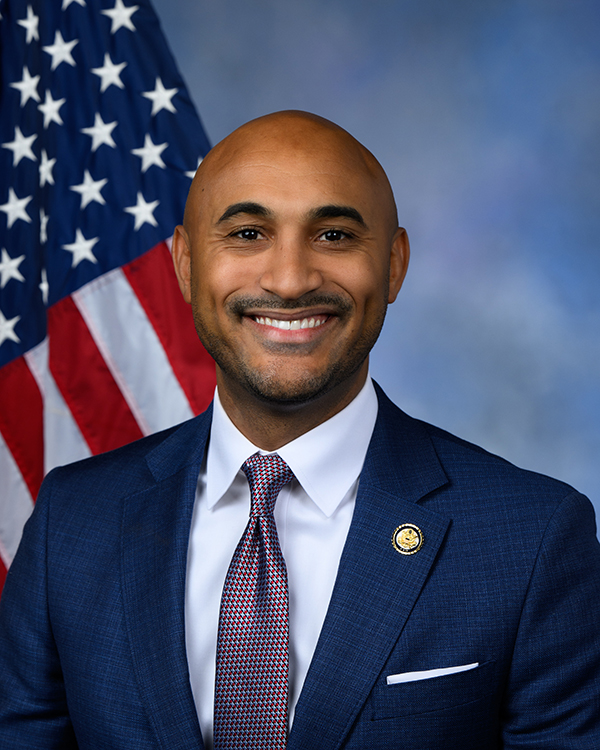
Rep. Shomari Figures
Sponsored bills
Maddy summaryThe Fresh Bucks for Fresh Produce Act establishes a five-year pilot program where the Department of Agriculture provides grants to states to offer monthly $60 payments to low-income households for purchasing fresh fruits and vegetables. To qualify, households must earn 80 percent or less of the area median income, though those already receiving SNAP benefits can enroll with minimal paperwork. The funds can only be used at specific retailers like farmers markets and grocery stores to buy fresh produce, and states must use these grants to cover administrative costs and support local community organizations. The bill requires states to prioritize food-insecure areas and ensures geographic diversity by awarding grants to at least one state in each major U.S. region. Additionally, the program mandates a study to collect data on participant outcomes and barriers to access, with final results and recommendations for expansion due within five years.
Maddy summaryThis bill, titled the Encouraging Public Service in Our National Parks and Public Land Act, requires the Secretary of the Interior to make specific federal recreational lands and waters free of admission fees on designated dates throughout the year. The key provision mandates that these free access days include Martin Luther King Jr. Day, the first day of National Park Week, Juneteenth, Great American Outdoors Day, National Public Lands Day, and Veterans Day. Additionally, the legislation grants the Secretary the authority to establish extra fee-free days beyond those listed. These changes directly affect visitors to national parks and other federal recreational areas by providing them with guaranteed free entry on these holidays and observances.
Maddy summaryThe Community Schools and Health Equity Act establishes a competitive grant program led by the Department of Education to fund school-based health services in community schools. Eligible recipients, such as local school districts and community partnerships, can use these funds to hire staff like nurses and social workers, provide wraparound support including nutrition and housing assistance, and address social determinants of health. The legislation prioritizes grants for schools serving high numbers of low-income students, English learners, and families in medically underserved areas. To ensure accountability, grantees must annually report on student outcomes and health impacts, while the Education and Health and Human Services Secretaries must coordinate to reduce administrative burdens and share technical assistance.
Maddy summaryThe Haitian Refugee Immigration Fairness Act of 2026 allows nationals of Haiti and their immediate family members who have lived continuously in the United States since June 26, 2024, to apply for permanent resident status. To qualify, applicants must submit their request within three years of the bill's enactment and generally cannot have been convicted of aggravated felonies, multiple crimes of moral turpitude, or acts of persecution. The bill also permits eligible individuals with existing deportation orders to apply without first overturning those orders and grants them work authorization while their applications are pending. Additionally, the legislation ensures that granting permanent residence to these applicants does not reduce the number of available immigrant visas for other categories.
Maddy summaryThis bill authorizes Congress to award a Congressional Gold Medal to individuals who fought for or with the United States in the Pacific theater during World War II and subsequently became prisoners of war. The legislation specifically recognizes the service and sacrifice of those who defended locations such as Bataan and Corregidor, including Filipino soldiers and civilians who served alongside U.S. forces. To implement this award, the Speaker of the House and the President pro tempore of the Senate will arrange for the creation of a gold medal by the Secretary of the Treasury, which will be presented to the Smithsonian Institution for display. The act also allows for the production of duplicate bronze medals to cover the costs of the original gold medals, with any proceeds from these sales deposited into the United States Mint Public Enterprise Fund.
Maddy summaryThis bill, titled the Artificial Intelligence Data Center Moratorium Act, halts the construction and upgrading of large-scale artificial intelligence data centers until specific federal laws are passed. It defines these facilities as sites with high power capacity or advanced cooling systems used for developing AI models. The moratorium remains in effect until new legislation ensures federal safety reviews for AI products, mandates that economic benefits reach workers rather than just wealthy owners, prevents increases in utility bills, avoids environmental harm, requires community approval, bans government subsidies, and guarantees union jobs with strong labor standards. Additionally, the bill restricts the export of computing hardware, such as semiconductors and networking equipment, to countries that do not adopt these same protective laws for AI development.
Maddy summaryThe Affordable Youth Enrichment Opportunities Act creates a new tax deduction allowing individuals to claim up to $5,000 for expenses related to youth programs for dependents under age 19. These eligible programs include tutoring, academic enrichment, athletics, and the arts, covering costs such as fees, equipment, and digital platform access. The deduction is subject to income limits, phasing out for taxpayers with modified adjusted gross income exceeding $100,000 to $200,000 depending on filing status, and cannot be claimed if the dependent is already claimed by another taxpayer. The provision applies to taxable years beginning after December 31, 2026, with the dollar amounts subject to inflation adjustments after 2027.
Maddy summaryThis bill redesignates the existing National Parks and Public Land Legacy Restoration Fund as the America's Legacy Restoration Fund to address deferred maintenance on federal lands. It directs revenue from recreation fees and a portion of energy development income into the fund, which must be used primarily for repairing critical infrastructure like roads, trails, and buildings managed by agencies such as the National Park Service and the Forest Service. The legislation establishes strict rules requiring that most funds go toward non-transportation projects, mandates transparency through public dashboards tracking project status, and sets aside a small percentage for matching private donations. Additionally, the bill increases entrance fees for foreign visitors to ensure they contribute to the fund, while prohibiting the use of these specific funds for land acquisition or employee bonuses.
Maddy summaryThe Pell Grant Preservation and Expansion Act of 2026 aims to increase financial aid for college students by raising the maximum Pell Grant amount to $15,000 by the 2031-2032 award year and ensuring the program is fully funded through mandatory spending rather than annual appropriations. The bill also expands eligibility for students who receive means-tested government benefits by automatically assigning them a lower financial need score, while simultaneously allowing Dreamer students - undocumented immigrants who meet specific criteria such as graduating high school or serving in the military - to qualify for federal aid. Additional provisions restore the total number of semesters a student can receive Pell Grants from 12 to 18 and adjust the rules for satisfactory academic progress to reduce penalties for students who struggle to meet grade requirements. Finally, the legislation restores Pell Grant eligibility for some students who previously received outside scholarships and sets the law's effective date for July 1, 2026.