Issue · Transportation

Transportation

Every transportation bill, vote, and legislator stance in United States, automatically classified by Maddy, our AI policy reader.

Total bills
742
119th Congress
Top supporter
Martin Heinrich
78% support rate
Top opponent
Marsha Blackburn
22% support rate
Ranked legislators
10
5 support · 5 oppose
Key legislators

Who's moving transportation in United States

Legislators moving transportation in United States
Legislator Party Stance Support rate Decisive votes
Martin Heinrich
Martin Heinrich Senate
D
Support
78% 9
Matt Van Epps
Matt Van Epps House · District 7
R
Support
78% 9
Greg Casar
Greg Casar House · District 35
D
Support
75% 12
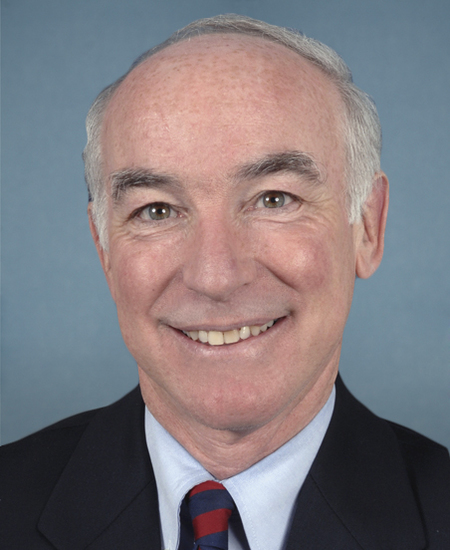
Joe Courtney
Joe Courtney House · District 2
D
Support
75% 12
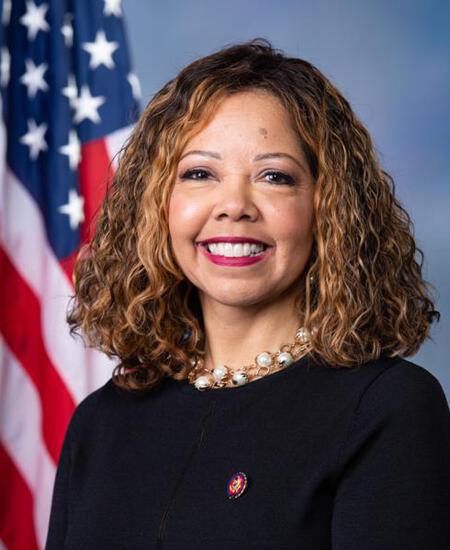
Lucy McBath
Lucy McBath House · District 6
D
Support
75% 12
Marsha Blackburn
Marsha Blackburn Senate
R
Oppose
22% 9
Ted Budd
Ted Budd Senate
R
Oppose
25% 12
Mary E. Miller
Mary E. Miller House · District 15
R
Oppose
29% 14
Wesley Hunt
Wesley Hunt House · District 38
R
Oppose
30% 10
Joni Ernst
Joni Ernst Senate
R
Oppose
31% 26
Showing 411–420 of 742 bills

All transportation bills

in committee · United States · House Dec 18, 2025

HR 6850: DRIVE to HALT Drunk Driving Act

This bill requires large auto manufacturers (those producing over 250,000 vehicles annually) to make at least 10,000 passenger vehicles per year meeting two specific safety standards: one for a U.S. impairment detection system (DADSS) and another based on a European car safety assessment (ENCAP 10.3). It applies directly to major vehicle manufacturers selling in the U.S., mandating these standards within 180 days of enactment. The bill expires when a related rule from the Infrastructure Investment and Jobs Act takes effect. It does not specify enforcement penalties but references existing civil penalties for noncompliance.
Sub-Topics Traffic Safety
in committee · United States · House Jan 15, 2026

HR 6637: To advance bipartisan priorities.

This bill establishes a carbon tax on fossil fuel emissions starting at $35 per metric ton in 2027, with annual increases tied to inflation. It creates the Rebuilding Infrastructure and Solutions for the Environment (RISE) Trust Fund to distribute tax revenues toward infrastructure projects, climate adaptation, energy sector worker retraining, and carbon capture research. The bill also establishes a National Climate Commission to set emissions reduction goals and assess federal climate policies, while implementing border adjustments to prevent carbon leakage for imported goods. Additional sections address cancer research funding, PFAS contamination at defense sites, voting rights for unaffiliated voters, and restrictions on financial transactions for House members.
in committee · United States · Senate Jan 29, 2026

S 3728: Long-Distance Corridor Relief Enhancement Act

This bill modifies a federal requirement for selecting rail corridors by exempting long-distance passenger rail routes from needing committed or anticipated non-Federal funding. It directly affects intercity passenger rail corridors on long-distance routes accepted into the program after October 1, 2023. The key provision removes the Secretary's obligation to consider non-Federal funding when selecting these specific corridors under the program described in the law. This change simplifies the selection process for qualifying long-distance rail corridors by eliminating a prior funding requirement.
Sub-Topics Airports Rail
in committee · United States · House Jul 24, 2025

HRES 608: Recognizing the importance of the Interstate Highway System and supporting the development of an interstate through southern Ohio.

HRES 608 is a symbolic House resolution recognizing the importance of the Interstate Highway System and supporting the *planning and development* of a future interstate highway through southern Ohio. It does not fund construction or create new policy, but expresses the House's position that such an interstate could improve economic opportunities and connectivity in southern Ohio, particularly for communities near the Portsmouth Gaseous Diffusion Plant site and other regional business areas. The resolution directly affects southern Ohio residents and businesses by urging federal consideration of the project, though it has no binding effect on actual construction.
Sub-Topics Roads & Highways
in committee · United States · Senate Dec 18, 2025

S 3572: Roadway Safety Modernization Act of 2025

The Roadway Safety Modernization Act of 2025 requires states to integrate proven safety tools like predictive analytics and telematics into highway safety planning and freight programs. It directs state highway agencies to use these technologies to identify high-risk road segments, evaluate crash causes, and improve safety project effectiveness. The bill also mandates the Transportation Department to issue guidance on data privacy, tool validation, and transparency for these safety technologies. This directly affects state transportation departments and freight operators who must adopt these data-driven approaches in their safety planning under federal highway programs.
in committee · United States · House Nov 19, 2025

HR 6087: To amend the Delta Development Act to add the Kentucky counties of Hancock, Ohio, and Daviess to the Delta Regional Authority area, and for other purposes.

HR 6087 updates the Delta Development Act to expand the Delta Regional Authority (DRA) area by adding Kentucky counties Hancock, Ohio, and Daviess to the existing list. This change directly affects those three counties, enabling them to access DRA programs and federal funding for economic development, infrastructure, and community projects. The bill modifies Section 4(2)(C) of the Act by replacing "and Union" with "Union, Daviess, Hancock, and Ohio" in the geographic description. It is a procedural adjustment to the law's boundaries with no new funding or requirements.
in committee · United States · House Nov 18, 2025

HR 6064: Protecting Homes from Trains Act of 2025

This bill creates a federal grant program to help communities near rail lines address train-related impacts on homes. It authorizes $100 million annually (2026-2030) for grants to states, local governments, rail carriers, or other eligible entities to design or build physical barriers between rail lines and residential areas. These barriers aim to reduce damage from derailments, noise, and vibrations affecting homeowners. The program directly supports residents living adjacent to rail corridors who face these specific disruptions.
Sub-Topics Rail
in committee · United States · Senate Apr 1, 2025

S 1238: Securing Smart Investments in our Ports Act

This bill amends federal port infrastructure funding programs to require that projects receive funding based on equitable geographic distribution across U.S. regions. It adds new requirements to both the Port and Intermodal Improvement Program and assistance for small inland river/coastal ports, mandating that funding decisions consider fair representation across all U.S. regions. The change directly affects port projects seeking federal funds under these programs, ensuring regional balance in project selection. This is a procedural policy adjustment to existing grant rules, not a new funding source. The bill focuses on how funds are allocated, not on specific projects or outcomes.
in committee · United States · House Mar 4, 2025

HR 1828: School Bus Safety Act of 2025

HR 1828, the School Bus Safety Act of 2025, requires new school buses (over 10,000 lbs gross weight) to have 3-point seat belts at every seat, fire suppression systems, enhanced firewalls, and stricter interior flammability standards. It also mandates automatic emergency braking, event data recorders, electronic stability control, and 8 hours of specialized driver training for school bus operators. School districts can apply for federal grants to purchase new safety-equipped buses or retrofit existing ones. These requirements would take effect for buses manufactured or imported one year after the Transportation Secretary issues final rules.
passed · United States · House Apr 15, 2026

HR 7613: ALERT Act

The ALERT Act (HR 7613) requires the Federal Aviation Administration to improve aviation safety through several key measures. It mandates the evaluation and potential implementation of enhanced collision avoidance systems (ACAS-Xa) for commercial aircraft and ACAS-Xr for rotorcraft, with specific deadlines for rulemaking and installation. The bill establishes committees to develop recommendations for safety technology requirements, requires safety risk assessments for air traffic controllers, and addresses operational procedures at high-traffic airports like Ronald Reagan Washington National. These provisions affect air carriers, air traffic controllers, rotorcraft operators, and Department of Defense aircraft operations. The act aims to enhance situational awareness and reduce midair collision risks through technology upgrades and improved safety protocols.
Sub-Topics Airports
Showing 411 to 420 of 742 bills
Previous 1 … 41 42 43 … 75 Next