Issue · Technology

Technology

Every technology bill, vote, and legislator stance in United States, automatically classified by Maddy, our AI policy reader.

Total bills
1,447
119th Congress
Top supporter
Ami Bera
86% support rate
Top opponent
Scott Perry
14% support rate
Ranked legislators
10
5 support · 5 oppose
Key legislators

Who's moving technology in United States

Legislators moving technology in United States
Legislator Party Stance Support rate Decisive votes
Ami Bera
Ami Bera House · District 6
D
Strong +
86% 22
Chrissy Houlahan
Chrissy Houlahan House · District 6
D
Strong +
86% 22
Kim Schrier
Kim Schrier House · District 8
D
Strong +
86% 22
Mike Thompson
Mike Thompson House · District 4
D
Strong +
86% 22
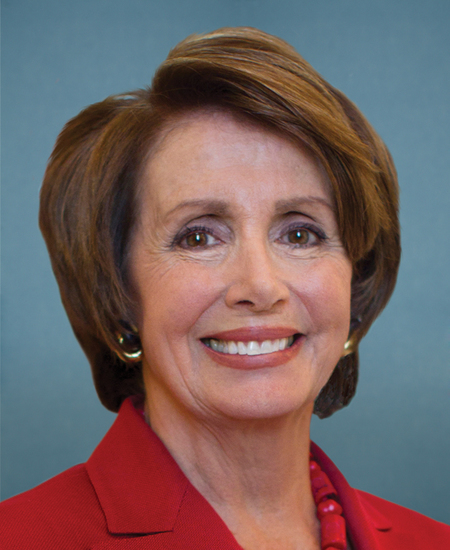
Nancy Pelosi
Nancy Pelosi House · District 11
D
Strong +
86% 22
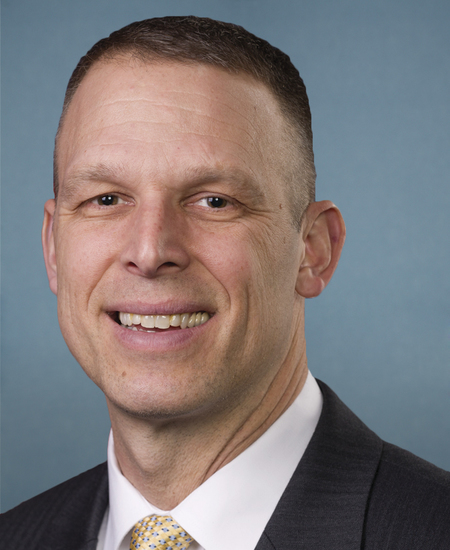
Scott Perry
Scott Perry House · District 10
R
Strong −
14% 21
AA
Alan Armstrong Senate
R
Strong −
17% 29
Rand Paul
Rand Paul Senate
R
Strong −
17% 46
Josh Hawley
Josh Hawley Senate
R
Strong −
18% 45
Andy Harris
Andy Harris House · District 1
R
Strong −
18% 22
Showing 411–420 of 1,447 bills

All technology bills

in committee · United States · House Mar 26, 2026

HR 8094: AI Foundation Model Transparency Act of 2026

This bill requires large AI companies and organizations to disclose detailed information about their foundation models, including training data sources, model performance, and potential risks, before and during the model's use. The Federal Trade Commission will create specific rules outlining what information must be submitted to the agency and made publicly available, with exemptions for fully open-source models and special provisions for small businesses. Covered entities are defined as AI providers with over 10 million monthly users, significant computing power usage, or models that could pose security or safety risks, while the FTC will enforce compliance as unfair business practices.
Sub-Topics Artificial Intelligence Data Privacy Tags Government Transparency
in committee · United States · House Apr 9, 2026

HR 8243: Virtual Readiness Act of 2026

The Virtual Readiness Act of 2026 requires the Secretary of Defense to submit a briefing to congressional defense committees within 180 days of the law's enactment. This briefing will assess whether virtual constructive training can reduce the amount of in-air training needed by the U.S. Armed Forces. The bill focuses on evaluating the feasibility of using simulation technology to optimize military training methods. It does not mandate specific training changes but instead directs a review of potential alternatives to traditional in-air exercises.
in committee · United States · House Mar 19, 2026

HR 7997: Research and Oversight of AI in Courts Act of 2026

This bill establishes a task force to study how artificial intelligence speech-to-text and automatic speech recognition technologies are used in federal and state courts across the United States. The 15-member group, composed of government officials, legal experts, and technology specialists, will examine issues like accuracy, privacy, civil liberties, and costs associated with these AI tools in judicial proceedings. Within 18 months of enactment, the task force must submit a final report to Congress detailing its findings on whether AI affects court record quality, impacts individuals with speech impediments, creates cybersecurity risks, and recommends any necessary policy changes. The task force will also provide quarterly status updates to congressional committees and will dissolve once its final report is submitted.
in committee · United States · House Apr 9, 2026

HR 8229: Lower Grocery Prices Act

This bill prohibits businesses from using automated systems to set different prices for food and groceries based on surveillance data about individual consumers, such as their browsing history or personal information. It allows exceptions for discounts based on reasonable costs, membership programs, or broad group categories like students and seniors, provided the rules are clearly disclosed and applied uniformly. The Federal Trade Commission would enforce these rules, while states and individuals can also sue for violations, seeking damages of at least $3,000 per violation.
in committee · United States · House Feb 9, 2026

HR 7444: Protecting Rural Telehealth Access Act

This bill expands Medicare telehealth access for rural and underserved communities by removing geographic restrictions on where telehealth services can originate and allowing more services to be provided from patients' homes. It enables critical access hospitals, federally qualified health centers, and rural health clinics to receive full reimbursement for telehealth services and permits audio-only technology for certain appointments starting in 2027. The legislation also establishes permanent payment rates for telehealth services provided by these facilities and requires a review of audio-only technology use within five years to assess its impact on access and clinical appropriateness.
Sub-Topics Medicare Mental Health Telehealth Tags Rural Communities
in committee · United States · Senate Apr 13, 2026

SJRES 179: A joint resolution providing for congressional disapproval under chapter 8 of title 5, United States Code, of the rule submitted by the Bureau of Consumer Financial Protection relating to the withdrawal of the rule relating to "Disclosure of Consumer Complaint Data".

This joint resolution seeks to reject a rule from the Bureau of Consumer Financial Protection that would remove a previous requirement for disclosing consumer complaint data. The bill directly affects the Bureau of Consumer Financial Protection by nullifying its proposed withdrawal of the disclosure rule. If passed, the earlier rule requiring the Bureau to make consumer complaint information public would remain in effect. The legislation uses a congressional disapproval process to override the agency's regulatory decision.
in committee · United States · House Apr 9, 2026

HR 8237: Quantum Instrumentation for Science and Engineering Act

This bill amends the National Quantum Initiative Act to create a new funding program for upgrading quantum research facilities and improving access to specialized equipment. The National Science Foundation would award grants to universities, nonprofit organizations, and industry partners to enhance research resources needed for quantum information science and technology development. These funds specifically support upgrading research capabilities, improving equipment access through better coordination and training programs, and enabling professional staff to maintain research resources. The program aims to address implementation challenges and meet the needs of the scientific community and quantum supply chain.
Sub-Topics Emerging Technology
in committee · United States · House Mar 26, 2026

HR 8125: CFTC Proprietary Information Act of 2026

This bill, titled the CFTC Proprietary Information Act of 2026, requires the Commodity Futures Trading Commission to create rules protecting sensitive business information it receives from companies. The legislation mandates that the Commission establish policies for requesting, safeguarding, limiting access to, and preventing unauthorized use or disclosure of this proprietary data. It also requires the Commission to set guidelines for sharing such information with other government agencies, ensuring those agencies maintain equivalent security measures. The rules must be developed through a notice and comment process before taking effect.
in committee · United States · House Apr 2, 2026

HR 8177: Critical Undersea Infrastructure Resilience Initiative Act

This bill establishes the Taiwan Critical Undersea Infrastructure Resilience Initiative to protect submarine cables and energy pipelines near Taiwan from sabotage, particularly by the People's Republic of China. It directs the State Department to create a program that includes advanced monitoring systems, rapid response protocols, enhanced maritime surveillance, and international cooperation to detect and mitigate threats to these critical communication and energy assets. The legislation authorizes $20 million annually through 2032 for these activities and mandates the hardening of undersea infrastructure to reduce vulnerability to damage. Additionally, the bill authorizes the President to impose sanctions on foreign entities that sabotage or facilitate attacks on undersea infrastructure critical to Taiwan or U.S. allies, and requires the creation of a Cross-Strait Contingency Planning Group to coordinate U.S. government responses to potential crises involving Taiwan.
in committee · United States · House Mar 27, 2026

HR 8144: Quality Broadband for Connected Communities Act

The Quality Broadband for Connected Communities Act updates minimum internet speed requirements for projects funded by the Community Connect Grant Program under the Rural Electrification Act. Specifically, it raises the minimum broadband capacity from 10-Mbps to 25-Mbps and from 1-Mbps to 3-Mbps for grant recipients. These changes apply to rural electrification projects and will take effect six months after the law is enacted. The bill directly affects organizations and communities receiving funding through this federal grant program to improve broadband infrastructure.
Sub-Topics Broadband Access Telecommunications Tags Rural Communities
Showing 411 to 420 of 1,447 bills
Previous 1 … 41 42 43 … 145 Next