Issue · Technology

Technology

Every technology bill, vote, and legislator stance in United States, automatically classified by Maddy, our AI policy reader.

Total bills
1,431
119th Congress
Top supporter
Suzan K. DelBene
86% support rate
Top opponent
Scott Perry
14% support rate
Ranked legislators
10
5 support · 5 oppose
Key legislators

Who's moving technology in United States

Legislators moving technology in United States
Legislator Party Stance Support rate Votes
Suzan K. DelBene
Suzan K. DelBene House · District 1
D
Strong +
86% 259
Mike Thompson
Mike Thompson House · District 4
D
Strong +
86% 261
Chrissy Houlahan
Chrissy Houlahan House · District 6
D
Strong +
86% 259
Nancy Pelosi
Nancy Pelosi House · District 11
D
Strong +
86% 246
Kim Schrier
Kim Schrier House · District 8
D
Strong +
86% 261
Scott Perry
Scott Perry House · District 10
R
Strong −
14% 252
AA
Alan Armstrong Senate
R
Strong −
14% 46
Rand Paul
Rand Paul Senate
R
Strong −
16% 223
Andy Harris
Andy Harris House · District 1
R
Strong −
18% 257
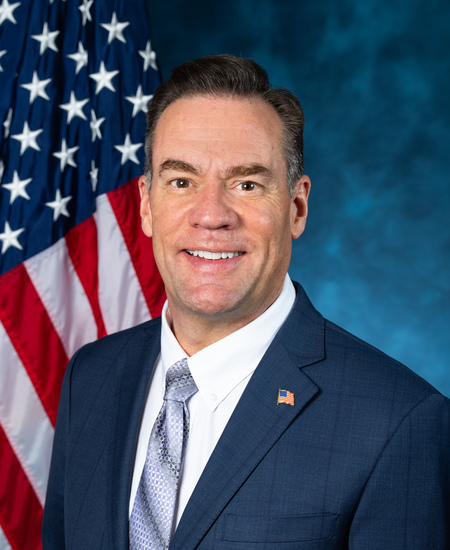
Russ Fulcher
Russ Fulcher House · District 1
R
Strong −
18% 262
Showing 201–210 of 1,431 bills

All technology bills

in committee · United States · House Jul 7, 2026

HR 9232: Critical Infrastructure Airspace Defense Act

The Critical Infrastructure Airspace Defense Act grants owners and operators of designated high-risk facilities, such as nuclear power plants and key electrical substations, the legal authority to detect, track, and disable unauthorized drones threatening their security. To exercise this power, personnel must complete a federally mandated training and certification program that establishes standards for legal and technical proficiency before they can use approved counter-drone technologies. The legislation also creates a $250 million grant program to help these facilities purchase and install the necessary equipment while providing liability protection for authorized actions taken to mitigate threats. Additionally, the bill requires the Department of Homeland Security to issue implementing regulations within 180 days and mandates regular reports on the program's activities to Congress.
Sub-Topics Emerging Technology
in committee · United States · House Jul 21, 2026

HR 9326: USA Act

The USA Act directs the National Institute of Standards and Technology to advance international standards for artificial intelligence and other emerging technologies by promoting private sector-led processes and strengthening public-private partnerships. To improve U.S. involvement, the bill requires the institute to provide Congress with a briefing on current standards activities and to create a web portal that helps industry and government agencies find and join these efforts. Additionally, the legislation establishes a five-year pilot program that awards grants to eligible organizations to host standards meetings within the United States, aiming to increase domestic participation in global technical standardization.
in committee · United States · House Jun 15, 2026

HR 9323: Department of Advanced Technology and Artificial Intelligence Act

This bill creates a new federal Department of Advanced Technology and Artificial Intelligence led by a Secretary appointed by the President. The department's main goal is to develop a unified national strategy for using artificial intelligence across all government agencies, including setting safety standards and managing research funding. It also aims to improve AI literacy in schools, protect workers from job displacement, and establish systems for reporting cybersecurity incidents related to AI. Additionally, the bill requires a government report within 180 days to assess current AI regulations and recommend updates to federal laws regarding privacy, safety, and misinformation.
in committee · United States · House Jun 11, 2026

HR 9258: Concrete Pump Tax Fairness Act

The Concrete Pump Tax Fairness Act introduces a new mileage-based fee for owners of mobile concrete boom pump vehicles that travel within the United States. This tax charges $0.05 per mile for vehicles weighing 60,000 pounds or less and $0.07 per mile for heavier vehicles, with payments due quarterly. The bill requires the government to create a system that uses existing vehicle technology to track mileage while protecting operator privacy and minimizing administrative burdens. Additionally, the law allows these vehicles to use existing fuel tax credits to offset the new fee and excludes them from certain existing highway use requirements. All collected fees will be deposited into the Highway Trust Fund to support road infrastructure.
in committee · United States · Senate Jun 11, 2026

S 4749: JAWBONE Act

The JAWBONE Act prohibits federal agencies and employees from coercing private platforms like social media sites, broadcasters, or artificial intelligence providers into removing or altering content. To enforce this rule, the bill creates a new legal cause of action that allows these platforms to sue for damages if they are pressured into taking content actions, with specific exceptions for lawful investigations and court-ordered warrants. The legislation also mandates the creation of a public portal where agencies must log and disclose communications sent to these platforms regarding content moderation, including metadata and requests for action. Additionally, the bill requires the National Institute of Standards and Technology to develop guidelines for logging these communications and establishes a formal complaint process for platforms to report potential violations.
in committee · United States · House Jun 11, 2026

HR 9286: Broadband Deployment and Economic Impact Study Act of 2026

This bill directs the Assistant Secretary of Commerce for Communications and Information to conduct a comprehensive study on various broadband internet technologies, including fiber-optic cables, satellite systems, and mobile wireless networks. The study will examine specific factors such as workforce needs, deployment costs, internet speed and latency, equipment lifespan, and monthly subscription prices for consumers. The findings will be compiled into a report submitted to Congress within one year of the bill's enactment to inform future policy decisions regarding broadband infrastructure.
in committee · United States · House Jun 9, 2026

HR 9227: Magnets Value Chain Support Act of 2026

The Magnets Value Chain Support Act of 2026 establishes a series of tax credits to encourage the production of magnets and related materials within the United States and to promote their use in critical industries. This legislation directly affects manufacturers of permanent magnets, magnet metals, and rare earth oxides, as well as companies that incorporate these materials into motors, generators, robotics, and defense systems. The bill creates three specific production credits that provide financial incentives based on the percentage of domestic content and the performance level of the magnets produced, while also offering a separate credit for businesses purchasing high-performance magnets made in the United States. To qualify for these benefits, producers must ensure that their materials are not sourced from prohibited foreign entities and must maintain certain domestic production capacities. The act includes strict reporting requirements to track supply chain origins and limits the credits to specific strategic applications, excluding low-power consumer goods.
Sub-Topics Procurement
in committee · United States · Senate Jun 11, 2026

S 4774: Fraudulent Artificial Intelligence Regulations (FAIR) Elections Act of 2026

The Fraudulent Artificial Intelligence Regulations (FAIR) Elections Act of 2026 prohibits individuals from knowingly distributing false AI-generated media about federal elections or election officials if the intent is to impede voting or harass officials, while allowing news organizations to report on such content as long as they clearly label it as false. The bill also restricts states from removing voters from official registration lists unless the data comes from government sources approved by the Attorney General and updated at least monthly. Additionally, it bars the federal government from comparing its own databases with state or local records to determine voter eligibility and establishes a private right of action for citizens to sue if the government violates this rule. To further ensure accuracy, the Act requires the Government Accountability Office to conduct a study on the impact of using federal databases like SAVE for voter removals and submit its findings to Congress within 180 days.
in committee · United States · Senate Jun 2, 2026

S 4656: Secure and Accountable Military AI Act of 2026

The Secure and Accountable Military AI Act of 2026 establishes strict oversight for the Department of Defense regarding the use of artificial intelligence in high-stakes military operations. It mandates that any AI application involving nuclear weapons, lethal targeting, cyber operations, or autonomous weapon systems must undergo rigorous testing, legal review, and continuous monitoring before deployment. The law also requires contractors developing these systems to report security incidents within specific timeframes and prohibits the use of AI for domestic surveillance of U.S. persons without a lawful basis. Additionally, the bill creates a special process requiring explicit congressional approval for any fully autonomous weapon systems that do not fall under limited exceptions for local defense or non-lethal force.
in committee · United States · House Jun 9, 2026

HR 9213: American Electric Rail Mapping Act of 2026

The American Electric Rail Mapping Act of 2026 directs the Federal Railroad Administration to conduct a study on the feasibility of electrifying passenger and freight rail lines across the United States. This study will identify existing and planned rail corridors, determine how current systems are powered, and assess which segments could adopt clean rail technologies. The Administrator must consult with railroad operators, state and local governments, and other relevant entities while using existing resources to minimize costs. The agency is required to submit an initial progress report to Congress within one year of enactment, followed by a final report on the study's results a year later.
Showing 201 to 210 of 1,431 bills
Previous 1 20 21 22 144 Next