Issue · Technology

Technology

Every technology bill, vote, and legislator stance in United States, automatically classified by Maddy, our AI policy reader.

Total bills
210
119th Congress
Top supporter
Suzan K. DelBene
86% support rate
Top opponent
Scott Perry
14% support rate
Ranked legislators
10
5 support · 5 oppose
Key legislators

Who's moving technology in United States

Legislators moving technology in United States
Legislator Party Stance Support rate Votes
Suzan K. DelBene
Suzan K. DelBene House · District 1
D
Strong +
86% 259
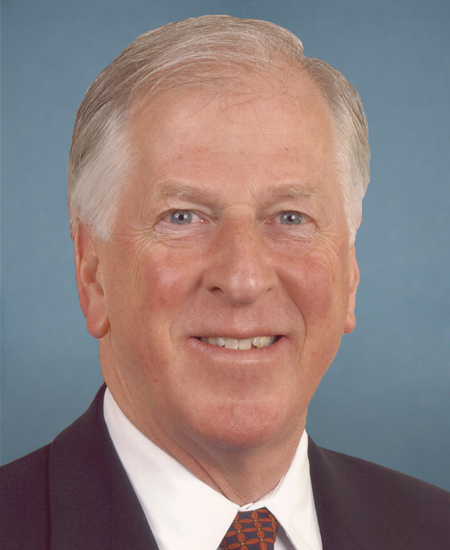
Mike Thompson
Mike Thompson House · District 4
D
Strong +
86% 261
Chrissy Houlahan
Chrissy Houlahan House · District 6
D
Strong +
86% 259
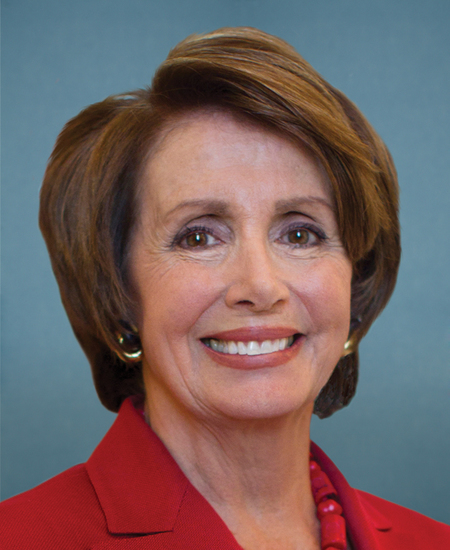
Nancy Pelosi
Nancy Pelosi House · District 11
D
Strong +
86% 246
Kim Schrier
Kim Schrier House · District 8
D
Strong +
86% 261
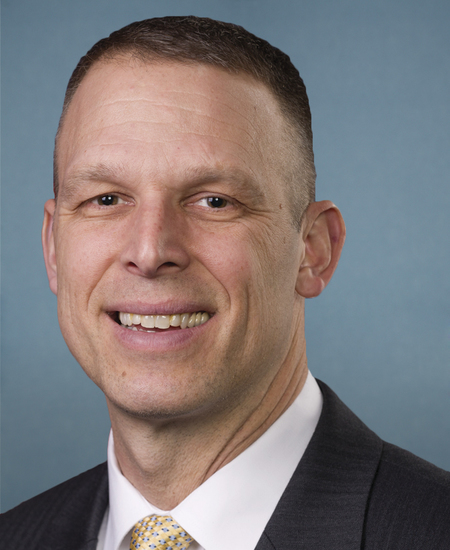
Scott Perry
Scott Perry House · District 10
R
Strong −
14% 252
AA
Alan Armstrong Senate
R
Strong −
14% 46
Rand Paul
Rand Paul Senate
R
Strong −
16% 223
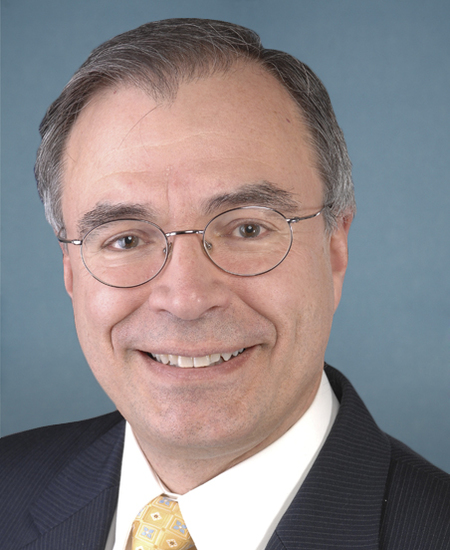
Andy Harris
Andy Harris House · District 1
R
Strong −
18% 257
Russ Fulcher
Russ Fulcher House · District 1
R
Strong −
18% 262
Showing 181–190 of 210 bills

All technology bills

in committee · United States · Senate Mar 31, 2025

S 1213: Protect Elections from Deceptive AI Act

S 1213, the Protect Elections from Deceptive AI Act, prohibits distributing AI-generated audio or video that appears authentic but misrepresents a candidate’s speech or actions during federal elections. It directly affects political campaigns, committees, and anyone distributing such content to influence elections or solicit funds. The bill defines "deceptive AI media" as content that creates a fundamentally different impression than reality, with key exceptions for news outlets (if clearly disclosing AI use) and satirical content. Candidates whose likeness is misused can seek court orders to stop distribution or sue for damages. The law aims to prevent AI-driven election misinformation while preserving journalistic and creative expression.
in committee · United States · Senate Dec 17, 2025

S 3546: Sunset Section 230 Act

This bill repeals Section 230 of the Communications Act of 1934, which currently shields online platforms from most liability for user-generated content. It would remove this legal protection, potentially making platforms more liable for content posted by users. The bill also updates references to Section 230 in other federal laws (like the Trademark Act and criminal codes) to instead reference Section 223 of the Communications Act. The changes would take effect two years after the bill is enacted.
Sub-Topics Social Media
in committee · United States · Senate Dec 17, 2025

S 3519: Remote Access Security Act

S 3519, the Remote Access Security Act, amends the Export Control Reform Act of 2018 to regulate remote access to U.S.-controlled items (like dual-use technology) via cloud services from outside the U.S. by "foreign persons of concern" (including governments of specified countries and their entities). It defines prohibited remote access as activities posing national security risks, such as enabling weapons development, offensive cyber operations, or human rights violations through spyware. The bill requires new licensing for remote access, imposes penalties for violations, and mandates annual reports to Congress on implementation, with controls set to expire after 10 years. It directly affects U.S. cloud service providers and foreign entities seeking remote access to controlled items.
in committee · United States · House Dec 18, 2025

HRES 967: Expressing the sense of the House of Representatives that European laws and regulations unfairly and unreasonably burden American speech and innovation.

HRES 967 is a non-binding resolution expressing the House's disapproval of European digital regulations like the EU's Digital Services Act and Digital Markets Act. It claims these laws unfairly burden American speech, innovation, and tech companies (citing examples like Meta and Alphabet), while harming U.S. workers and consumers. The resolution calls on the Trump administration to use diplomatic and economic tools to protect U.S. free speech rights and prevent foreign laws from undermining First Amendment principles. It also urges the Department of Justice and FTC to reject European antitrust principles and avoid cooperating with foreign enforcement of such regulations. This resolution directly affects American tech companies and free expression interests by framing European policies as a threat to U.S. digital freedoms.
Sub-Topics Digital Government
in committee · United States · House Aug 5, 2025

HR 4873: To codify Executive Order 14319 (relating to preventing woke AI in the Federal Government).

HR 4873 would make Executive Order 14319 - which prohibits the use of "woke AI" in federal government operations - legally binding as a law, rather than relying on presidential directive. This requires all federal agencies using artificial intelligence systems to comply with the order's restrictions as a mandatory legal requirement. The bill directly affects federal departments and agencies that develop or deploy AI tools, ensuring they adhere to the policy without needing repeated executive action. By codifying the order, the bill provides a permanent legal basis for the policy, removing reliance on future executive decisions.
passed · United States · House Sep 16, 2025

HRES 211: Providing for consideration of the joint resolution (H.J. Res. 25) providing for congressional disapproval under chapter 8 of title 5, United States Code, of the rule submitted by the Internal Revenue Service relating to ‘‘Gross Proceeds Reporting by Brokers That Regularly Provide Services Effectuating Digital Asset Sales’’; providing for consideration of the bill (H.R. 1156) to amend the CARES Act to extend the statute of limitations for fraud under certain unemployment programs, and for other purposes; providing for consideration of the bill (H.R. 1968) making further continuing appropriations and other extensions for the fiscal year ending September 30, 2025, and for other purposes; and for other purposes.

HRES 211 is a procedural resolution that allows the U.S. House of Representatives to debate and vote on three specific legislative measures. It enables consideration of H.J. Res. 25 (which would disapprove an IRS rule requiring brokers to report digital asset sales), H.R. 1156 (which would extend fraud statute of limitations for unemployment programs), and H.R. 1968 (which would fund government operations through September 2025). The resolution waives standard procedural objections and sets time limits for debate on each measure. This resolution itself does not change policy but facilitates the House’s review of these three bills.
in committee · United States · House Jun 3, 2025

HR 3693: To prohibit the Federal Government from establishing or maintaining a database that contains data collected through, or facilitates, the biometric identity verification of a citizen of the United States, and for other purposes.

HR 3693 prohibits all federal agencies from creating or maintaining databases that store biometric data used for verifying U.S. citizens' identities. The bill specifically bans databases containing information like fingerprints, facial recognition, or iris patterns collected through biometric identity verification systems. It applies directly to every federal agency, preventing them from using such technology for citizen identification purposes. This is a clear policy change restricting federal data collection practices related to biometric identification.
failed · United States · House Apr 1, 2025

HRES 282: Providing for consideration of the joint resolution (S.J. Res. 18) disapproving the rule submitted by the Bureau of Consumer Financial Protection relating to "Overdraft Lending: Very Large Financial Institutions''; providing for consideration of the joint resolution (S.J. Res. 28) disapproving the rule submitted by the Bureau of Consumer Financial Protection relating to ''Defining Larger Participants of a Market for General-Use Digital Consumer Payment Applications''; providing for consideration of the bill (H.R. 1526) to amend title 28, United States Code, to limit the authority of district courts to provide injunctive relief, and for other purposes; providing for consideration of the bill (H.R. 22) to amend the National Voter Registration Act of 1993 to require proof of United States citizenship to register an individual to vote in elections for Federal office, and for other purposes; and for other purposes.

HRES 282 is a procedural resolution that sets rules for debating and voting on four specific legislative items in the House. It enables consideration of two resolutions disapproving Consumer Financial Protection Bureau rules (one on overdraft lending by large banks, another on digital payment apps), a bill limiting court injunctions (H.R. 1526), and a bill requiring U.S. citizenship proof for federal voting registration (H.R. 22). The resolution waives objections to these items and allocates one hour of debate for each, equally divided between committee chairs and ranking members. This resolution itself does not change policy but streamlines the process for the House to vote on the underlying bills and disapproval resolutions.
in committee · United States · House Feb 12, 2025

HR 1233: To prohibit the obligation or expenditure of Federal funds for disinformation research grants, and for other purposes.

HR 1233 prohibits federal agencies from using taxpayer money to fund specific research programs. It bans spending on disinformation research grants, Secure and Trustworthy Cyberspace grants, and the National Science Foundation's Track F program focused on "Trust and Authenticity in Communications Systems." This directly affects federal departments and agencies that would otherwise allocate funds for these research areas, as well as researchers or institutions seeking such grants. The bill makes a concrete change by blocking federal funding for these particular research initiatives, without altering broader disinformation policies or creating new regulations.
in committee · United States · Senate Feb 4, 2026

S 3779: ICE Out of Our Faces Act

The ICE Out of Our Faces Act prohibits U.S. Immigration and Customs Enforcement (ICE) and U.S. Customs and Border Protection (CBP) officers from using facial recognition, voice recognition, or other biometric surveillance technology for immigration enforcement. It directly affects ICE, CBP, and 287(g) deputized officers by banning their acquisition, possession, or use of such technology in the U.S. The bill requires immediate deletion of all existing biometric data collected by these officers within 30 days and makes evidence obtained in violation inadmissible in court. Violations could lead to lawsuits by affected individuals or state attorneys general, with possible damages, penalties, or injunctive relief.
Showing 181 to 190 of 210 bills
Previous 1 18 19 20 21 Next