Issue · Technology

Technology

Every technology bill, vote, and legislator stance in United States, automatically classified by Maddy, our AI policy reader.

Total bills
1,431
119th Congress
Top supporter
Suzan K. DelBene
86% support rate
Top opponent
Scott Perry
14% support rate
Ranked legislators
10
5 support · 5 oppose
Key legislators

Who's moving technology in United States

Legislators moving technology in United States
Legislator Party Stance Support rate Votes
Suzan K. DelBene
Suzan K. DelBene House · District 1
D
Strong +
86% 259
Mike Thompson
Mike Thompson House · District 4
D
Strong +
86% 261
Chrissy Houlahan
Chrissy Houlahan House · District 6
D
Strong +
86% 259
Nancy Pelosi
Nancy Pelosi House · District 11
D
Strong +
86% 246
Kim Schrier
Kim Schrier House · District 8
D
Strong +
86% 261
Scott Perry
Scott Perry House · District 10
R
Strong −
14% 252
AA
Alan Armstrong Senate
R
Strong −
14% 46
Rand Paul
Rand Paul Senate
R
Strong −
16% 223
Andy Harris
Andy Harris House · District 1
R
Strong −
18% 257
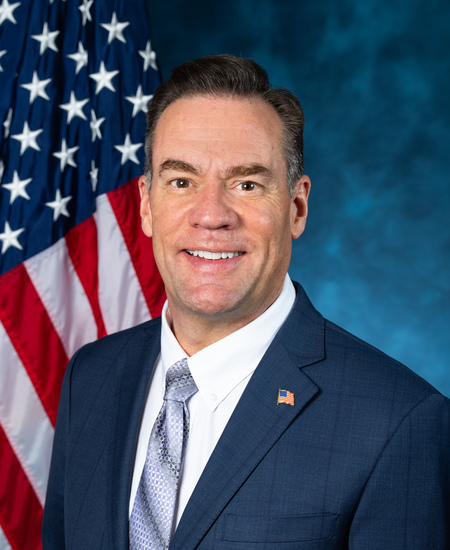
Russ Fulcher
Russ Fulcher House · District 1
R
Strong −
18% 262
Showing 1,301–1,310 of 1,431 bills

All technology bills

in committee · United States · House Jul 25, 2025

HR 4777: INNOVATE Act

The INNOVATE Act reforms the Small Business Innovation Research (SBIR) and Small Business Technology Transfer (STTR) programs to better support small businesses developing innovative technologies. Key provisions include creating a new "Phase 1A" program to increase accessibility for new small business entrants (with proposals limited to 5 pages and awards capped at $40,000), requiring fixed-price contracts for SBIR/STTR awards, and strengthening security measures to protect intellectual property from foreign influence. The bill prohibits SBIR/STTR awards to businesses with certain agreements (like with NewsGuard or Disinformation Index), expands outreach to rural communities, and extends program authorization through 2028. It also streamlines administrative processes, improves data collection, and requires GAO reports on due diligence programs.
Sub-Topics Data Privacy Tags Small Business
in committee · United States · Senate May 8, 2025

S 1702: Access to Prescription Digital Therapeutics Act of 2025

This bill requires Medicare to cover "prescription digital therapeutics" (software-based treatments for medical conditions, like apps for diabetes management or mental health) starting January 1, 2026. It mandates Medicare to establish payment rules for manufacturers - considering actual costs and usage - and create specific billing codes for these tools. Manufacturers must annually report pricing, distribution volume, and user data to Medicare, with penalties for noncompliance. The bill directly affects Medicare beneficiaries, digital therapeutic developers, and healthcare providers who prescribe these digital health tools.
in committee · United States · House Dec 12, 2025

HR 6687: DRIVER Act

The DRIVER Act requires car manufacturers and fleet owners to give vehicle owners free, real-time access to their vehicle's data (like location, driving habits, and sensor information) through standard ports or wireless connections. Owners can control how this data is used or shared with third parties (except for foreign adversaries), delete stored data, and cannot be charged for access or decryption. Manufacturers and fleet owners must provide clear opt-out options before selling owner data and are banned from selling data to specific countries like China, Russia, or Iran. The Federal Trade Commission enforces these rules under existing laws, and states cannot create conflicting laws.
in committee · United States · House Dec 11, 2025

HR 6289: Promoting a Safe Internet for Minors Act

This bill requires the Federal Trade Commission (FTC) to launch a nationwide online safety education program within 180 days of enactment, targeting minors under 17. It mandates collaboration with schools, parents, online platforms, and nonprofits to promote best practices for safe internet use, including protection from harmful content (like adult material or cybercrimes) and mental health risks. The FTC must submit annual reports to Congress for 10 years detailing these efforts. The law directly affects minors, parents/guardians, schools, and online platforms through these educational initiatives, without restricting content or imposing new regulations.
passed · United States · House Jul 15, 2025

HR 1770: Consumer Safety Technology Act

HR 1770, the Consumer Safety Technology Act, requires federal agencies to study and pilot new technologies to improve consumer safety. Title I mandates the Consumer Product Safety Commission to run a one-year AI pilot program to track product injuries, identify hazards, monitor recalls, and check imports, then report findings to Congress. Title II directs the Commerce Secretary to study how blockchain technology can prevent fraud in consumer transactions, including public input and a 6-month report to Congress. Title III requires the Federal Trade Commission to report on its enforcement actions against deceptive practices involving digital tokens and recommend improvements to protect consumers. The bill affects the Consumer Product Safety Commission, Commerce Department, and FTC, focusing on research and reporting rather than immediate regulatory changes.
in committee · United States · House Feb 24, 2025

HR 1541: Wireless Broadband Competition and Efficient Deployment Act

This bill exempts certain wireless infrastructure projects from standard environmental and historic preservation reviews. It removes requirements under the National Environmental Policy Act (NEPA) and National Historic Preservation Act (NHPA) for projects involving mounting or modifying existing wireless facilities (like cell towers or antennas) that require federal approval. The exemption applies directly to wireless providers seeking permits for these installations, streamlining the approval process with state, local, or tribal governments. This change aims to accelerate deployment of wireless broadband infrastructure by reducing regulatory hurdles.
in committee · United States · House Feb 5, 2025

HRES 111: Expressing support for blockchain technology and digital assets.

This resolution expresses the House of Representatives' support for blockchain technology and digital assets. It states the House believes the U.S. should prioritize understanding blockchain's potential, foster innovation to improve financial systems, avoid losing digital asset development to less regulated countries, and create tailored regulations that maintain investor protections while acknowledging the unique benefits of the technology. As a non-binding resolution, it does not change laws or directly affect specific groups, but reflects congressional sentiment toward the digital asset industry.
Sub-Topics Emerging Technology
in committee · United States · Senate May 7, 2025

S 1638: Protection Against Foreign Adversarial Artificial Intelligence Act of 2025

This bill blocks federal contractors from using DeepSeek or similar AI tools developed by High Flyer (or its affiliates) for government work, with limited security waivers allowed for national defense or research. It requires a detailed report within one year on national security risks from AI platforms based in or linked to "countries of concern" (as defined in existing law). The report must analyze data privacy threats, including how U.S. user data stored in these platforms could be accessed by foreign governments, used for propaganda, or exploited for economic espionage. The law aims to protect U.S. data security and prevent foreign adversaries from leveraging AI systems for strategic advantage.
in committee · United States · House Mar 27, 2025

HR 2403: TELL Act

HR 2403, the TELL Act, requires companies operating websites or mobile apps that store U.S. user data in China to clearly disclose two specific facts to users: (1) that their data is stored in China, and (2) whether the Chinese Communist Party or Chinese state-owned entities have access to it. It prohibits companies from knowingly providing false information about these points. Violations would be enforced as unfair or deceptive practices under the Federal Trade Commission Act, with the FTC handling enforcement and penalties. The law directly affects U.S. technology companies that collect user data and store it in China.
in committee · United States · House Sep 15, 2025

HR 5358: TRUSTED Broadband Networks Act

This bill exempts certain broadband network projects from federal environmental (NEPA) and historic preservation (NHPA) review requirements. It directly affects projects replacing "covered communications equipment" (like equipment deemed insecure under existing law) with secure alternatives. The key mechanism removes the need for federal environmental reviews or historic preservation assessments when replacing banned equipment. This streamlines the process for deploying secure broadband infrastructure by bypassing these review steps for qualifying projects. The policy change specifically targets faster replacement of insecure equipment without altering security standards.
Showing 1,301 to 1,310 of 1,431 bills