Issue · Labor & Employment

Labor & Employment (Child Labor)

Every labor & employment bill, vote, and legislator stance in United States, automatically classified by Maddy, our AI policy reader.

Total bills
10
119th Congress
Top supporter
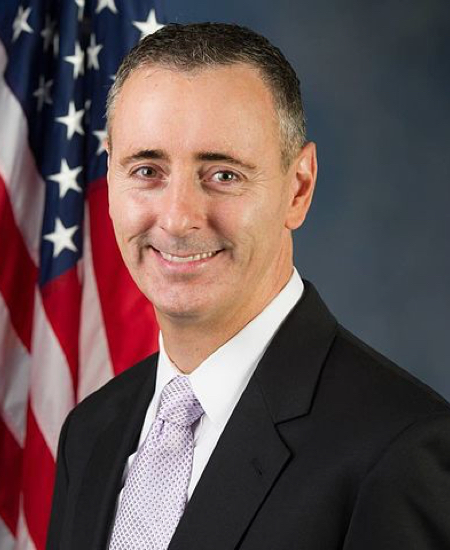
Brian K. Fitzpatrick
100% support rate
Top opponent
Adam Gray
33% support rate
Ranked legislators
10
5 support · 5 oppose
Key legislators

Who's moving child labor in United States

Legislators moving child labor in United States
Legislator Party Stance Support rate Votes
Brian K. Fitzpatrick
Brian K. Fitzpatrick House · District 1
R
Strong +
100% 3
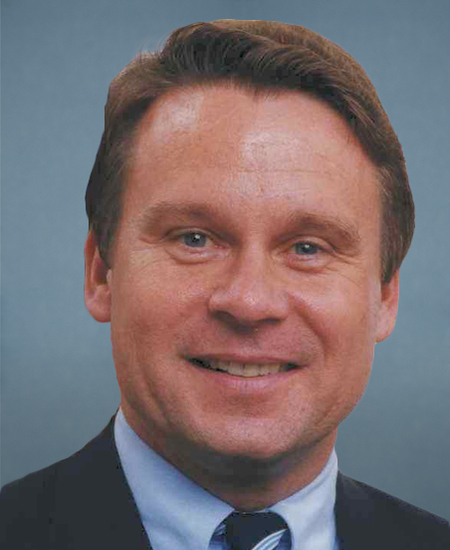
Christopher H. Smith
Christopher H. Smith House · District 4
R
Strong +
100% 3
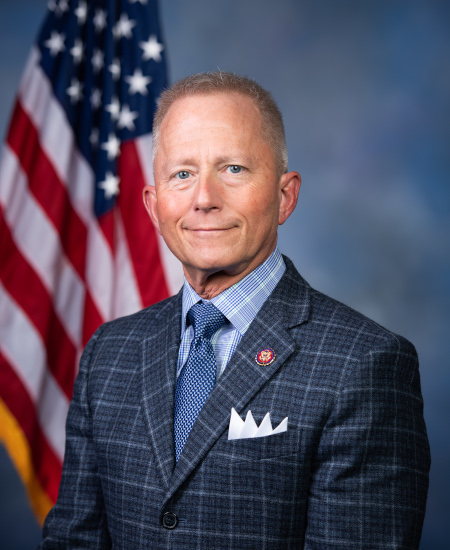
Jefferson Van Drew
Jefferson Van Drew House · District 2
R
Strong +
100% 3
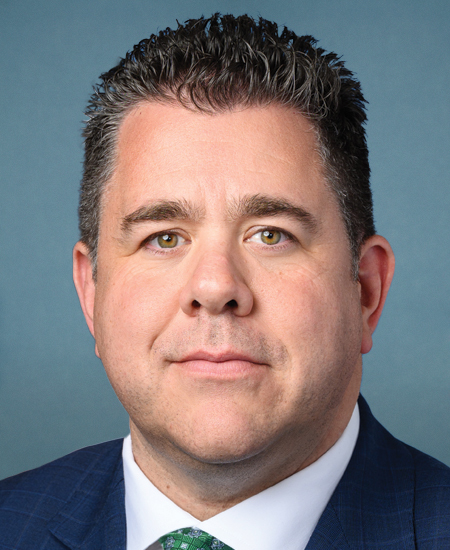
Nick LaLota
Nick LaLota House · District 1
R
Strong +
100% 3
Riley M. Moore
Riley M. Moore House · District 2
R
Strong +
100% 3
Adam Gray
Adam Gray House · District 13
D
Oppose
33% 3
Adam Smith
Adam Smith House · District 9
D
Oppose
33% 3
Adelita S. Grijalva
Adelita S. Grijalva House · District 7
D
Oppose
33% 3
Adriano Espaillat
Adriano Espaillat House · District 13
D
Oppose
33% 3
Al Green
Al Green House · District 9
D
Oppose
33% 3
Showing 10 of 10 bills

All labor & employment bills

in committee · United States · House May 21, 2026

HR 8736: Restoration of Employment Choice for Adults with Disabilities Act

This bill modifies federal rules to allow adults with disabilities aged 18 and older to work for employers at wages below the standard minimum rate, whereas the previous law restricted this option to individuals under 24. It requires these employers to make documented efforts to find suitable jobs for their employees at regular intervals and permits the use of subminimum wages only if state agencies fail to provide necessary job counseling and referrals. Additionally, the bill mandates that employers must provide copies of these job search records to the individuals they employ. These changes aim to expand employment opportunities for adults with disabilities while maintaining specific oversight to ensure they are not denied access to regular competitive employment.
Sub-Topics Child Labor Labor Standards Minimum Wage Tags People with Disabilities
in committee · United States · House Jan 16, 2025

HJRES 23: Disapproving of the rule submitted by the Department of Homeland Security relating to "Increase of the Automatic Extension Period of Employment Authorization and Documentation for Certain Employment Authorization Document Renewal Applicants".

HJRES 23 is a congressional resolution disapproving a specific rule issued by the Department of Homeland Security (DHS). The rule in question would have extended the automatic period allowing certain immigrants to continue working while renewing their employment authorization documents. This resolution, if passed, would cancel that DHS rule, meaning the extension period would not apply to immigrants renewing their work permits. It directly affects non-citizens in the U.S. who are waiting for their work permit renewals to be processed.
in committee · United States · House May 19, 2025

HR 3499: Outdoor Recreational Outfitting and Guiding Act

This bill amends the Fair Labor Standards Act to exempt certain employees in the outdoor recreation industry from overtime pay requirements. It specifically applies to employees primarily engaged in outdoor recreational outfitting (like equipment rentals) or guiding services, but only if their business meets one of two seasonal criteria: operating for fewer than seven months annually, or having average receipts for six months that don't exceed 33 1/3% of receipts during the other six months. The exemption applies to wages and overtime compensation for workweeks starting after the bill's enactment date. This change directly affects small seasonal outdoor recreation businesses and their employees who meet the specified operational thresholds.
in committee · United States · House May 21, 2025

HR 3545: TEENS Act

The TEENS Act amends child labor rules to allow teenagers working during school sessions to work up to 24 hours per week, with specific time restrictions. It directly affects teen workers in part-time jobs, setting a maximum weekly hour limit and requiring work to start no earlier than 7:00 a.m. and end no later than 9:00 p.m. in their local time zone. These provisions prevent employers from being deemed in violation of "oppressive child labor" rules under the Fair Labor Standards Act when following these limits. The bill creates a clear, time-bound framework for teen work hours during school terms.
in committee · United States · House Feb 11, 2025

HR 1193: Future in Logging Careers Act

This bill amends the Fair Labor Standards Act to create child labor exemptions for specific logging work. It allows 16- and 17-year-olds to work in mechanized timber harvesting operations (like felling, processing, and transporting timber using machinery) that the Secretary of Labor deems particularly hazardous, provided the employer is not owned or operated by a parent or guardian. The exemption applies to jobs involving equipment such as feller-bunchers, forwarders, and whole tree processors, but excludes children working for non-family-owned logging businesses. It does not create new career programs but modifies existing child labor restrictions for certain logging occupations.
failed · United States · House Jan 13, 2026

HR 2262: Flexibility for Workers Education Act

Flexibility for Workers Education Act This bill modifies the definition of hours worked under the Fair Labor Standards Act to exclude certain voluntary training that occurs outside an employee's regular working hours. Such training does not count as hours worked even if it is offered by the employer, provided that an employee's working conditions are not adversely affected by choosing not to participate and the employee does not perform any work for the employer during the training.
in committee · United States · House Oct 31, 2025

HR 5884: TASK Act

HR 5884, the TASK Act, amends the Fair Labor Standards Act to exclude certain vocational students from being classified as "employees." It specifically exempts students performing work required by their postsecondary vocational program to earn a recognized credential (as defined by federal education law) from FLSA protections like minimum wage. This means schools can assign these training tasks without paying students the federal minimum wage. The bill directly affects students in structured vocational programs at colleges or institutions covered under the Higher Education Act.
in committee · United States · House Jan 7, 2025

HR 240: Protect Local Farms Act

HR 240, the Protect Local Farms Act, amends federal labor law to override certain state regulations affecting agricultural workers. It adds a provision stating that federal overtime rules preempt any state law setting a maximum workweek of less than 60 hours for farm employees. This means states with stricter rules (like limiting workweeks to 50 or 55 hours) would no longer be able to enforce those limits for agricultural workers. The bill directly affects farm employees in states that currently have shorter workweek requirements under their own laws.
in committee · United States · House Jan 13, 2026

HR 2270: Empowering Employer Child and Elder Care Solutions Act

This bill amends the Fair Labor Standards Act to exclude the value of employer-provided child or dependent care services from overtime pay calculations. It directly affects employers who offer such care benefits, allowing them to exclude the cost of these services when determining overtime wages for eligible employees. The key change adds a new exclusion (paragraph (9)) to the overtime calculation rules, meaning the value of childcare or elder care provided by an employer is no longer counted toward an employee's regular rate for overtime purposes. The change applies to overtime pay required for workweeks beginning after the bill's enactment date.
in committee · United States · Senate Feb 11, 2025

S 509: Future Logging Careers Act

This bill amends the Fair Labor Standards Act to create a specific exemption for 16- and 17-year-olds working in family-owned logging operations. It defines "logging operation" to include mechanized equipment (like skidders and processors) but explicitly excludes manual chainsaw work and cable skidders. The exemption allows teens to work in these family businesses without applying standard child labor restrictions for hazardous occupations, provided the employer is their parent or legal guardian. This change directly affects young workers in small, family-run logging operations across the logging industry.