Issue · Immigration

Immigration

Every immigration bill, vote, and legislator stance in United States, automatically classified by Maddy, our AI policy reader.

Total bills
325
119th Congress
Top supporter
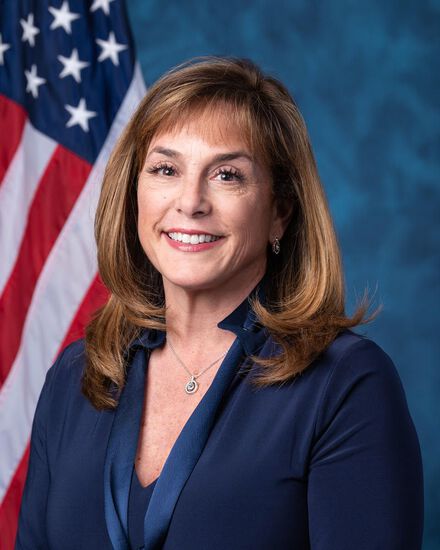
Christian D. Menefee
88% support rate
Top opponent
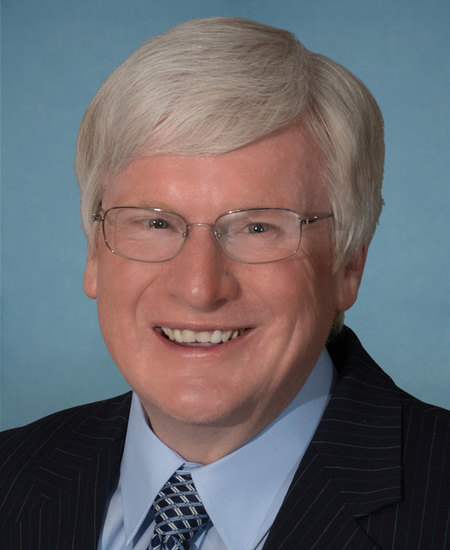
Gregory F. Murphy
14% support rate
Ranked legislators
10
5 support · 5 oppose
Key legislators

Who's moving immigration in United States

Legislators moving immigration in United States
Legislator Party Stance Support rate Votes
Christian D. Menefee
Christian D. Menefee House · District 18
D
Strong +
88% 66
Nancy Pelosi
Nancy Pelosi House · District 11
D
Strong +
86% 139
Seth Moulton
Seth Moulton House · District 6
D
Strong +
85% 127
Joyce Beatty
Joyce Beatty House · District 3
D
Strong +
84% 135
Mike Quigley
Mike Quigley House · District 5
D
Strong +
84% 146
Gregory F. Murphy
Gregory F. Murphy House · District 3
R
Strong −
14% 123
Ronny Jackson
Ronny Jackson House · District 13
R
Strong −
15% 145
Elise M. Stefanik
Elise M. Stefanik House · District 21
R
Strong −
16% 132
Lisa C. McClain
Lisa C. McClain House · District 9
R
Strong −
16% 147
Glenn Grothman
Glenn Grothman House · District 6
R
Strong −
16% 147
Showing 221–230 of 325 bills

All immigration bills

in committee · United States · House Feb 11, 2026

HR 7470: Keep ICE Out of Washington County, Maryland Act

This bill prohibits U.S. Immigration and Customs Enforcement (ICE) and other federal immigration authorities from establishing, operating, expanding, or reopening detention facilities in Washington County, Maryland. It bans the use of federal funds for any such facility in the county and requires all federal agencies to respect local community concerns about immigration detention. Residents, local officials, or the state can legally challenge violations in court. The bill directly affects Washington County residents and local decision-making by preventing federal immigration detention operations in the area.
in committee · United States · House Jul 7, 2025

HR 4298: ICE Badge Visibility Act of 2025

HR 4298, the ICE Badge Visibility Act of 2025, requires U.S. Immigration and Customs Enforcement (ICE) officers to visibly display their badge numbers on their person during any interaction involving questioning, arresting, or detaining an individual. This bill directly affects ICE officers, who must comply with the new identification requirement, and the public, who would see the badge numbers during enforcement encounters. The key provision amends the Immigration and Nationality Act to mandate that officers show their badge number visibly during specific enforcement actions. The bill does not change immigration policy or enforcement procedures, only requiring clear officer identification during certain interactions.
in committee · United States · Senate Jan 22, 2025

S 193: Neighbors Not Enemies Act

The Neighbors Not Enemies Act repeals the Alien Enemies Act, a 19th-century law that allowed the president to detain or deport non-citizens during wartime. This removes a historical legal authority that targeted non-citizens based on nationality during declared wars. The repeal affects how the government could act against non-citizens in wartime scenarios but does not change current immigration or detention policies in peacetime. The bill makes no other policy changes beyond this specific repeal.
Sub-Topics Sanctuary Policies
in committee · United States · House Feb 4, 2026

HR 7335: Humanitarian Standards for Individuals in ICE and CBP Custody Act

HR 7335 establishes comprehensive humanitarian standards for individuals held in U.S. Immigration and Customs Enforcement (ICE) and U.S. Customs and Border Protection (CBP) custody. The bill requires facilities to provide immediate health screenings within 12 hours (6 hours for high-risk individuals like children, pregnant people, or those with medical conditions), ensure access to adequate water, sanitation, food (with 2,000+ calories daily for adults), and age-appropriate shelter. It mandates specific facility standards including separate housing for males and females, accessible accommodations for people with disabilities, daily outdoor access for those detained over 48 hours, and proper medical equipment and personnel on-site. The bill also requires regular inspections, staff training on humanitarian protocols, and public reporting of sexual abuse complaints. These standards directly affect all individuals detained by ICE or CBP, with special protections for vulnerable groups like children, pregnant people, and those with medical needs.
in committee · United States · House Jul 23, 2025

HR 4696: Renewing Immigration Provisions of the Immigration Act of 1929

HR 4696 amends Section 249 of the Immigration and Nationality Act to update eligibility for a registry program that provides a pathway to legal status for long-term residents. It changes the requirement from entering the U.S. before January 1, 1972, to entering at least 7 years before the application date. This adjustment bases eligibility on a rolling 7-year window instead of a fixed historical cutoff, allowing more recent long-term residents to qualify. The bill directly affects individuals who entered the U.S. after 1972 but maintained continuous residence for at least seven years prior to applying.
in committee · United States · Senate Apr 3, 2025

S 1292: Save Our Seafood Act

S 1292, the Save Our Seafood Act, exempts foreign workers employed as fish processors (including roe processors and supervisors) from the annual H-2B visa numerical cap. This directly affects nonimmigrant aliens working in specific seafood processing roles, such as handling, preparing, or packaging fish, mollusks, or crustaceans (excluding harvesting or retail). The bill amends immigration law to clarify that the visa cap does not apply to these workers, using defined terms to exclude roles like vessel-based processing or retail. It does not change visa requirements for other industries or create new visa categories. The key mechanism is removing a barrier for seafood processing employers seeking foreign labor in these defined roles.
in committee · United States · House Feb 4, 2025

HR 944: Access to Counsel Act

HR 944, the Access to Counsel Act, requires U.S. immigration officials to provide certain immigrants a meaningful opportunity to consult with legal counsel during key immigration processes. It directly affects U.S. nationals, lawful permanent residents returning from travel, visa holders, refugees, asylees, and parolees subject to secondary or deferred inspection at ports of entry. The bill mandates that officials ensure access to counsel (including via phone) within one hour of inspection starting, allow counsel to present evidence, and accommodate in-person meetings when possible. It also requires officials to provide counsel access before accepting Form I-407 abandonment forms from lawful permanent residents, unless waived in writing. The law takes effect 180 days after enactment and preserves existing rights to counsel under other immigration laws.
in committee · United States · House Jan 13, 2026

HRES 994: Expressing the sense of the House of Representatives that the Secretary of Defense should review section 504 of title 10, United States Code, for purposes related to enlisting certain aliens in the Armed Forces.

HRES 994 is a resolution urging the Secretary of Defense to review section 504 of title 10, U.S. Code, which governs military enlistment of aliens. It specifically requests an assessment of whether current policy permits enlisting immigrants holding Deferred Action for Childhood Arrivals (DACA) employment authorization - a status created by a 2012 DHS memo. This resolution does not change military eligibility rules but asks for a formal review to determine if DACA holders could be recruited. It directly affects the Department of Defense’s enlistment procedures and potential recruitment of immigrants with DACA status.
in committee · United States · House Jan 22, 2026

HR 7190: To end detention and electronic monitoring, and redirect funding to community-based wrap-around services.

HR 7190 would end immigration detention and electronic monitoring by requiring the immediate release of all detained noncitizens on their own recognizance within six months and repealing all federal laws authorizing detention. It prohibits using federal funds for detention facilities, ankle monitors, or immigration enforcement activities after specific deadlines (six months for monitors, two years for detention contracts). Instead, it establishes a new grant program to fund community-based wrap-around services - including housing, healthcare, mental health support, legal aid, and job training - provided voluntarily by non-profit organizations without surveillance or data sharing with federal agencies. The bill directly affects noncitizens currently held in detention or under electronic monitoring.
in committee · United States · House Jan 14, 2026

HR 7053: Preemption of Real Property Discrimination Act

HR 7053, the Preemption of Real Property Discrimination Act, overrides state laws that restrict foreign citizens from purchasing real estate based on their citizenship. It directly affects foreign individuals seeking to buy property in any U.S. state, the District of Columbia, or territory, and state governments enforcing such restrictions. The bill establishes that federal law preempts these state rules, authorizes the Attorney General to enforce this preemption, and allows individuals harmed by state enforcement to sue the state in federal court for damages and injunctions. This changes policy by removing state-level barriers to foreign real estate ownership, replacing them with a uniform federal standard.
Showing 221 to 230 of 325 bills
Previous 1 22 23 24 33 Next