Issue · Housing

Housing (Housing Finance)

Every housing bill, vote, and legislator stance in United States, automatically classified by Maddy, our AI policy reader.

Total bills
156
119th Congress
Top supporter
Adam B. Schiff
100% support rate
Top opponent
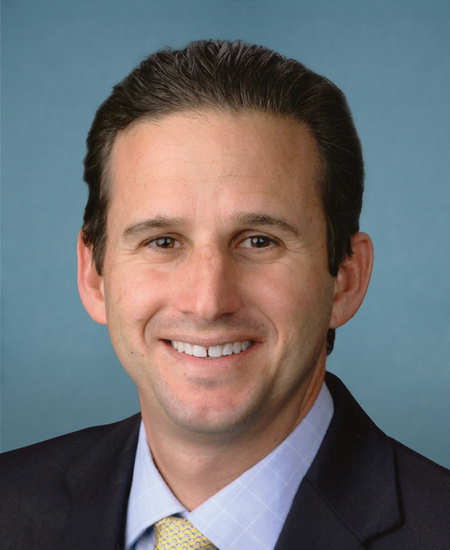
Brian Schatz
0% support rate
Ranked legislators
10
5 support · 5 oppose
Key legislators

Who's moving housing finance in United States

Legislators moving housing finance in United States
Legislator Party Stance Support rate Decisive votes
Adam B. Schiff
Adam B. Schiff Senate
D
Strong +
100% 3
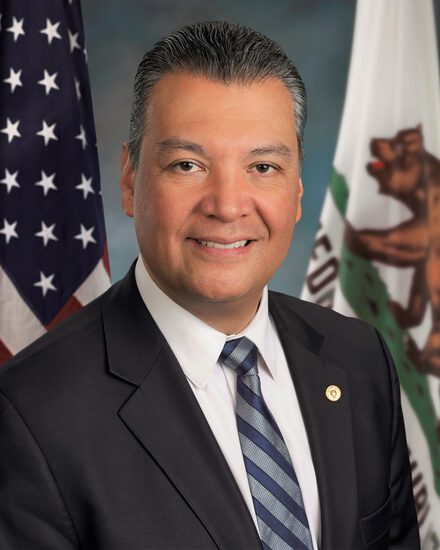
Alex Padilla
Alex Padilla Senate
D
Strong +
100% 3
Amy Klobuchar
Amy Klobuchar Senate
D
Strong +
100% 3
Andy Kim
Andy Kim Senate
D
Strong +
100% 3
Angela D. Alsobrooks
Angela D. Alsobrooks Senate
D
Strong +
100% 3
Brian Schatz
Brian Schatz Senate
D
Strong −
0% 3
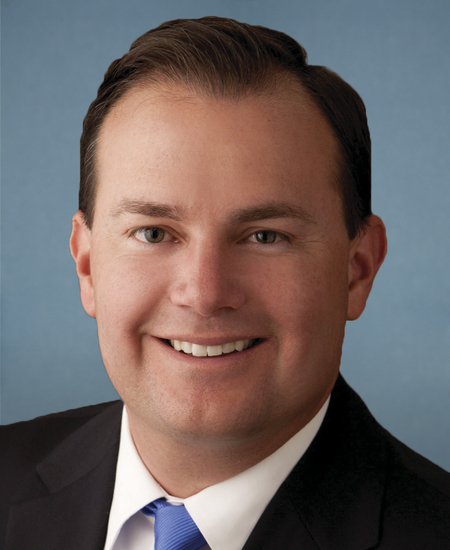
Mike Lee
Mike Lee Senate
R
Strong −
0% 3
Rand Paul
Rand Paul Senate
R
Strong −
0% 3
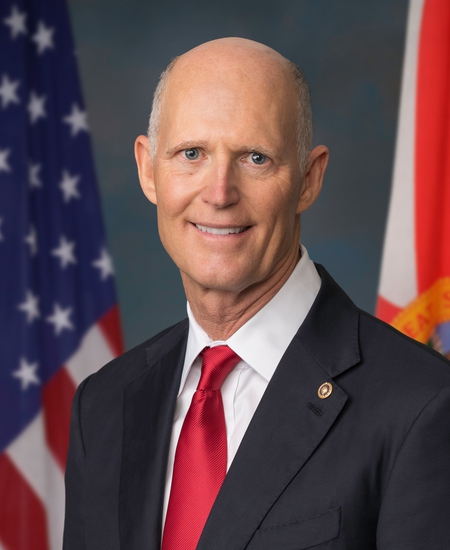
Rick Scott
Rick Scott Senate
R
Strong −
0% 3
Ron Johnson
Ron Johnson Senate
R
Strong −
0% 3
Showing 41–50 of 156 bills

All housing bills

in committee · United States · House Dec 9, 2025

HR 6511: Affordable Homeownership Access Act

The Affordable Homeownership Access Act exempts small property owners who provide direct financing (owner financing) from certain mortgage licensing requirements if they make no more than 24 loans per year for properties they own. It also amends federal definitions to exclude these owner financers from "mortgage originator" rules, requiring loans to be fully amortizing, have reasonable interest rate caps, and include buyer ability-to-pay assessments. The bill mandates a study by HUD and Treasury on owner financing usage - particularly for homes under $150,000 or 60% of local median value - to evaluate its potential to boost homeownership and wealth creation in underserved communities.
in committee · United States · House Aug 15, 2025

HR 4989: Streamlining Rural Housing Act of 2025

HR 4989, the Streamlining Rural Housing Act of 2025, requires the Departments of Housing and Urban Development (HUD) and Agriculture (USDA) to simplify coordination for rural housing projects funded by both agencies. Within 180 days, they must create a memorandum of understanding to evaluate environmental review processes, designate a lead agency for efficiency, and maintain existing environmental standards. The bill establishes an advisory group with housing stakeholders - including nonprofits, developers, and residents - to guide implementation. It mandates a report within one year with recommendations to improve project efficiency without reducing resident safety, shifting long-term costs, or undermining environmental standards. This bill directly affects rural housing projects funded by HUD or USDA by targeting bureaucratic delays in approvals.
Sub-Topics Affordable Housing Housing Finance Property Development Tags Rural Communities
in committee · United States · Senate Sep 4, 2025

S 2719: LIFT Homebuyers Act of 2025

The LIFT Homebuyers Act of 2025 creates a federal program to help low-income first-time homebuyers purchase single-family homes. It establishes the "LIFT HOME Fund" within HUD and USDA to support eligible mortgages with monthly payments capped at 100-110% of standard rates for comparable loans. The bill directly affects homebuyers with household income under 120% (or 140% in high-cost areas) of local median income who are both first-time buyers and first-generation homebuyers (with no prior home ownership by them or their parents). Key mechanisms include waiving some insurance premium caps, requiring borrower self-attestation for eligibility, and mandating outreach programs to expand participation.
in committee · United States · House Jan 7, 2026

HR 6962: Families First Housing Act of 2026

This bill requires federal housing agencies (like HUD and Fannie Mae) to prioritize qualified first-time homebuyers when selling single-family homes (1-4 units). For 180 days after listing, properties must be offered only to eligible buyers (individuals, nonprofits, local governments, or community land trusts) at fair market value based on recent third-party appraisals, with public online listings showing the priority window. Covered entities must report quarterly sales data, including prices relative to appraised value, and annual audits will verify compliance. Institutional investors (e.g., rental companies) cannot purchase during the priority period. The law aims to increase access to homeownership for specific groups through transparency and structured sales processes.
in committee · United States · House Jul 17, 2025

HR 4479: To amend the National Housing Act to direct the Secretary of Housing and Urban Development to establish a program to insure certain second liens secured against property for the purpose of financing the construction of an accessory dwelling unit, and for other purposes.

This bill establishes a program to insure second mortgages (loans taken out after the primary mortgage) for financing accessory dwelling units (ADUs) on single-family properties. The Secretary of Housing and Urban Development must create the program within two years, setting loan limits (up to 30% of a standard mortgage amount or 100% of the property's after-construction value, with potential increases based on 50% of projected rental income) and requiring borrowers to own the property and apply for insurance. It also allows Fannie Mae and Freddie Mac to purchase and securitize these insured loans, unless the Federal Housing Finance Agency determines market risks require a prohibition. The program requires the Secretary to submit annual reports to Congress on its implementation starting one year after enactment.
in committee · United States · Senate Feb 6, 2025

S 479: New Markets Tax Credit Extension Act of 2025

This bill permanently extends the New Markets Tax Credit (NMTC) program, which incentivizes private investment in low-income communities. It modifies the tax code to keep the credit available beyond 2025 (replacing "2020 through 2025" with "2020 and each calendar year thereafter") and adds automatic annual inflation adjustments to the credit amount starting in 2026. The bill also provides tax relief by allowing NMTC credits to offset the alternative minimum tax, specifically for investments made after December 2024. This directly affects community development financial institutions (CDFIs) and investors who fund projects in designated low-income areas.
in committee · United States · House Jun 23, 2025

HR 4069: Downpayment Toward Equity Act of 2025

The Downpayment Toward Equity Act of 2025 creates a federal program to provide financial assistance to first-generation homebuyers for down payments, closing costs, and other home purchase expenses. It authorizes $100 billion in funding to be distributed through states and eligible entities, with grants that can cover up to $20,000 or 10% of a home's purchase price (whichever is greater). To qualify, homebuyers must meet income limits (up to 120-140% of median area income), be first-time homebuyers with no prior home ownership by their parents, and complete homebuyer counseling. The program requires recipients to occupy homes as primary residences for at least five years, with repayment required if they sell sooner, and states must report on program demographics to ensure equitable outcomes.
in committee · United States · House Jan 16, 2026

HR 7139: Housing Choice Voucher Fairness Act of 2025

The Housing Choice Voucher Fairness Act of 2025 (HR 7139) requires housing agencies to continue providing tenant-based rental assistance to voucher recipients who move outside their jurisdiction after January 1, 2026, unless the new rent exceeds 10% higher than the previous rent. This directly affects families using housing choice vouchers and the public housing agencies administering the program. The key provision establishes a 10% cost threshold for rent differences, preventing agencies from terminating assistance solely due to relocation outside their area. The bill applies only to moves occurring on or after the 2026 effective date, with no changes to existing rules for prior relocations.
in committee · United States · House Mar 3, 2026

HR 7769: MINT Act

The MINT Act modifies rules for federal home loan banks backing tax-exempt bonds used in community development projects. It removes a 2010 deadline for certain bond issuances and shifts safety requirements to be set by the Federal Housing Finance Agency Director, rather than fixed standards. This directly affects community development organizations and local governments using tax-exempt bonds for housing or neighborhood revitalization. The changes apply to guarantees issued after the bill's enactment, streamlining how these bonds are secured.
in committee · United States · House Jun 5, 2025

HR 3745: American Neighborhoods Protection Act of 2025

This bill imposes an annual $10,000 tax on large residential property owners who own more than 75 single-family homes (defined as properties with up to 4 units), excluding nonprofits, construction companies, and owners of federally subsidized housing. Revenue from this tax funds a new Housing Trust Fund, which provides down payment assistance grants to homebuyers. Priority for these grants goes to families purchasing homes sold by owners subject to the tax. The tax applies to taxable years beginning after December 2025.
Showing 41 to 50 of 156 bills
Previous 1 … 4 5 6 … 16 Next