Issue · Healthcare

Healthcare (Women's Health)

Every healthcare bill, vote, and legislator stance in United States, automatically classified by Maddy, our AI policy reader.

Total bills
223
119th Congress
Top supporter
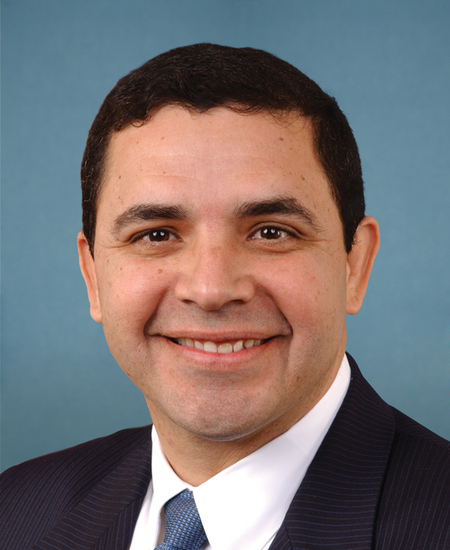
Henry Cuellar
100% support rate
Top opponent
John Garamendi
33% support rate
Ranked legislators
6
5 support · 1 oppose
Key legislators

Who's moving women's health in United States

Legislators moving women's health in United States
Legislator Party Stance Support rate Decisive votes
Henry Cuellar
Henry Cuellar House · District 28
D
Strong +
100% 4
Marcy Kaptur
Marcy Kaptur House · District 9
D
Support
67% 3
Mike Haridopolos
Mike Haridopolos House · District 8
R
Support
67% 3
Aaron Bean
Aaron Bean House · District 4
R
Mixed
50% 4
Abraham J. Hamadeh
Abraham J. Hamadeh House · District 8
R
Mixed
50% 4
John Garamendi
John Garamendi House · District 8
D
Oppose
33% 3
Showing 21–30 of 223 bills

All healthcare bills

in committee · United States · House Jun 24, 2026

HR 9445: Let Doctors Provide Reproductive Health Care Act

The Let Doctors Provide Reproductive Health Care Act prohibits states and officials from restricting or penalizing health care providers and their staff for offering reproductive health services that are legal within the state where they are performed. It establishes a federal right for providers to assist patients regardless of where those patients live and allows attorneys general to sue states that enforce such restrictions, including stripping states of legal immunity in these cases. To support this framework, the bill appropriates $40 million each for legal defense grants to help providers navigate lawsuits and $40 million for security grants to improve physical and cyber safety at medical facilities. Additionally, the legislation requires insurance companies to offer professional liability coverage to providers without discrimination based on the reproductive services they provide.
Sub-Topics Women's Health
in committee · United States · Senate Jul 15, 2026

S 4986: Mamas First Act

The Mamas First Act expands Medicaid coverage to include prenatal, labor, and postpartum care provided by doulas, midwives, tribal midwives, and lactation support providers. To qualify for this coverage, these professionals must meet specific certification, training, or recognition standards, such as doulas having continuing education and references from former clients or healthcare providers. The bill also prohibits Medicaid programs from charging copayments or deductibles for these essential services. These changes are scheduled to take effect on January 1, 2027, aiming to improve maternal health outcomes by increasing access to supportive care.
in committee · United States · Senate Jun 24, 2026

S 4878: Reproductive Health Care Training Act of 2026

The Reproductive Health Care Training Act of 2026 directs the Health Resources and Services Administration to create a grant program that funds medical schools and health centers to expand abortion care training for students and clinicians. These funds are specifically designated for states where such comprehensive training is legally permitted, with a priority given to institutions serving minority populations or those training providers for medically underserved communities. The bill outlines how the money can be used to develop clinical curricula, support telehealth practices, offer scholarships, and build partnerships to improve access to abortion services. Additionally, the legislation requires recipients to submit annual reports on program performance while ensuring federal funds supplement rather than replace existing state or private funding.
in committee · United States · Senate Jun 8, 2026

S 4701: Freedom to Travel for Health Care Act of 2026

The Freedom to Travel for Health Care Act of 2026 prohibits any person or government entity from restricting, sanctioning, or discriminating against individuals who travel to another state to receive reproductive health care that is legal there. It also protects those who assist travelers and reproductive health care providers from facing penalties for offering services to out-of-state patients, effectively overriding any conflicting state laws. The bill establishes a private right of action allowing affected individuals, organizations, and providers to sue in federal or state court for violations, with provisions for damages and attorney's fees. Additionally, it removes state sovereign immunity defenses for officials enforcing laws that interfere with this travel right, ensuring federal courts can hear such cases directly.
Sub-Topics Women's Health
in committee · United States · House Jun 24, 2026

HR 9420: Reproductive Health Care Training Act of 2026

The Reproductive Health Care Training Act of 2026 authorizes $25 million over five years to fund a program that provides grants to health schools and clinics for expanding abortion care training. These funds are specifically designated for institutions located in states where comprehensive abortion training is legal, with a priority on serving minority-serving schools and those training students from medically underserved areas. The program supports activities such as developing clinical curricula, utilizing telehealth, recruiting diverse healthcare workers, and offering scholarships to students pursuing this specialized training. Recipients must submit annual reports on program performance while ensuring federal funds supplement, rather than replace, existing state and private resources.
in committee · United States · House Jun 24, 2026

HR 9441: SAFE Training for OB-GYNs Act

The SAFE Training for OB-GYNs Act creates a new federal grant program to help medical residents who must leave their home states to receive training in reproductive health care due to local abortion restrictions. Funded with up to $10 million annually from 2027 to 2031, these grants support residency programs that offer specialized training in sexual and reproductive health, including abortion care. The funding can be used to expand existing programs or establish new ones specifically for out-of-state residents and to cover their travel expenses. This legislation directly affects health care professionals seeking specialized training and the medical residency programs that provide it.
Sub-Topics Women's Health
in committee · United States · House Jun 24, 2026

HR 9448: Federal Workforce Reproductive Rights Protection Act

The Federal Workforce Reproductive Rights Protection Act prevents federal agencies from relocating headquarters or major operations to states with laws restricting or banning abortion, while also barring the use of funds to build or lease facilities in those locations. To support federal employees who need to access reproductive health care, the bill allows workers to decline transfers to restrictive states, grants up to 21 days of paid leave for travel to obtain such services, and provides reimbursement for travel costs without requiring disclosure of the specific medical procedure. Additionally, the legislation prohibits government agencies from investigating an employee's use of abortion services when reviewing security clearances or making personnel decisions and protects workers from retaliation if they exercise these new rights.
in committee · United States · House Jun 24, 2026

HRES 1389: Expressing the sense of the House of Representatives that the monitoring and regulation of water systems not be weaponized for the purposes of surveilling, tracking, or detecting use of, stigmatizing, and further restricting access to medication abortion care.

This resolution expresses the House of Representatives' view that monitoring water systems for medication abortion drugs should not be used to track or restrict access to abortion care. It states that such surveillance lacks scientific support and misuses environmental laws to target reproductive health services. The bill asserts that medications like mifepristone are safe and effective, and that water protection efforts should focus on actual environmental threats rather than political agendas. As a non-binding statement of sentiment, it does not create new laws but aims to influence future policy discussions on reproductive rights and environmental regulation.
Sub-Topics Women's Health
in committee · United States · House Jun 11, 2026

HR 9273: To direct the Secretary of Health and Human Services to require public institutions of higher education that receive grants under the Medical Student Education program to include training for medical students relating to menopause in the curriculums of such institutions, and for other purposes.

This bill directs the Secretary of Health and Human Services to require public institutions of higher education receiving Medical Student Education grants to include menopause training in their medical school curricula. The key provision makes this specific training a mandatory condition for receiving federal funding, aiming to better prepare physicians across all specialties to care for patients experiencing menopause. By tying the requirement directly to grant eligibility, the legislation ensures that public medical schools must integrate this topic into their existing programs.
Sub-Topics Women's Health
in committee · United States · Senate Jun 4, 2026

S 4694: Maternal Health for Veterans Act

The Maternal Health for Veterans Act establishes a new program within the Department of Veterans Affairs to coordinate maternity care for enrolled veterans from the start of pregnancy through 12 months after birth. This initiative requires the VA to systematically track mental health screenings, implement performance goals to improve care quality, and provide specialized training to community providers regarding the unique needs of veterans with service-related mental or behavioral health conditions. Additionally, the bill mandates annual reports detailing maternal health outcomes, such as mortality and severe morbidity, broken down by demographics like race, disability status, and rural residence to address specific disparities. The legislation also updates legal definitions for terms like "maternal mortality" and repeals a previous section of the Protecting Moms Who Served Act to align with these new requirements.
Showing 21 to 30 of 223 bills
Previous 1 … 2 3 4 … 23 Next