Issue · Healthcare

Healthcare (Insurance)

Every healthcare bill, vote, and legislator stance in United States, automatically classified by Maddy, our AI policy reader.

Total bills
250
119th Congress
Top supporter
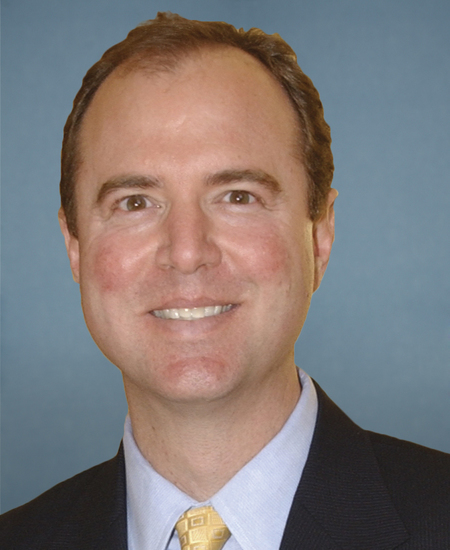
Adam B. Schiff
90% support rate
Top opponent
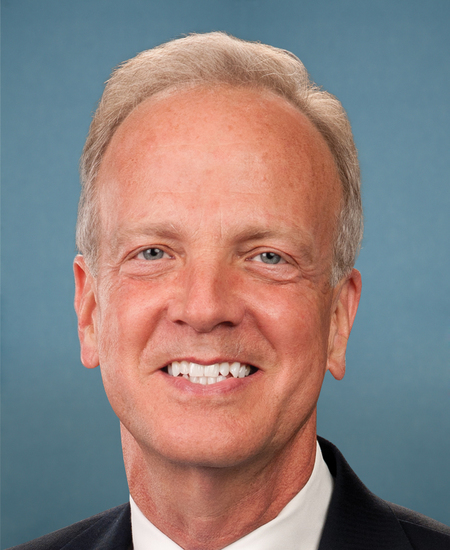
Jerry Moran
0% support rate
Ranked legislators
10
5 support · 5 oppose
Key legislators

Who's moving insurance in United States

Legislators moving insurance in United States
Legislator Party Stance Support rate Decisive votes
Adam B. Schiff
Adam B. Schiff Senate
D
Strong +
90% 10
Alex Padilla
Alex Padilla Senate
D
Strong +
90% 10
Amy Klobuchar
Amy Klobuchar Senate
D
Strong +
90% 10
Andy Kim
Andy Kim Senate
D
Strong +
90% 10
Angela D. Alsobrooks
Angela D. Alsobrooks Senate
D
Strong +
90% 10
Jerry Moran
Jerry Moran Senate
R
Strong −
0% 8
Ashley Moody
Ashley Moody Senate
R
Strong −
10% 10
Bernie Moreno
Bernie Moreno Senate
R
Strong −
10% 10
Bill Hagerty
Bill Hagerty Senate
R
Strong −
10% 10
Chuck Grassley
Chuck Grassley Senate
R
Strong −
10% 10
Showing 201–210 of 250 bills

All healthcare bills

in committee · United States · House Jan 12, 2026

HR 7023: Affordable CHOICE Act

The Affordable CHOICE Act (HR 7023) creates a new public health insurance option to be offered exclusively through state health insurance exchanges starting in 2027. It directly affects consumers purchasing coverage through these exchanges by adding a government-run plan that must offer bronze, silver, and gold coverage tiers. Key provisions require the Secretary to set premiums based on geographic rates (using Medicare reimbursement rates if negotiations with providers fail), collect data to reduce health disparities, and establish provider networks using existing Medicare/Medicaid participating providers unless they opt out. The plan must maintain quality and affordability while operating under the same consumer protections as private plans in the exchanges.
in committee · United States · House Sep 4, 2025

HR 5145: Bipartisan Premium Tax Credit Extension Act

HR 5145, the Bipartisan Premium Tax Credit Extension Act, extends enhanced federal subsidies for health insurance premiums through 2026. It directly affects individuals purchasing coverage through health insurance marketplaces who qualify for premium tax credits. The bill extends the period for increased credit amounts (through 2026 instead of 2025) and maintains the rule allowing tax credits for households earning above 400% of the federal poverty level. These changes apply to tax years beginning after December 31, 2025.
in committee · United States · House Apr 24, 2025

HR 3020: Addressing Anti-Competitive Health Care Contract Clauses Act

This bill mandates a study by the Government Accountability Office (GAO) to examine how specific contract clauses in health insurance agreements affect competition and costs. It focuses on "anti-steering" clauses (restricting insurers from directing patients to lower-cost providers), "anti-tiering" clauses (blocking tiered provider networks), "all-or-nothing" clauses (forcing inclusion of all providers), and "gag" clauses (preventing price transparency). The study will assess these clauses' impact on healthcare consolidation, consumer prices, access, and whether federal agencies have sufficient resources to enforce antitrust laws against them. The findings must be reported to relevant congressional committees within 18 months of the bill's enactment. This is a procedural study - no immediate policy changes are implemented by the bill itself.
in committee · United States · Senate Sep 16, 2025

S 2824: A bill to amend the Internal Revenue Code of 1986 to extend the temporary enhanced premium credits.

This bill extends the temporary enhanced premium tax credits for health insurance under the Affordable Care Act through 2028, instead of ending in 2026. It directly affects individuals purchasing health insurance through state or federal marketplaces who qualify for these credits based on income (up to 400% of the federal poverty level). The key change updates specific dates in tax law to align the credit period with 2028, while maintaining the same income eligibility rules. The extension applies to tax years beginning after December 31, 2025.
in committee · United States · Senate Jun 11, 2025

S 2035: Protect IVF Act

S 2035, the "Protect IVF Act," establishes federal rights to access and provide fertility treatment, including IVF, under widely accepted medical standards defined by the American Society for Reproductive Medicine. It directly affects patients seeking fertility care, health care providers offering IVF services, health insurance issuers covering such care, and manufacturers of fertility-related drugs or devices. The bill preempts state laws that restrict IVF access in ways inconsistent with medical standards - such as mandating unnecessary procedures, limiting telemedicine, or imposing discriminatory barriers - and allows federal court enforcement against violating state actions. This focuses on protecting existing access rather than creating new benefits or altering insurance coverage requirements.
Sub-Topics Insurance Telehealth
in committee · United States · House Mar 11, 2025

HR 2062: To amend the Internal Revenue Code of 1986 to treat membership in a health care sharing ministry as a medical expense, and for other purposes.

HR 2062 would allow taxpayers to deduct membership fees and medical expenses paid through health care sharing ministries (HCSMs) as medical expenses on their federal tax returns, similar to other health costs. It specifically adds HCSM membership to the list of deductible medical expenses under Internal Revenue Code Section 213(d)(1) and clarifies that HCSMs are not treated as health insurance under Section 7702C. This change directly affects individuals enrolled in HCSMs, which are faith-based or community-based cost-sharing groups operating outside traditional insurance. The bill would take effect for tax years beginning after December 31, 2025.
Sub-Topics Insurance
in committee · United States · Senate Jun 12, 2025

S 2072: MORE Savings Act

The MORE Savings Act eliminates copays and deductibles for opioid treatment under Medicare, private health plans, and Medicaid. It requires Medicare beneficiaries to have no out-of-pocket costs for opioid treatment drugs, behavioral health services, and recovery support (like peer counseling and transportation). Private health plans must cover these services without cost-sharing starting in 2027, and Medicaid states get a 90% federal match for medication-assisted treatment. The bill directly affects Medicare beneficiaries, private insurance enrollees, and Medicaid recipients seeking opioid use disorder treatment.
in committee · United States · Senate Mar 27, 2025

S 1186: Lower Drug Costs for Families Act

This bill modifies how Medicare calculates rebates for certain drugs to potentially lower costs for beneficiaries. It changes the reference year for rebate calculations from 2021 back to 2016 for both Medicare Part B (outpatient drugs) and Part D (prescription drug coverage) programs. The bill also adjusts how drug units are counted for rebates, excluding units paid for through state Medicaid programs or other existing rebate programs. These changes apply to Part B rebates starting January 2026 and Part D rebates starting October 2025. The policy directly affects drug manufacturers who pay Medicare rebates and impacts Medicare beneficiaries through potential cost reductions in covered drugs.
in committee · United States · House Dec 10, 2025

HR 6575: CommonGround for Affordable Health Care Act

HR 6575, the CommonGround for Affordable Health Care Act, extends enhanced premium tax credits for health insurance through 2026, directly benefiting millions of lower and middle-income Americans purchasing coverage through the ACA marketplace. The bill modifies income thresholds for premium subsidies, creating new income tiers that maintain or increase financial assistance for households earning up to 1,000% of the poverty level. It includes provisions to prevent fraud in health insurance exchanges by imposing civil penalties on agents and brokers who provide false information, and requires transparency in pharmacy benefit manager contracts to improve drug pricing accountability. The legislation also extends the annual open enrollment period for health insurance exchanges for the 2026 plan year, allowing more time for people to enroll or change coverage.
in committee · United States · Senate Dec 4, 2025

S 3349: PBM Disclosure Act

The PBM Disclosure Act clarifies that pharmacy benefit managers (PBMs) and third-party administrators (TPAs) must disclose both direct and indirect compensation they receive for managing pharmacy benefits in employer-sponsored health plans. This requirement directly affects PBMs and TPAs that provide pharmacy benefit management services to health plans. The bill mandates the Department of Labor to issue regulations within 180 days of enactment, which will apply to health plan years beginning six months after publication. The law explicitly clarifies an existing ERISA disclosure rule without creating new requirements.
Showing 201 to 210 of 250 bills
Previous 1 … 20 21 22 … 25 Next