Issue · Environment

Environment

Every environment bill, vote, and legislator stance in United States, automatically classified by Maddy, our AI policy reader.

Total bills
1,501
119th Congress
Top supporter
Aisha Wahab
100% support rate
Top opponent
Marsha Blackburn
11% support rate
Ranked legislators
10
5 support · 5 oppose
Key legislators

Who's moving environment in United States

Legislators moving environment in United States
Legislator Party Stance Support rate Decisive votes
Aisha Wahab
Aisha Wahab House · District 14
D
Strong +
100% 7
Everton Blair Jr.
Everton Blair Jr. House · District 13
D
Strong +
89% 9
Martin Heinrich
Martin Heinrich Senate
D
Strong +
84% 37
Adam B. Schiff
Adam B. Schiff Senate
D
Support
79% 53
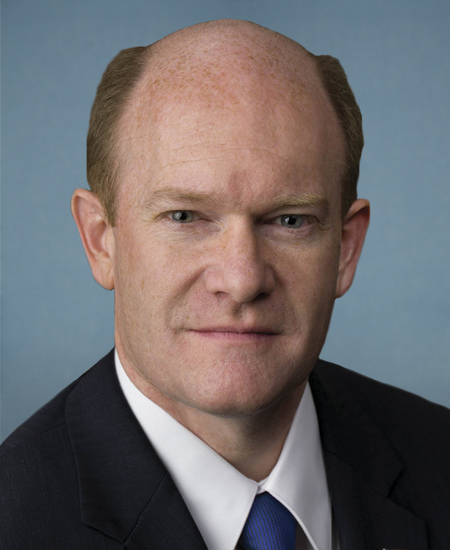
Christopher A. Coons
Christopher A. Coons Senate
D
Support
79% 52
Marsha Blackburn
Marsha Blackburn Senate
R
Strong −
11% 36
Ted Budd
Ted Budd Senate
R
Strong −
20% 40
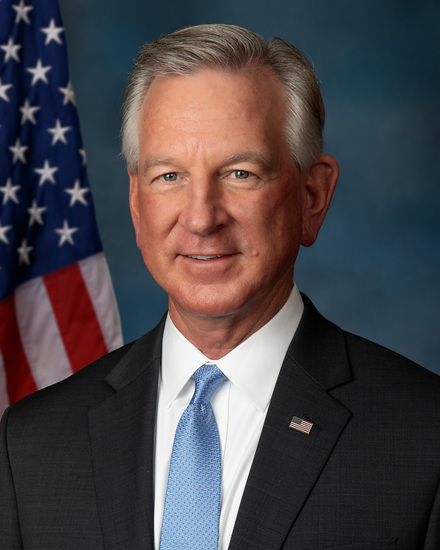
Tommy Tuberville
Tommy Tuberville Senate
R
Oppose
21% 53
Bill Cassidy
Bill Cassidy Senate
R
Oppose
22% 54
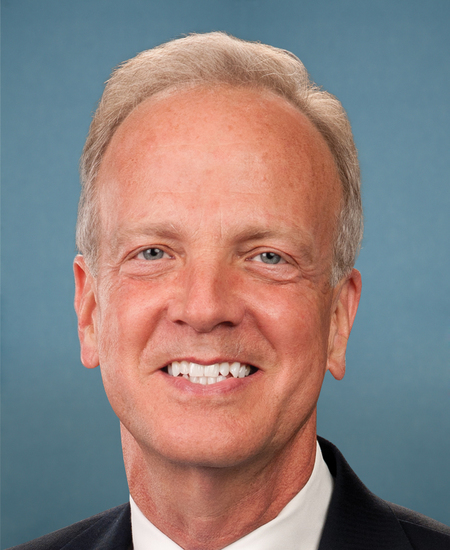
Jerry Moran
Jerry Moran Senate
R
Oppose
23% 53
Showing 841–850 of 1,501 bills

All environment bills

passed · United States · House Dec 16, 2025

HR 1045: Utah Wildfire Research Institute Act of 2025

This bill amends the Southwest Forest Health and Wildfire Prevention Act of 2004 to add Utah as an eligible state for the Wildfire Research Institute program. It updates two specific sections of the law - adding Utah to the list of states that can establish such institutes and modifying a reference to include Utah alongside Colorado. The bill directly affects Utah by enabling it to participate in the existing federal research program. No new funding, regulations, or policy changes are introduced; it solely expands eligibility under current law.
Sub-Topics Forestry
in committee · United States · Senate Sep 17, 2026

S 3743: A bill to direct the Secretary of the Interior to carry out a feasibility study on a selective water withdrawal system at Glen Canyon Dam, and for other purposes.

This bill directs the Secretary of the Interior to conduct a feasibility study on a selective water withdrawal system at Glen Canyon Dam. The study will assess how to optimize hydropower generation when releasing cold water while preventing invasive species from being drawn into the water system, following existing Colorado River management plans. It requires completion within 18 months using existing federal funds (nonreimbursable), with consultation from the Department of Energy and power contractors. The bill does not change current operations guidelines for Lake Powell or Lake Mead.
in committee · United States · House Feb 13, 2025

HR 1293: Vehicle Energy Performance Act of 2025

This bill creates a tax credit for new vehicles with better fuel economy than the median for their model year, with a maximum credit of $5,000. It also imposes a fee on manufacturers of vehicles with fuel economy below the median for their model year. The credit amount is calculated based on how much a vehicle's fuel economy exceeds the median for its model year, using combined fuel-economy ratings expressed in miles per gallon of gasoline equivalent. Vehicle manufacturers must report fuel economy data annually, and the credit can be transferred to dealers who disclose the amount to customers. The bill applies to new passenger cars and light trucks starting with model year 2027.
in committee · United States · House Jul 29, 2025

HR 4791: Keep USGS Strong Act

HR 4791, the Keep USGS Strong Act, prevents the U.S. Geological Survey (USGS) from facing hiring freezes, staff cuts, or lease cancellations without approval, specifically exempting it from a January 2025 presidential hiring freeze and related restrictions. This protects USGS employees and operations when Congress has appropriated funds for their salaries and expenses. The bill directly affects USGS staff and its ability to maintain ongoing scientific work critical to monitoring natural hazards, water resources, ecosystems, and geospatial data used by communities and agencies nationwide. It ensures continuity in the USGS’s essential data collection and research, which supports public safety, environmental management, and informed decision-making.
in committee · United States · House Oct 28, 2025

HR 5862: American Energy Independence and Affordability Act

The American Energy Independence and Affordability Act extends multiple clean energy tax credits that were set to expire between 2025 and 2026. It specifically extends residential clean energy credits through 2034, clean electricity investment credits for wind and solar through 2032, and clean vehicle credits for electric vehicles through 2032. The bill also reinstates special rates for sustainable aviation fuel and modifies requirements for energy-efficient home improvements. These provisions directly affect homeowners installing solar panels, businesses investing in clean energy infrastructure, and manufacturers producing clean energy equipment.
in committee · United States · House Mar 21, 2025

HR 2280: BIRD Energy and U.S.-Israel Energy Center Reauthorization Act of 2025

This bill reauthorizes and expands U.S.-Israel energy cooperation programs through 2031. It increases annual funding for the BIRD Energy Foundation from $2 million to $5 million and for the U.S.-Israel Energy Center from $4 million to $7 million, extending support through fiscal years 2026-2031. The bill adds new focus areas like hydrogen energy, fusion, industrial decarbonization, carbon management, agrivoltaics, grid modernization, and energy infrastructure cybersecurity to existing collaboration efforts. These changes directly affect U.S. and Israeli energy companies, researchers, and institutions working on commercializing clean energy technologies.
in committee · United States · House Apr 9, 2025

HR 2770: TAME Extreme Weather and Wildfires Act

This bill directs the National Oceanic and Atmospheric Administration (NOAA) to develop and improve artificial intelligence (AI) weather models and wildfire prediction systems. It requires NOAA to create comprehensive training datasets for AI forecasting, integrate AI with existing weather models to enhance forecasts, and build wildfire prediction tools using observational and synthetic data to warn communities and responders. The bill mandates technical assistance for forecasters and emergency managers, establishes partnerships with private and academic entities, and ensures public access to non-sensitive data and tools developed under the program. It directly affects NOAA, federal weather agencies, and their partners in improving forecasting accuracy for extreme weather and wildfires, without imposing new regulations on the public.
in committee · United States · House Jan 8, 2026

HR 6977: Better Care for PFAS Patients Act of 2026

This bill requires the Agency for Toxic Substances and Disease Registry (ATSDR) to partner with the National Academies to assess the health effects of per- and polyfluoroalkyl substances (PFAS) found in human tissues and develop clinical recommendations for addressing them. It mandates that this assessment be completed within 2 years of the law's enactment, updated every 5 years, and includes input from PFAS-exposed communities. Based on these assessments, ATSDR must issue and regularly update public clinical guidance for healthcare providers and public health authorities on managing PFAS health effects. The guidance must be posted online and shared with state/local health officials and medical professionals within 5 years of the agreement and every 5 years thereafter.
in committee · United States · House May 29, 2025

HR 3637: Locally Led Restoration Act of 2025

This bill amends wildfire fuel removal rules under the Healthy Forests Restoration Act to allow private entities, local groups, and other organizations to directly propose projects for federal land management agencies (Forest Service and Bureau of Land Management). It requires that at least 10% of vegetation removed in these projects must be "salvage" (dead/dying trees from wildfires or pests), mandates a 120-day response time for proposals, and requires environmental reviews before contracts are finalized. The bill also adjusts the timber sale threshold for inflation, raising the minimum from $10,000 to $55,000 annually based on the Consumer Price Index. These changes aim to streamline locally proposed wildfire hazard reduction projects while maintaining federal oversight and environmental safeguards.
Sub-Topics Forestry Public Lands
in committee · United States · House Mar 14, 2025

HR 2160: Maintaining and Enhancing Hydroelectricity and River Restoration Act

Maintaining and Enhancing Hydroelectricity and River Restoration Act This bill establishes a new investment tax credit in the amount of 30% of the basis of any hydropower improvement property. The bill defines hydropower improvement property as property that adds or improves fish passage at a qualified dam; maintains or improves the quality of the water retained or released by a qualified dam; promotes downstream sediment transport and habitat maintenance; upgrades, repairs, or reconstructs a qualified dam to meet safety and security standards; improves public uses of, and access to, public waterways impacted by a qualified dam; removes an obsolete river obstruction; or places into service an approved remote dam. Further, written approval for hydropower improvement property must be obtained from the Federal Energy Regulatory Commission or state or local officials prior to January 1, 2032. The bill also allows an election to claim the investment tax credit for qualified progress expenses for some types of hydropower improvement property in advance of such property being placed into service. Any investment tax credit amount claimed for qualified progress expenses reduces the amount of the investment tax credit that may be claimed once the hydropower improvement property is placed into service.  The bill authorizes certain entities, including tax-exempt and governmental entities, to treat the investment tax credit for hydropower improvement property as a payment of tax and receive a refund of any overpayment (also known as elective pay).  Finally, the investment tax credit for hydropower improvement property may be transferred (i.e., sold).
Showing 841 to 850 of 1,501 bills
Previous 1 … 84 85 86 … 151 Next