Issue · Environment

Environment (Water Quality)

Every environment bill, vote, and legislator stance in United States, automatically classified by Maddy, our AI policy reader.

Total bills
213
119th Congress
Top supporter
Adam B. Schiff
100% support rate
Top opponent
Alan Armstrong
0% support rate
Ranked legislators
10
5 support · 5 oppose
Key legislators

Who's moving water quality in United States

Legislators moving water quality in United States
Legislator Party Stance Support rate Votes
Adam B. Schiff
Adam B. Schiff Senate
D
Strong +
100% 3
Alex Padilla
Alex Padilla Senate
D
Strong +
100% 3
Amy Klobuchar
Amy Klobuchar Senate
D
Strong +
100% 3
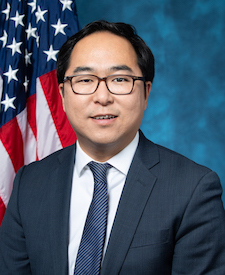
Andy Kim
Andy Kim Senate
D
Strong +
100% 3
Angela D. Alsobrooks
Angela D. Alsobrooks Senate
D
Strong +
100% 3
AA
Alan Armstrong Senate
R
Strong −
0% 3
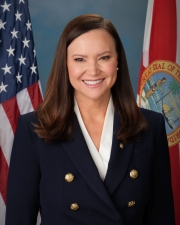
Ashley Moody
Ashley Moody Senate
R
Strong −
0% 3
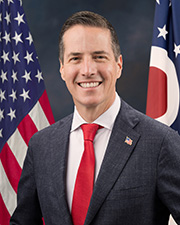
Bernie Moreno
Bernie Moreno Senate
R
Strong −
0% 3
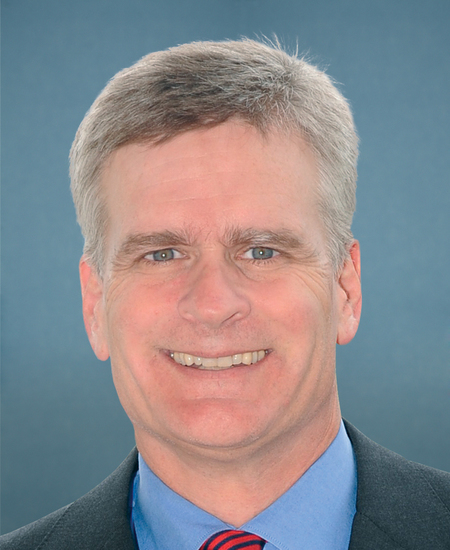
Bill Cassidy
Bill Cassidy Senate
R
Strong −
0% 3
Bill Hagerty
Bill Hagerty Senate
R
Strong −
0% 3
Showing 61–70 of 213 bills

All environment bills

in committee · United States · Senate Dec 11, 2025

S 3465: UPGRADE Act of 2025

This bill amends the Safe Drinking Water Act to extend support for small water systems and underserved communities. It updates technical assistance deadlines for small public water systems from 2026 to 2031 (Section 1442(e)(5)) and expands eligibility for assistance to include "unincorporated communities" identified by states with county coordination (Section 1459A). The changes directly affect small water systems and communities lacking municipal status, particularly in rural or disadvantaged areas. The bill provides longer-term funding certainty and broadens access to federal resources for water infrastructure improvements.
in committee · United States · Senate Jun 10, 2025

S 2007: Financing Lead Out of Water Act of 2025

S 2007 (Financing Lead Out of Water Act of 2025) modifies federal tax rules to help communities replace lead pipes in drinking water systems. It clarifies that using tax-exempt bonds to replace privately-owned lead service lines connected to public water systems does not count as "private business use" under tax law, making these bonds eligible for tax exemption. This directly affects public water systems and the communities they serve, particularly those needing to comply with federal lead regulations. The key change allows municipalities to finance lead pipe replacement projects using tax-exempt bonds without violating existing tax code restrictions. The bill applies to bonds issued after December 31, 2025.
passed · United States · House Mar 18, 2026

HR 4294: MAWS Act of 2026

The MAWS Act of 2026 establishes a 3-year pilot program (2027-2029) to purchase invasive blue catfish from watermen and seafood processors within the Chesapeake Bay Watershed. It authorizes $2 million annually to fund covered entities - manufacturers of pet food, animal feed, or aquaculture feed - to buy blue catfish caught in the watershed, requiring certification of origin and setting minimum prices based on market factors. The program mandates detailed reporting on environmental impacts, economic effects on watermen, and market responses to inform future policy. This directly supports watermen and processors by creating a market for invasive blue catfish while collecting data for potential expansion to other watersheds.
Sub-Topics Water Quality
in committee · United States · Senate Jan 13, 2026

S 3620: Emergency Rural Water Response Act of 2026

This bill expands a federal grant program to help rural communities address water infrastructure needs. It directly affects small rural communities with populations under 35,000 (up from 10,000) by allowing them to apply for grants. Key changes include broadening eligible uses to cover potable water, wastewater, storm drainage, and solid waste facilities, and increasing the population cap for program eligibility. The bill modifies existing provisions under the Consolidated Farm and Rural Development Act to make these changes. It does not create new funding but adjusts who qualifies for existing grant opportunities.
Sub-Topics Drinking Water Waste Management Water Quality Tags Rural Communities
in committee · United States · Senate Mar 25, 2025

S 1107: MATCH Act of 2025

S 1107, the MATCH Act of 2025, allows states, local governments, and federally recognized tribes to pay for urgent emergency watershed protection measures (like flood prevention after disasters) before formally agreeing with the federal government. It requires the Secretary of Agriculture to identify eligible emergency measures and create a state-level process for sponsors to request these upfront costs within 180 days of the bill's enactment. If an agreement is later made, these pre-agreement costs count toward the sponsor’s required contribution. However, sponsors bear the full risk of incurring these costs if no agreement is reached. The bill does not guarantee federal funding but streamlines cost-sharing for immediate disaster response.
Sub-Topics Coastal & Flood Protection Natural Disasters Water Quality Tags Emergency Management
in committee · United States · Senate Jul 9, 2025

S 2215: Restoring America’s Floodplains Act

S 2215, the Restoring America’s Floodplains Act, amends the Agricultural Credit Act of 1978 to update how federal floodplain easements are managed. It directly affects landowners who hold existing floodplain easements (where they’ve given up development rights on flood-prone land) and federal agencies managing these areas. The bill requires the Secretary to provide financial and technical assistance for restoring natural vegetation and water flow on these easements, and grants the Secretary sole discretion to manage them through agreements with landowners or organizations. This changes current management by adding specific restoration requirements and flexibility for ongoing maintenance.
in committee · United States · House Jan 13, 2025

HR 337: To provide technical and financial assistance for groundwater recharge, aquifer storage, and water source substitution projects.

HR 337 redirects $3 million annually from unobligated funds to support groundwater recharge, aquifer storage, and water source substitution projects. It authorizes $3 million per year for fiscal years 2026-2031 to be transferred to the Secretary for these specific water management initiatives. The bill directly affects state and local water agencies implementing these projects by providing dedicated funding. It does not create new programs but reallocates existing unobligated funds from the Infrastructure Investment and Jobs Act. The key mechanism is the annual transfer of $3 million for these water storage and supply projects.
Sub-Topics Water Quality
passed · United States · House Jun 10, 2026

HR 3857: Snow Water Supply Forecasting Reauthorization Act of 2025

This bill reauthorizes the federal Snow Water Supply Forecasting Program through 2031, updating its focus to integrate advanced technologies for more accurate snowpack measurement and water supply forecasting. It specifically requires the use of commercially available technologies like airborne laser altimetry, imaging spectroscopy, and physics-based modeling to provide real-time, spatially complete data. The program must now emphasize activities that improve forecasting responsiveness to changing conditions, integrate data with water management decisions (including interstate disputes), and build partner capacity in key river basins. The changes directly affect federal water management agencies and Western states relying on snowmelt for water supply planning.
Sub-Topics Water Quality
in committee · United States · Senate Apr 2, 2025

S 1254: A bill to amend the Aquifer Recharge Flexibility Act to clarify a provision relating to conveyances for aquifer recharge purposes.

This bill clarifies rules for using existing water infrastructure to recharge aquifers. It allows states, tribes, public entities, or non-profits to use pre-existing rights-of-way, easements, or permits (like canals built before 1976) for aquifer recharge without new federal permits, provided they give 30 days' notice to the Bureau of Land Management. Non-profits using these existing resources are exempt from paying extra rent to the federal government, but for-profit entities or uses are not. The bill also waives certain environmental regulations (like the Clean Water Act) for these specific recharge activities and permits modifying existing infrastructure.
in committee · United States · Senate Apr 8, 2025

S 1324: A bill to amend the Safe Drinking Water Act to modify eligibility for the State response to contaminants program, and for other purposes.

This bill (S 1324) makes technical corrections to the Safe Drinking Water Act's eligibility rules for states seeking assistance under the State Response to Contaminants program. It clarifies who qualifies for federal grants, specifically allowing states to apply on behalf of: (1) disadvantaged communities meeting state affordability criteria, (2) small communities (under 10,000 people) lacking debt capacity, or (3) private drinking water well owners not connected to public systems. The changes streamline how states identify eligible communities and well owners for funding to address water contaminants. This is a procedural adjustment to existing program rules, not a new policy.
Showing 61 to 70 of 213 bills
Previous 1 6 7 8 22 Next