Issue · Environment

Environment

Every environment bill, vote, and legislator stance in United States, automatically classified by Maddy, our AI policy reader.

Total bills
1,989
119th Congress
Top supporter
Aisha Wahab
100% support rate
Top opponent
Marsha Blackburn
11% support rate
Ranked legislators
10
5 support · 5 oppose
Key legislators

Who's moving environment in United States

Legislators moving environment in United States
Legislator Party Stance Support rate Decisive votes
Aisha Wahab
Aisha Wahab House · District 14
D
Strong +
100% 7
Everton Blair Jr.
Everton Blair Jr. House · District 13
D
Strong +
89% 9
Martin Heinrich
Martin Heinrich Senate
D
Strong +
84% 37
Adam B. Schiff
Adam B. Schiff Senate
D
Support
79% 53
Christopher A. Coons
Christopher A. Coons Senate
D
Support
79% 52
Marsha Blackburn
Marsha Blackburn Senate
R
Strong −
11% 36
Ted Budd
Ted Budd Senate
R
Strong −
20% 40
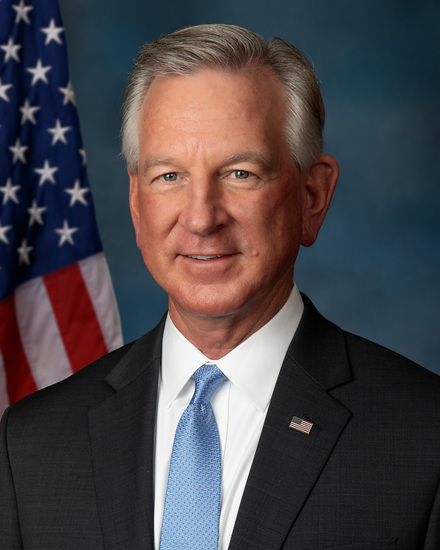
Tommy Tuberville
Tommy Tuberville Senate
R
Oppose
21% 53
Bill Cassidy
Bill Cassidy Senate
R
Oppose
22% 54
Jerry Moran
Jerry Moran Senate
R
Oppose
23% 53
Showing 651–660 of 1,989 bills

All environment bills

in committee · United States · House Mar 26, 2025

HR 2371: Scarper Ridge Golden Gate National Recreation Area Boundary Adjustment Act

This bill expands the boundaries of the Golden Gate National Recreation Area by adding a specific parcel of land. The addition is defined by the map titled "Golden Gate National Recreation Area Proposed Boundary Addition" (map number 641/193973), dated July 2024. It directly affects the management of that designated land within the recreation area. The bill makes a technical boundary adjustment without altering existing land use or creating new policies.
Sub-Topics Parks & Recreation
in committee · United States · Senate Oct 30, 2025

S 3086: Restoring Integrity in Fiduciary Duty Act

This bill clarifies that retirement plan fiduciaries must prioritize financial factors - such as investment risk and return - when selecting investments or voting on shareholder matters. It prohibits using nonfinancial goals (like environmental or social objectives) to choose investments or votes unless financial factors are equal, requiring detailed documentation for such decisions. For shareholder voting, it allows plans to adopt "safe harbor" policies that limit voting to proposals with material economic impact (e.g., when a plan holds significant stakes in a company), while mandating records of all voting activity. The law applies to ERISA-covered retirement plans (like 401(k)s), taking effect for investment decisions one year after enactment and for shareholder voting starting January 1, 2026.
in committee · United States · House Apr 29, 2025

HR 2613: Next Generation Pipelines Research and Development Act

The Next Generation Pipelines Research and Development Act establishes a new demonstration initiative that will award competitive grants to eligible entities - including universities, research organizations, and private companies - for projects developing advanced pipeline technologies. The bill focuses on improving pipeline safety, efficiency, and environmental performance through research on leak detection, novel materials, sensor technologies, and cybersecurity for pipelines and associated infrastructure. It authorizes $45 million for fiscal year 2026 (increasing to $50 million annually through 2030) for demonstration projects and creates a National Pipeline Modernization Center to coordinate research and development efforts. The program specifically prioritizes projects that reduce environmental impacts, leverage existing infrastructure, and involve diverse geographic and technological approaches to pipeline innovation.
in committee · United States · House Mar 11, 2025

HR 1820: FLASH Act

The FLASH Act authorizes construction of navigable roads along federal border lands to improve U.S. Customs and Border Protection access and operational control. It requires federal agencies to develop protocols for reducing trash accumulation and environmental degradation from unauthorized border crossings, while targeting illegal cannabis cultivation sites with environmental response initiatives. The bill prohibits using federal funds to provide housing for undocumented immigrants on federal lands and establishes criminal penalties for illegal pesticide use. The legislation affects how federal land management agencies (National Park Service, Bureau of Land Management, etc.) operate along the southern border, with specific reporting requirements for environmental impacts and trash collection.
in committee · United States · Senate Jun 4, 2026

S 564: Zuni Indian Tribe Water Rights Settlement Act of 2025

The Zuni Indian Tribe Water Rights Settlement Act of 2025 resolves longstanding water rights claims for the Zuni Tribe of the Zuni Reservation in the Zuni River Stream System. It establishes a $655.5 million trust fund to support water infrastructure development, confirms the Tribe's water rights held in trust by the U.S. government (prohibiting forfeiture through non-use), and withdraws approximately 92,364 acres of federal land to protect the Zuni Salt Lake and Sanctuary. The bill ensures allottees' (individual landowners) water rights remain separate from the Tribe's rights, with specific provisions for accounting for water use on allotments. This settlement replaces all previous claims against the U.S. government related to water rights in the Zuni River System.
Sub-Topics Public Lands Tags Tribal Nations
passed · United States · House Sep 10, 2025

HR 4553: Energy and Water Development and Related Agencies Appropriations Act, 2026

Energy and Water Development and Related Agencies Appropriations Act, 2026 This bill provides FY2026 appropriations for U.S. Army Corps of Engineers civil works projects, the Department of the Interior's Bureau of Reclamation, the Department of Energy (DOE), and several independent agencies. The bill provides appropriations for U.S. Army Corps of Engineers civil works projects, including for Investigations, Construction, Mississippi River and Tributaries, Operation and Maintenance, the Regulatory Program, Flood Control and Coastal Emergencies, Expenses, the Office of the Assistant Secretary of the Army for Civil Works, and the Water Infrastructure Finance and Innovation Program. The bill provides appropriations to the Department of the Interior for the Central Utah Project and the Bureau of Reclamation. The bill provides appropriations to DOE for energy programs, including Energy Efficiency and Renewable Energy; Cybersecurity, Energy Security, and Emergency Response; Electricity; Grid Deployment; Nuclear Energy; Fossil Energy; Naval Petroleum and Oil Shale Reserves; the Strategic Petroleum Reserve; the Northeast Home Heating Oil Reserve; the Energy Information Administration; Non-Defense Environmental Cleanup; the Uranium Enrichment Decontamination and Decommissioning Fund; Science; Nuclear Waste Disposal; the Advanced Research Projects Agency—Energy; the Title 17 Innovative Technology Loan Guarantee Program; the Advanced Technology Vehicles Manufacturing Loan Program; the Tribal Energy Loan Guarantee Program; Indian Energy Policy and Programs; Departmental Administration; and the Office of the Inspector General. The bill also provides appropriations to DOE for Atomic Energy Defense Activities of the National Nuclear Security Administration, Environmental and Other Defense Activities, and the Power Marketing Administrations. The bill provides appropriations to several independent agencies, including the Federal Energy Regulatory Commission and the Nuclear Regulatory Commission. The bill also sets forth requirements and restrictions for using funds provided by this and other appropriations acts.
in committee · United States · House Mar 20, 2026

HR 7144: Food Rescue Act

HR 7144, the Food Rescue Act, establishes a national food rescue system under the USDA's Food and Nutrition Service to coordinate the recovery and distribution of surplus food to food-insecure communities. The bill creates a competitive grant program for food rescue organizations to improve logistics (like refrigerated transport and storage), build partnerships with retailers and farms, and use technology to match surplus food with emergency feeding organizations. It directly affects food-insecure communities by increasing access to rescued food and supports food banks, nonprofits, and local governments through grants covering recovery operations, transportation, and infrastructure. The bill amends the Emergency Food Assistance Act of 1983 to integrate food rescue efforts with existing USDA programs.
in committee · United States · House Dec 9, 2025

HR 6503: Broadband for Americans through Responsible Streamlining (BARS) Act

The BARS Act streamlines broadband infrastructure deployment by exempting certain projects from environmental reviews under the National Environmental Policy Act (NEPA) and the National Historic Preservation Act (NHPA). It applies to projects like small cell installations on existing structures, modifications in public rights-of-way, and disaster recovery work, removing federal review hurdles for telecom companies. The bill also creates a presumption that tribes have waived concerns about projects if they fail to respond within 45 days to FCC forms (Form 620/621), unless tribes provide a "favorable demonstration" to override this. This directly affects telecom providers seeking faster approvals and Indian tribes regarding consultation processes for infrastructure projects.
in committee · United States · House May 14, 2025

HR 3392: STOP Screwworms Act

HR 3392, the STOP Screwworms Act, requires the U.S. Department of Agriculture to build modular facilities for rearing sterile New World screwworm flies within 180 days of enactment. These facilities will disperse sterile flies into at-risk agricultural areas - identified based on migratory patterns and suitability for dispersal - to prevent infestations that threaten livestock. The bill authorizes $300 million in funding for construction, operation, and annual reporting to Congress on threat assessments and effectiveness. It directly affects livestock producers and agricultural regions vulnerable to screwworm fly migration, using sterile insect technique as a preventive measure.
Tags Agriculture
in committee · United States · Senate Feb 27, 2025

S 799: United States Legal Gold and Mining Partnership Act

This bill establishes a "Legal Gold and Mining Partnership Strategy" to combat illicit gold mining in the Western Hemisphere, particularly targeting Venezuela's Maduro regime and transnational criminal organizations that profit from illegal mining operations. The strategy aims to disrupt linkages between artisanal miners and illicit actors, promote responsible sourcing, support formalization of mining operations, and reduce environmental harm from mercury use. It would require coordination between U.S. departments and international partners to build law enforcement capacity, support miners in transitioning to legal operations, and enhance traceability in gold supply chains. The bill authorizes $10 million for implementation over two fiscal years to support these objectives.
Showing 651 to 660 of 1,989 bills
Previous 1 65 66 67 199 Next