Issue · Environment

Environment

Every environment bill, vote, and legislator stance in United States, automatically classified by Maddy, our AI policy reader.

Total bills
1,501
119th Congress
Top supporter
Aisha Wahab
100% support rate
Top opponent
Marsha Blackburn
11% support rate
Ranked legislators
10
5 support · 5 oppose
Key legislators

Who's moving environment in United States

Legislators moving environment in United States
Legislator Party Stance Support rate Decisive votes
Aisha Wahab
Aisha Wahab House · District 14
D
Strong +
100% 7
Everton Blair Jr.
Everton Blair Jr. House · District 13
D
Strong +
89% 9
Martin Heinrich
Martin Heinrich Senate
D
Strong +
84% 37
Adam B. Schiff
Adam B. Schiff Senate
D
Support
79% 53
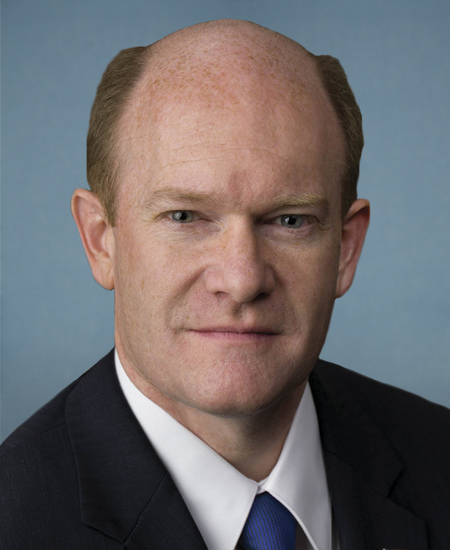
Christopher A. Coons
Christopher A. Coons Senate
D
Support
79% 52
Marsha Blackburn
Marsha Blackburn Senate
R
Strong −
11% 36
Ted Budd
Ted Budd Senate
R
Strong −
20% 40
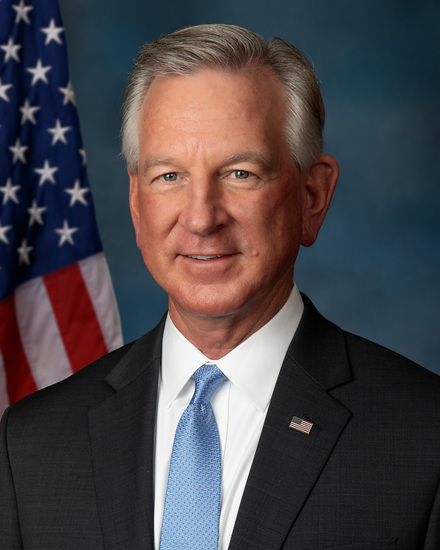
Tommy Tuberville
Tommy Tuberville Senate
R
Oppose
21% 53
Bill Cassidy
Bill Cassidy Senate
R
Oppose
22% 54
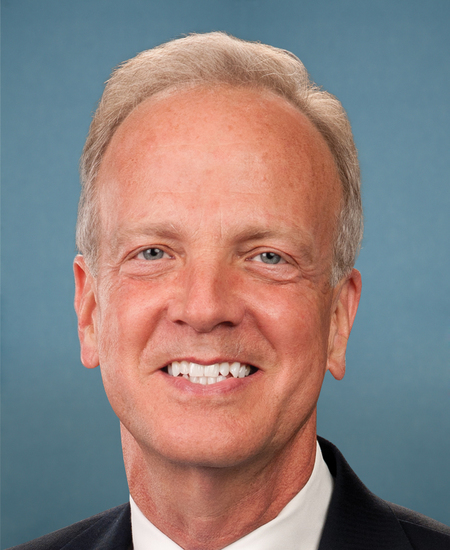
Jerry Moran
Jerry Moran Senate
R
Oppose
23% 53
Showing 421–430 of 1,501 bills

All environment bills

passed · United States · House Jul 29, 2026

HR 6380: Chiricahua National Park Act

Chiricahua National Park Act This bill redesignates the Chiricahua National Monument in Arizona as the Chiricahua National Park. The bill directs the National Park Service (NPS) to (1) ensure the protection of traditional cultural and religious sites in the park, and (2) provide access to those sites by members of Indian tribes for traditional cultural and customary uses. Upon the request of an Indian tribe, the NPS may temporarily close to general public use one or more specific areas of the park to protect traditional cultural and customary uses in the area by members of the tribe. The closure must be limited to the smallest practicable area for the minimum period necessary for the traditional cultural and religious activities.
Sub-Topics Parks & Recreation
in committee · United States · Senate Jun 26, 2025

S 2182: Community Solar Consumer Choice Act of 2025

The Community Solar Consumer Choice Act of 2025 establishes a federal program to expand access to community solar energy for low- and moderate-income individuals, businesses, nonprofits, and state/local governments, requiring most electric utilities to offer community solar programs with equitable access for all customers. It amends existing law to mandate that non-Tribal utilities provide community solar options allowing all ratepayers - including low-income households - to participate, while Tribal utilities may choose to adopt the program and leverage federal resources. The Department of Energy will provide technical assistance and use National Laboratories to collect data and develop affordable financing models for community solar projects. States must begin reviewing utility programs within one year of enactment and complete implementation within two years to meet these requirements.
Sub-Topics Solar
in committee · United States · House Aug 19, 2025

HR 4999: Fusion Workforce Act

The Fusion Workforce Act (HR 4999) creates dedicated funding streams - $20 million annually for the National Science Foundation and $10 million annually for the Department of Energy - to support workforce development in fusion-related fields. It directly affects institutions of higher education (including community colleges, minority-serving institutions, and Tribal Colleges), National Laboratories, and industry partners by requiring grants for developing fusion-focused curricula, teacher training, hands-on learning experiences, and industry partnerships. Key mechanisms include establishing a national Fusion Education and Workforce Coordination Hub to share resources and address workforce gaps, supporting industry professional instructors in classrooms, and prioritizing outreach to underrepresented groups and rural communities. The bill mandates concrete activities like creating stackable credentials, modernizing lab facilities, and connecting students to internships, all aligned with fusion industry needs.
in committee · United States · House Feb 5, 2026

HR 7354: Stop Underrides Act 2.0

This bill requires the National Highway Traffic Safety Administration to establish new safety standards for side underride guards on trucks and trailers within 18 months, with full compliance required within two years. The standards mandate that these guards prevent passenger vehicles from sliding under trucks during collisions, improve safety for vulnerable road users like motorcyclists, and include aerodynamic features to aid fuel efficiency. The bill also creates an advisory committee to monitor underride safety and mandates studies to better understand and prevent these crashes. It aims to reduce the thousands of deaths and injuries from underride crashes that have occurred over the past 50 years, as documented by the National Transportation Safety Board.
passed · United States · House Feb 24, 2026

HR 390: ACERO Act

Advanced Capabilities for Emergency Response Operations Act or the ACERO Act This bill provides statutory authority for the Advanced Capabilities for Emergency Response Operations (ACERO) project. The ACERO project conducts research and development activities regarding aerial response to wildfires using uncrewed aircraft systems (UAS) and other advanced aviation technologies. It is administered by the National Aeronautics and Space Administration (NASA).  The bill directs the ACERO project to address airspace management and deconfliction during wildfire response efforts, including through real-time information sharing among response teams and the development of a platform to provide situational awareness of aerial assets. The bill also directs the ACERO project to establish a multiagency concept of operations to facilitate the coordination of aerial wildfire response among federal, state, and local government agencies. NASA must consult with other federal agencies and departments to avoid duplication of these efforts.  NASA generally may not procure UAS manufactured or assembled by specified foreign entities, including entities domiciled in or controlled by China, for use by the ACERO project.
in committee · United States · House Sep 2, 2025

HR 5091: To amend section 5545 of title 5, United States Code, to provide hazard pay for carrying out prescribed burns, and for other purposes.

This bill amends federal pay rules to provide hazard pay for specific federal firefighters. It requires that firefighters conducting prescribed burns (controlled fires for land management) and smokejumpers during training or operations receive the same hazard pay rate currently given to those fighting wildfires. The change applies to employees covered under Title 5 of U.S. Code, with implementation required within 90 days of enactment through Office of Personnel Management regulations. The policy directly affects federal wildfire management personnel performing these high-risk duties.
Sub-Topics Forestry Public Lands
in committee · United States · Senate Feb 3, 2025

S 374: Direct Property Acquisitions Act

S 374 (Direct Property Acquisitions Act) establishes a 48-month pilot program allowing selected local governments to apply directly to FEMA for disaster mitigation funds - specifically for buying flood-prone properties or demolishing homes - instead of through their state governments. It affects only "covered communities" (local governments meeting FEMA criteria for self-sufficiency in hazard mitigation, with state approval and demonstrated need). The program requires FEMA to select no more than two communities per FEMA region (max one per state), provide written justification for selections, and submit annual reports to Congress evaluating the pilot’s impact on processing speed and potential long-term changes. The pilot expires 8 years after selection, with no guarantee of permanent adoption.
Sub-Topics Coastal & Flood Protection Natural Disasters Tags Emergency Management
in committee · United States · House May 20, 2026

HR 398: Geothermal Cost-Recovery Authority Act of 2025

Geothermal Cost-Recovery Authority Act of 2025 This bill expands the Geothermal Steam Act of 1970 to give the Department of the Interior the authority to collect certain fees from applicants for, or holders of, geothermal leases through September 30, 2032. Specifically, Interior may direct those applicants or leaseholders to reimburse the United States for costs from (1) processing applications for geothermal leases on federal land, such as applications for geothermal drilling permits; and (2) inspecting and monitoring geothermal exploration and development activities, including reclamation activities. Interior may reduce the amount of the fee if it determines that (1) the full reimbursement would impose an economic hardship on the applicant, or (2) a less than full reimbursement is necessary to promote the greatest use of geothermal resources. Interior may use those fees only to the extent that they are provided in advance in appropriations acts for (1) processing applications for geothermal leases, and (2) inspecting and monitoring related exploration and development activities. Within five years of the bill's enactment, Interior must submit to Congress a report that includes an assessment of how the fees affect Interior's geothermal leasing program and any recommendations for updates to the fees and the program.
Sub-Topics Oil & Gas Public Lands
in committee · United States · Senate Jun 4, 2025

S 1953: Complete Streets Act of 2025

The Complete Streets Act of 2025 requires states to establish programs that provide technical assistance and grants for local governments, transit agencies, and other eligible entities to develop and implement street projects accommodating all transportation modes. The bill mandates that these projects prioritize safety for pedestrians and cyclists, especially in underserved communities, and must follow new design standards including protected bike lanes, accessible sidewalks, and proper lighting. States must dedicate 5% of certain federal transportation funds to support these initiatives and report on progress to the federal government. The law establishes specific deadlines for implementing these standards on new road projects, with phased requirements for different types of projects and locations. This legislation aims to create streets that safely serve people of all ages, abilities, and backgrounds, including those who walk, bike, take transit, or drive.
in committee · United States · House Feb 13, 2026

HR 7568: Hot Rock Act

HR 7568, the Hot Rock Act, funds research and development for "hot dry rock" geothermal energy - a next-generation technology that extracts heat from superhot (300°C+) rock formations with low natural permeability. It authorizes $16-30 million annually (2027-2031) for grant programs targeting high-temperature drilling, reservoir creation, and supercritical fluid research, plus a workforce training program to transition oil/gas workers into geothermal roles. The bill directly affects eligible entities (National Labs, universities, private companies) and covered individuals (U.S. oil/gas workers seeking geothermal careers), with provisions requiring seismic monitoring and risk research. Key mechanisms include milestone-based grants for achieving technical goals like drilling to supercritical temperatures and developing new well-casing methods.
Showing 421 to 430 of 1,501 bills
Previous 1 … 42 43 44 … 151 Next