Issue · Environment

Environment (Air Quality)

Every environment bill, vote, and legislator stance in United States, automatically classified by Maddy, our AI policy reader.

Total bills
72
119th Congress
Top supporter
Adam B. Schiff
85% support rate
Top opponent
Thomas H. Kean, Jr.
0% support rate
Ranked legislators
10
5 support · 5 oppose
Key legislators

Who's moving air quality in United States

Legislators moving air quality in United States
Legislator Party Stance Support rate Votes
Adam B. Schiff
Adam B. Schiff Senate
D
Strong +
85% 13
Alex Padilla
Alex Padilla Senate
D
Strong +
85% 13
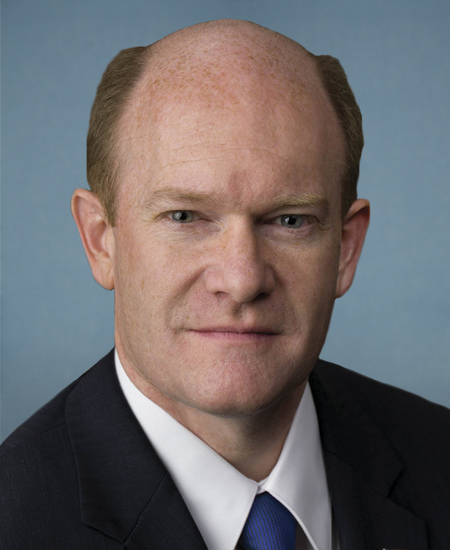
Christopher A. Coons
Christopher A. Coons Senate
D
Strong +
85% 13
Kirsten E. Gillibrand
Kirsten E. Gillibrand Senate
D
Strong +
85% 13
Angela D. Alsobrooks
Angela D. Alsobrooks Senate
D
Strong +
83% 12
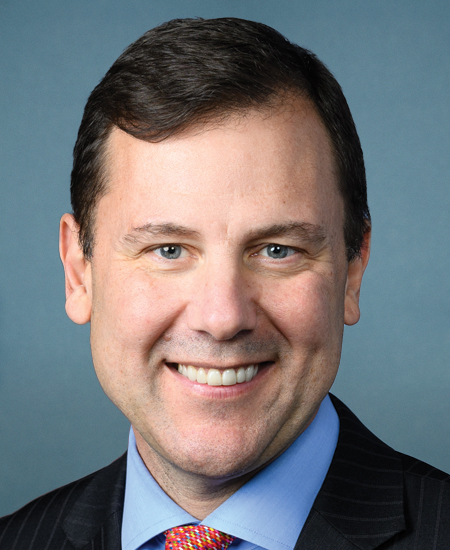
Thomas H. Kean, Jr.
Thomas H. Kean, Jr. House · District 7
R
Strong −
0% 6
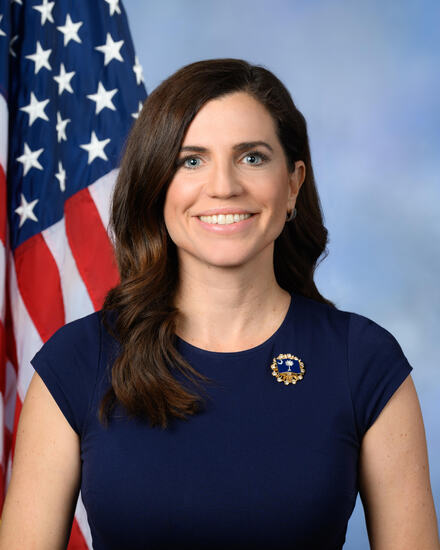
Nancy Mace
Nancy Mace House · District 1
R
Strong −
12% 8
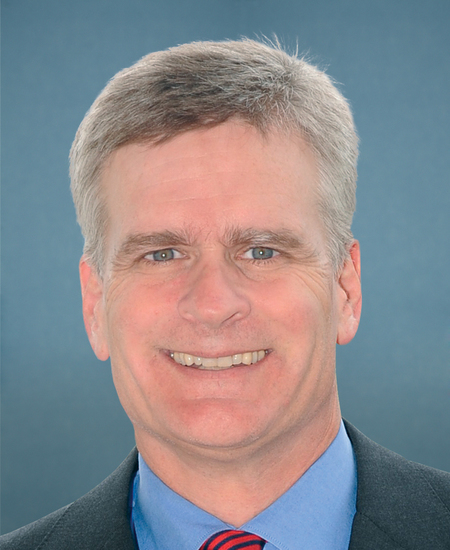
Bill Cassidy
Bill Cassidy Senate
R
Strong −
15% 13
Eric Schmitt
Eric Schmitt Senate
R
Strong −
15% 13
Mike Lee
Mike Lee Senate
R
Strong −
15% 13
Showing 21–30 of 72 bills

All environment bills

in committee · United States · House Jul 14, 2026

HR 3194: LOCOMOTIVES Act

HR 3194, the LOCOMOTIVES Act, prevents states from setting their own emissions standards for locomotives used in interstate commerce. It amends the Clean Air Act to clarify that federal emissions rules exclusively apply to locomotives providing common carrier railroad transportation for hire (like commercial freight or passenger services across state lines), excluding these from state regulation. This directly affects railroads operating interstate services and state environmental agencies that previously could establish stricter local rules for such locomotives. The bill does not change the actual emissions requirements but shifts regulatory authority solely to the federal government for this specific category of locomotives.
Sub-Topics Air Quality
in committee · United States · House Apr 10, 2025

HR 2814: Transportation Freedom Act

Transportation Freedom Act This bill reduces taxes on auto companies and repeals specified environmental regulations on cars and trucks. The bill establishes a new tax deduction equal to 200% of eligible wages paid or incurred by domestic producers of automobiles or automobile components, subject to limitations. It also allows an entity to reduce (and adjust) its financial statement income (for purposes of calculating liability for the alternative minimum tax) by the amount of eligible wages it elects to deduct. The bill nullifies the 2024 rules of the Environmental Protection Agency (EPA) regarding (1) the finalization of specified greenhouse gas (GHG) programs and the reduction of emissions from certain light-duty and medium-duty vehicles (e.g., cars and trucks that are under a certain weight) starting with model year 2027, and (2) phase three of GHG emission standards for heavy-duty vehicles (e.g., school buses and tractor-trailer trucks). It also repeals the 2024 rules of the National Highway Traffic Safety Administration (NHTSA) regarding corporate average fuel economy (CAFE) standards for certain cars, trucks, and vans.  Additionally, the bill eliminates (1) the option given to California to set standards for car emissions that are more stringent than those set under the Clean Air Act, and (2) the option for other states to adopt California's standards.  NHTSA and the EPA must establish new CAFE and GHG standards, respectively, for vehicles that are economically practicable and technologically feasible. The GHG standards may not require the production or sale of electric vehicles.
in committee · United States · House Mar 27, 2025

HR 2460: Eliminating the RFS and Its Destructive Outcomes Act

HR 2460 would repeal the Renewable Fuel Standard (RFS), a Clean Air Act requirement mandating that fuel producers blend renewable fuels like ethanol into gasoline. This repeal would directly affect oil refiners and fuel distributors who currently must meet these blending quotas. The bill removes Section 211(o) of the Clean Air Act and updates related provisions in the Clean Air Act and Petroleum Marketing Practices Act to eliminate references to the RFS program. If enacted, the measure would eliminate the federal mandate for renewable fuel blending in transportation fuels.
Sub-Topics Oil & Gas Air Quality
in committee · United States · House Jan 13, 2025

HR 346: Preserving Choice in Vehicle Purchases Act

HR 346, the Preserving Choice in Vehicle Purchases Act, amends the Clean Air Act to clarify that state emissions standards directly or indirectly limiting sales of new internal combustion engine vehicles (ICE) would not qualify for federal EPA waivers. It adds a specific definition to the law, requiring states to avoid restrictions on ICE vehicle sales to maintain waiver eligibility. The bill also mandates the EPA to revoke existing waivers granted between January 2022 and the bill's enactment if those waivers didn't comply with the new definition. This directly affects states with their own vehicle emission standards (like California), the EPA's waiver approval process, and automakers selling vehicles in those states.
in committee · United States · House Mar 24, 2025

HR 2288: Common Sense Air Regulations Act

This bill would cancel a specific Environmental Protection Agency (EPA) rule finalized in March 2024 that reconsidered national air quality standards for particulate matter. It directly affects the EPA’s regulatory authority and would prevent the implementation of that rule, impacting industries and communities subject to particulate matter air quality standards. The key mechanism is a direct nullification of the EPA’s final rule (89 Fed. Reg. 16202), declaring it "shall have no force or effect." This policy change would revert to prior air quality standards without altering the broader regulatory framework.
Sub-Topics Air Quality
in committee · United States · House Mar 18, 2025

HR 2218: Stop CARB Act of 2025

HR 2218 (Stop CARB Act of 2025) would block California from enforcing its own emissions standards for construction equipment, farm machinery, and locomotives by repealing federal provisions that allow states to set stricter rules. It specifically repeals Section 177 of the Clean Air Act, which authorizes California’s vehicle standards, and invalidates all existing waivers permitting California’s regulations (including those for nonroad engines) upon enactment. The bill also denies any pending waiver applications and removes references to California’s standards from other Clean Air Act sections. This directly affects California’s regulatory authority over emissions for these specific equipment types and vehicle categories.
Sub-Topics Air Quality
in committee · United States · House Sep 30, 2025

HR 5636: Protect Consumers from Reallocation Costs Act of 2025

HR 5636, the *Protect Consumers from Reallocation Costs Act of 2025*, prevents the Environmental Protection Agency from shifting renewable fuel obligations from small refineries with extended exemptions to other companies. It directly affects small refineries that have received extended exemptions under the Clean Air Act. The bill requires the EPA to include gasoline or diesel refined by these exempt refineries in the total fuel volume calculations for the year, rather than excluding it or reallocating the obligation. This change ensures small refineries’ production is counted toward overall fuel volume, preventing other entities from bearing their renewable fuel requirements. The law modifies Section 211(o)(9) of the Clean Air Act (42 U.S.C. 7545(o)(9)).
Sub-Topics Air Quality
passed · United States · House Apr 17, 2026

HR 6409: FENCES Act

The FENCES Act clarifies that states can avoid penalties under the Clean Air Act for failing to meet air quality standards if pollution originates from outside U.S. borders (regardless of human activity). It allows states to demonstrate to the EPA that nonattainment areas (for ozone or particulate matter) would meet standards but for pollution from outside their borders, exceptional events, or mobile sources beyond their control. States must renew this demonstration every five years to maintain the exemption from sanctions or fees. The bill does not change air quality standards but prevents penalties for pollution sources outside a state’s jurisdiction. It applies directly to states and local areas struggling with air quality due to external pollution sources.
Sub-Topics Air Quality Forestry
in committee · United States · House Apr 28, 2026

HR 6373: Air Permitting Improvements to Protect National Security Act of 2025

HR 6373 modifies the Clean Air Act to create new permitting flexibility for specific facilities. It allows the President to waive certain emission offset requirements for new or modified semiconductor manufacturing facilities or critical mineral facilities (like those processing lithium or cobalt) if deemed necessary for national security. States can also permit these facilities to use alternative offset methods - such as paying an emissions fee capped at 1.5 times local control costs - if all standard offsets are exhausted, with fees required to fund further emissions reductions in the area. The bill directly affects advanced manufacturing and critical mineral operations seeking streamlined permitting.
Sub-Topics Air Quality
in committee · United States · House Jan 9, 2026

HR 7000: Freedom to Fuel Act

HR 7000, the Freedom to Fuel Act, amends the Clean Air Act to exclude portable fuel containers (like gas cans) from being classified as "consumer or commercial products" under the law. This change directly affects manufacturers and sellers of these containers, removing them from certain regulatory requirements. The key provision modifies the Clean Air Act's definition to specifically state that portable fuel containers are not subject to product standards for consumer or commercial products. This is a technical regulatory adjustment focused on clarifying which products fall under existing Clean Air Act provisions.
Sub-Topics Air Quality
Showing 21 to 30 of 72 bills
Previous 1 2 3 4 8 Next