Issue · Environment

Environment (Forestry)

Every environment bill, vote, and legislator stance in United States, automatically classified by Maddy, our AI policy reader.

Total bills
254
119th Congress
Top supporter
Adam B. Schiff
100% support rate
Top opponent
Alan Armstrong
0% support rate
Ranked legislators
10
5 support · 5 oppose
Key legislators

Who's moving forestry in United States

Legislators moving forestry in United States
Legislator Party Stance Support rate Votes
Adam B. Schiff
Adam B. Schiff Senate
D
Strong +
100% 3
Alex Padilla
Alex Padilla Senate
D
Strong +
100% 3
Amy Klobuchar
Amy Klobuchar Senate
D
Strong +
100% 3
Andy Kim
Andy Kim Senate
D
Strong +
100% 3
Angela D. Alsobrooks
Angela D. Alsobrooks Senate
D
Strong +
100% 3
AA
Alan Armstrong Senate
R
Strong −
0% 3
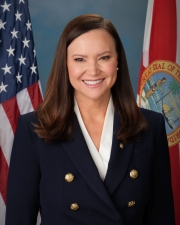
Ashley Moody
Ashley Moody Senate
R
Strong −
0% 3
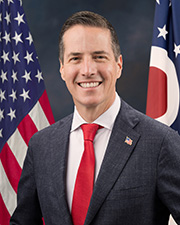
Bernie Moreno
Bernie Moreno Senate
R
Strong −
0% 3
Bill Cassidy
Bill Cassidy Senate
R
Strong −
0% 3
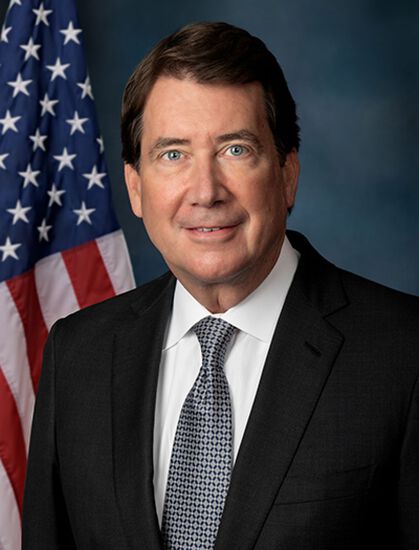
Bill Hagerty
Bill Hagerty Senate
R
Strong −
0% 3
Showing 221–230 of 254 bills

All environment bills

in committee · United States · House May 17, 2025

HR 3476: Forest Conservation Easement Program Act of 2025

The Forest Conservation Easement Program Act of 2025 establishes a new federal program to conserve forest land through easements. The program provides cost-share assistance (50-75% of fair market value) for eligible entities to purchase forest land easements or for the Secretary to purchase forest reserve easements directly. It requires forest management plans for enrolled land, prioritizes protection of endangered species habitat, and sets aside 10% of annual funding for beginning, socially disadvantaged, veteran, and limited resource forest landowners. The program replaces the Healthy Forests Reserve Program and allocates $100 million annually from 2026-2030 for implementation.
in committee · United States · House Jul 16, 2025

HR 4420: Cool Corridors Act of 2025

The Cool Corridors Act of 2025 expands the existing Healthy Streets program to fund tree planting, shade structures, and green infrastructure along transportation corridors - like bus stops, transit hubs, and school zones - to reduce heat exposure. It directly affects communities facing extreme heat and limited tree canopy (especially low-income or historically underserved areas), as well as state/local transit agencies, schools, and environmental groups. Key provisions include requiring projects to prioritize heat-vulnerable regions, mandate annual reporting on temperature reduction and equity outcomes, and ensure tree planting doesn’t obstruct traffic safety. The bill also extends program funding through 2030 and mandates coordination with agencies like the EPA and Forest Service.
in committee · United States · Senate Dec 2, 2025

S 1476: M.H. Dutch Salmon Greater Gila Wild and Scenic River Act

This bill designates specific segments of New Mexico's Gila River system as Wild and Scenic Rivers, protecting them from development while preserving existing rights. It classifies over 50 river segments totaling hundreds of miles as "wild," "recreational," or "scenic" rivers and withdraws federal lands within these areas from mining, logging, and other development activities. The legislation also modifies boundaries of Gila Cliff Dwellings National Monument and Gila National Forest to incorporate these protected areas. Existing water rights, grazing permits, and mining operations remain unaffected by the designation. The bill aims to protect the ecological and recreational value of these rivers while respecting current land uses and rights.
Sub-Topics Forestry Public Lands
in committee · United States · House Jan 8, 2026

HR 179: Proven Forest Management Act of 2025

HR 179, the Proven Forest Management Act of 2025, requires U.S. Forest Service and Interior Department managers to conduct forest management activities on National Forest System land in ways that achieve multiple ecosystem benefits - including reducing wildfire fuels, maintaining biodiversity, improving water quality, and increasing climate resilience. It simplifies environmental reviews for fuel-reduction projects under 10,000 acres (with no more than 3,000 acres of mechanical thinning) by exempting them from standard National Environmental Policy Act (NEPA) requirements, provided projects are coordinated with local governments and fire departments. The bill also mandates post-activity monitoring of ground conditions and allows cooperative agreements with local entities for activities like erosion control and stream restoration. This directly affects federal forest managers and local stakeholders involved in wildfire risk reduction on public lands.
in committee · United States · Senate Nov 18, 2025

S 3190: Fire Innovation Unit Act of 2025

This bill establishes a 7-year pilot program to test and deploy innovative wildfire technologies through partnerships between federal agencies and private entities. It directly affects federal land management agencies (like the Forest Service and FEMA), state/local fire departments, and private companies, nonprofits, or universities developing fire prevention, detection, and response tools. The program will identify priority technology areas - such as remote sensing, community resilience tools, and autonomous suppression systems - and connect innovators with agencies for real-world testing, with evaluations focused on effectiveness, scalability, and cost-efficiency. Annual reports to Congress will track progress, costs, and barriers to adopting these technologies at scale. The goal is to accelerate the use of proven tools to improve wildfire management across federal and local operations.
Sub-Topics Forestry Public Lands Tags Emergency Management
in committee · United States · House Jan 21, 2026

HR 4218: CLEAR Act

The CLEAR Act (HR 4218) amends the Clean Air Act to streamline state compliance with air quality standards. It extends the review cycle for national air quality standards from five to ten years, requires states to consider economic feasibility alongside technical achievability when developing plans, and gives states up to three years (instead of two) to fix deficiencies before federal intervention. The bill also creates a new exception for wildfire mitigation actions like prescribed fires, allowing states to exclude wildfire-related air quality data from violation determinations. These changes primarily affect states responsible for implementing air quality plans under federal oversight.
Sub-Topics Air Quality Forestry
in committee · United States · Senate Mar 13, 2025

S 1050: Forest Conservation Easement Program Act of 2025

This bill creates the Forest Conservation Easement Program, providing federal funding to help landowners place conservation easements on eligible forest land. The program offers two types of easements: forest land easements (purchased by eligible entities from landowners) and forest reserve easements (purchased directly by the federal government). It prioritizes protecting working forests and habitats for species at risk, with funding up to 75% of the fair market value for easements and special considerations for socially disadvantaged forest landowners. The program is funded at $100 million annually for fiscal years 2025-2029 and requires forest management plans for enrolled land.
Sub-Topics Conservation Forestry
in committee · United States · Senate May 7, 2025

S 1662: Collaborative Forest Landscape Restoration Program Reauthorization Act of 2025

This bill reauthorizes and updates the Collaborative Forest Landscape Restoration Program through 2034, extending its current authorization period. It increases the annual funding cap for proposals from $4 million to $8 million and adds new requirements for projects addressing wildfire risk, watershed health, and ecological restoration across public, tribal, state, and private lands. The bill also expands the program's focus to include monitoring for species or pathogens and requires federal staffing plans for collaborative groups. It directly affects federal agencies like the Forest Service and collaborative groups managing forest restoration projects nationwide. The changes aim to strengthen existing partnerships and address evolving forest management challenges.
Sub-Topics Forestry Water Quality
in committee · United States · Senate Feb 12, 2026

S 1349: Ruby Mountains Protection Act

The Ruby Mountains Protection Act (S 1349) withdraws approximately 309,272 acres of Humboldt-Toiyabe National Forest land and 39,926 acres of Ruby Lake National Wildlife Refuge from mineral leasing and development. This protects these specific areas from future mining or mineral extraction activities, directly affecting potential developers and federal land management decisions. The bill allows noncommercial wildlife management activities by the U.S. Fish and Wildlife Service but prohibits all mineral leasing under federal law. Maps defining the exact boundaries are available for public inspection at relevant federal offices.
in committee · United States · House May 21, 2026

HR 184: Action Versus No Action Act

HR 184, the "Action Versus No Action Act," requires the Secretary of Agriculture or Interior to limit environmental reviews for specific forest management activities to only two alternatives: the proposed activity or "no action." It applies when projects occur on lands suitable for timber production and meet conditions like being part of a collaborative process, developed via a resource advisory committee, or covered by a community wildfire protection plan. The bill mandates that "no action" alternatives must explicitly analyze impacts on forest health, wildfire risk, habitat, water supply, and economic factors. This directly affects federal land managers conducting environmental assessments under the National Environmental Policy Act (NEPA) for these designated projects.
Showing 221 to 230 of 254 bills
Previous 1 22 23 24 26 Next