Issue · Environment

Environment (Water Quality)

Every environment bill, vote, and legislator stance in United States, automatically classified by Maddy, our AI policy reader.

Total bills
30
119th Congress
Top supporter
Adam B. Schiff
100% support rate
Top opponent
Alan Armstrong
0% support rate
Ranked legislators
10
5 support · 5 oppose
Key legislators

Who's moving water quality in United States

Legislators moving water quality in United States
Legislator Party Stance Support rate Votes
Adam B. Schiff
Adam B. Schiff Senate
D
Strong +
100% 3
Alex Padilla
Alex Padilla Senate
D
Strong +
100% 3
Amy Klobuchar
Amy Klobuchar Senate
D
Strong +
100% 3
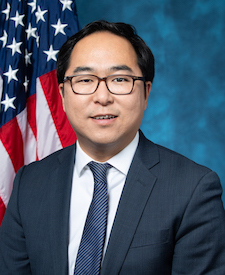
Andy Kim
Andy Kim Senate
D
Strong +
100% 3
Angela D. Alsobrooks
Angela D. Alsobrooks Senate
D
Strong +
100% 3
AA
Alan Armstrong Senate
R
Strong −
0% 3
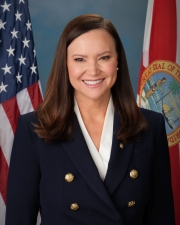
Ashley Moody
Ashley Moody Senate
R
Strong −
0% 3
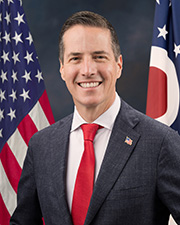
Bernie Moreno
Bernie Moreno Senate
R
Strong −
0% 3
Bill Cassidy
Bill Cassidy Senate
R
Strong −
0% 3
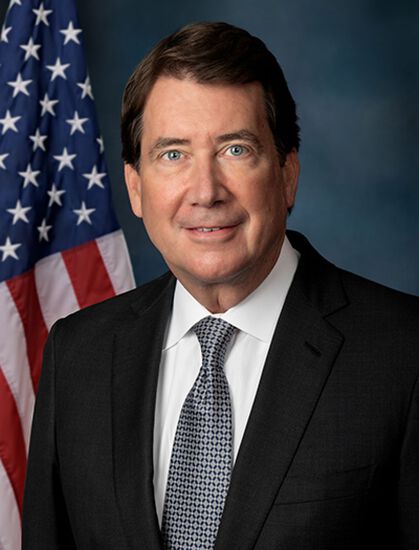
Bill Hagerty
Bill Hagerty Senate
R
Strong −
0% 3
Showing 11–20 of 30 bills

All environment bills

passed · United States · House Dec 15, 2025

HR 3898: PERMIT Act

The PERMIT Act (HR 3898) amends the definition of "navigable waters" under the Clean Water Act to exclude specific water features from federal regulation. It explicitly removes waste treatment systems, ephemeral streams (flowing only after rain), prior converted cropland, groundwater, and other features designated by regulators. This change directly affects federal agencies like the EPA and Army Corps of Engineers, reducing their jurisdiction over these excluded water bodies. The bill aims to streamline permitting by clarifying which waters fall under federal Clean Water Act oversight.
Sub-Topics Water Quality
in committee · United States · House Jun 13, 2025

HR 3897: Confidence in Clean Water Permits Act

HR 3897, the Confidence in Clean Water Permits Act, clarifies compliance requirements for facilities holding permits under the Clean Water Act. It directly affects industrial and wastewater facilities by expanding what counts as "compliance" with permit conditions, including pollutants not explicitly listed but identified during application or operations. Key provisions require that water quality-based limits in permits must clearly specify the pollutant and describe how compliance is achieved - either through numerical limits or detailed narrative requirements. The bill also includes minor technical corrections to existing permit language. These changes aim to reduce ambiguity in permit enforcement without altering the underlying regulatory framework.
in committee · United States · House Feb 11, 2025

HR 1217: Orphan Well Grant Flexibility Act of 2025

HR 1217, the Orphan Well Grant Flexibility Act of 2025, amends federal grant rules for cleaning up orphaned oil and gas wells by removing the requirement for states to measure methane emissions as a condition for receiving funding. It allows states to use estimated data from well plugging projects (without needing to collect new monitoring data) for reporting purposes. The bill also mandates a National Academies study to analyze how well-plugging activities affect local economies, housing, and water quality in communities where many wells are cleaned up, requiring input from all U.S. regions and agencies like HUD. This study must be completed within 18 months after the final grant is awarded, using existing federal funding.
in committee · United States · House Feb 12, 2025

HR 1267: Water Systems PFAS Liability Protection Act

HR 1267, the Water Systems PFAS Liability Protection Act, exempts certain water and wastewater treatment facilities from liability under the federal environmental cleanup law (CERCLA) for releases of specific PFAS chemicals. It directly affects public water systems, wastewater treatment plants, municipalities with stormwater permits, and their contractors who handle PFAS while following all applicable laws. The exemption applies only if facilities manage PFAS in compliance with existing federal or state water quality rules, such as through proper biosolids disposal or treated water discharge under permits. However, the bill does not protect facilities that act with gross negligence or willful misconduct in handling PFAS. This law changes liability rules for water systems but does not alter PFAS regulation standards.
in committee · United States · House Apr 9, 2025

HR 2783: Infrastructure Project Acceleration Act

HR 2783, the Infrastructure Project Acceleration Act, fast-tracks large-scale manufacturing projects in the U.S. by waiving certain federal environmental reviews. It applies to projects costing $1 billion or more that require federal approvals, directly affecting major manufacturers seeking to build or expand facilities. Key provisions exclude projects from needing permits under the Clean Water Act (Section 404) and the Endangered Species Act (Sections 7, 9, 10), modify National Environmental Policy Act (NEPA) reviews to accept equivalent state/Tribal environmental processes, and limit court challenges by barring judicial review of approvals for these projects. The bill aims to speed up manufacturing projects in critical sectors like defense and healthcare while reducing reliance on foreign manufacturing.
passed · United States · House Dec 15, 2025

HR 3668: Improving Interagency Coordination for Pipeline Reviews Act

This bill makes the Federal Energy Regulatory Commission (FERC) the sole lead agency for environmental reviews (NEPA) of natural gas pipeline projects, replacing the current multi-agency process. It requires FERC to coordinate early with other federal, state, or tribal agencies that issue permits, sets strict 90-day deadlines for final approvals after FERC's review, and mandates that other agencies defer to FERC's environmental assessment scope. The bill also streamlines water quality reviews by shifting certification requirements to FERC coordination and requires public tracking of all agency actions and deadlines through FERC's website. Pipeline applicants, FERC, and all agencies involved in permitting (like environmental or water quality authorities) are directly affected by these coordination and timeline requirements.
in committee · United States · House Jun 13, 2025

HR 3824: Reducing Regulatory Burdens Act of 2025

HR 3824, the Reducing Regulatory Burdens Act of 2025, removes a requirement for permits under the Clean Water Act for discharges of authorized pesticides into navigable waters. It amends the Federal Insecticide, Fungicide, and Rodenticide Act (FIFRA) and the Clean Water Act to state that EPA or states cannot mandate a permit for pesticide discharges resulting from legally authorized applications. The bill specifically exempts discharges from violations of pesticide law, stormwater, industrial manufacturing effluent, treatment works, and vessel operations. This directly affects pesticide users (like farmers) and regulatory agencies by eliminating a permitting step for routine pesticide applications already approved under FIFRA.
Sub-Topics Water Quality
in committee · United States · House Jun 13, 2025

HR 3927: Nationwide Permitting Improvement Act

HR 3927, the Nationwide Permitting Improvement Act, extends the term of nationwide permits for environmental projects from five to ten years and creates a new category for "linear infrastructure projects" like pipelines and power lines. It allows these projects to receive nationwide permits if they discharge dredged or fill material into less than 3 acres of navigable waters, classifying such impacts as "minimal." The bill removes requirements for certain environmental reviews, including consultations under the Endangered Species Act and full National Environmental Policy Act assessments, replacing them with streamlined environmental assessments. This directly affects infrastructure developers and the Army Corps of Engineers, which administers the permitting process under the Clean Water Act.
Sub-Topics Water Quality Wildlife
in committee · United States · House Jun 13, 2025

HR 3935: Reducing Permitting Uncertainty Act

HR 3935, the "Reducing Permitting Uncertainty Act," amends a key provision of the Clean Water Act to create clear timelines for federal permits involving disposal sites in U.S. waters. It requires the Environmental Protection Agency (EPA) to stop blocking or restricting disposal site applications during a defined period: from the date an applicant submits all required information to the date the permit is issued. This directly affects developers, construction firms, and other applicants seeking permits under Section 404 of the Clean Water Act. The bill’s main mechanism sets specific start and end dates for EPA review, reducing potential delays from indefinite administrative holds.
Sub-Topics Water Quality
in committee · United States · House May 13, 2025

HR 3346: Sovereign State Environmental Quality Assurance Act

HR 3346 would eliminate the federal Environmental Protection Agency (EPA) 270 days after the bill becomes law, transferring its environmental responsibilities to state and territorial agencies. The bill allocates $4.4 billion annually (2026-2029) to states based on population for programs covering air/water quality, waste management, chemical safety, and contaminated site cleanup. States must designate a specific environmental department to manage funds, undergo audits, and repay misused funds. This directly affects all 50 states, the District of Columbia, and U.S. territories by replacing federal oversight with state-administered environmental programs.
Showing 11 to 20 of 30 bills