Issue · Environment

Environment (Water Quality)

Every environment bill, vote, and legislator stance in United States, automatically classified by Maddy, our AI policy reader.

Total bills
213
119th Congress
Top supporter
Adam B. Schiff
100% support rate
Top opponent
Alan Armstrong
0% support rate
Ranked legislators
10
5 support · 5 oppose
Key legislators

Who's moving water quality in United States

Legislators moving water quality in United States
Legislator Party Stance Support rate Votes
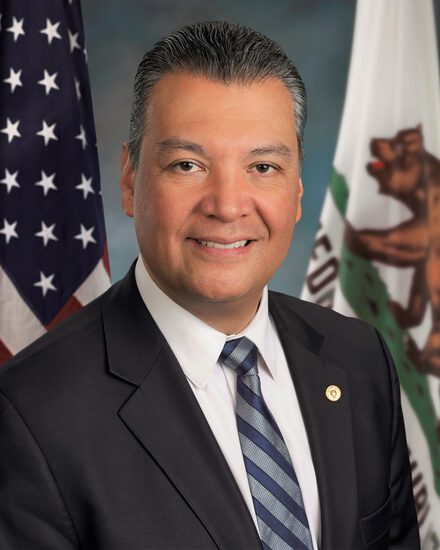
Adam B. Schiff
Adam B. Schiff Senate
D
Strong +
100% 3
Alex Padilla
Alex Padilla Senate
D
Strong +
100% 3
Amy Klobuchar
Amy Klobuchar Senate
D
Strong +
100% 3
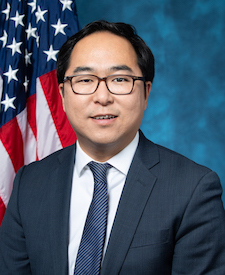
Andy Kim
Andy Kim Senate
D
Strong +
100% 3
Angela D. Alsobrooks
Angela D. Alsobrooks Senate
D
Strong +
100% 3
AA
Alan Armstrong Senate
R
Strong −
0% 3
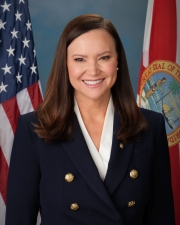
Ashley Moody
Ashley Moody Senate
R
Strong −
0% 3
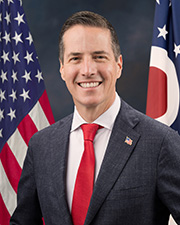
Bernie Moreno
Bernie Moreno Senate
R
Strong −
0% 3
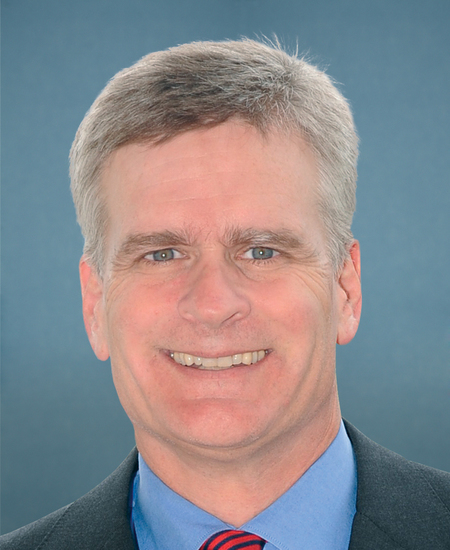
Bill Cassidy
Bill Cassidy Senate
R
Strong −
0% 3
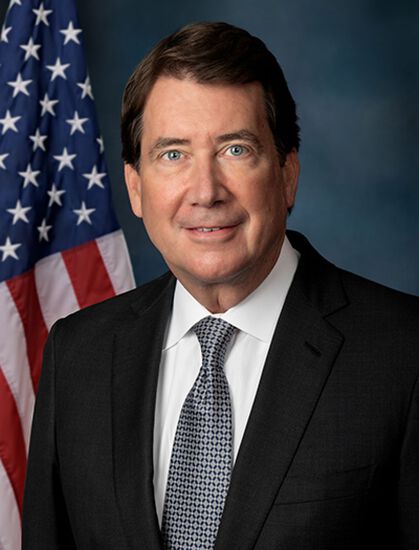
Bill Hagerty
Bill Hagerty Senate
R
Strong −
0% 3
Showing 151–160 of 213 bills

All environment bills

in committee · United States · House Apr 29, 2025

HR 3071: Increasing Penalties for Offshore Polluters Act

HR 3071, the "Increasing Penalties for Offshore Polluters Act," increases civil and criminal penalties for violations of oil spill regulations under the Federal Water Pollution Control Act. It doubles fines and prison terms for polluters, such as raising the maximum civil penalty from $2,500 to $5,000 per violation and increasing criminal fines from $250,000 to $500,000 per day for severe offenses, with prison terms doubling to up to 30 years. The bill directly affects offshore oil and gas operators who cause spills by making penalties significantly harsher. Key provisions mandate minimum penalty amounts instead of maximums and explicitly double all existing fine and imprisonment limits for violations. These changes apply to both civil enforcement actions and criminal prosecutions under current federal law.
Sub-Topics Water Quality
in committee · United States · House Nov 8, 2025

HR 5966: Ohio River Restoration Program Act

HR 5966 establishes the Ohio River Basin Restoration Program within the Environmental Protection Agency (EPA) to advance large-scale restoration and protection of the Ohio River Basin. The program, funded with $350 million annually from 2026-2030, directs the EPA to create a dedicated Program Office and advisory council including representatives from the 14 Ohio River Basin states, tribal governments, and regional agencies. It requires projects to improve water quality, increase flood resilience, restore habitats, control invasive species, and remediate toxins - prioritizing natural infrastructure like restored wetlands over traditional structures. The program mandates annual public reporting on progress, funding use, and project outcomes, with the EPA developing a detailed action plan within two years of enactment.
in committee · United States · Senate May 13, 2025

S 1730: Water Affordability, Transparency, Equity, and Reliability Act of 2025

This bill establishes significant federal funding for water infrastructure projects to improve affordability, transparency, equity, and reliability in water services. It allocates over $33 billion annually for clean water, drinking water, rural water, and Indian Health Service water infrastructure projects. The bill requires a comprehensive study on water affordability, discrimination in water services, and data collection about service disconnections, with a report to Congress within one year. It includes specific provisions about funding priorities, public ownership requirements for water systems, and protections for vulnerable populations facing service disconnections, affecting communities across the U.S., particularly low-income neighborhoods, rural areas, tribal communities, and colonias.
in committee · United States · House Feb 26, 2025

HR 1382: To amend the Federal Water Pollution Control Act with respect to San Francisco Bay restoration, and for other purposes.

HR 1382 amends the Federal Water Pollution Control Act to establish a formal San Francisco Bay Restoration Program. It provides federal funding through grants or cooperative agreements to local agencies, nonprofits, and the Estuary Partnership for specific Bay restoration projects, studies, and activities listed in an annual priority plan. The bill requires that federal funds cover no more than 75% of project costs, with non-federal sources (like local governments or nonprofits) contributing at least 25%. Additionally, it prohibits federal funding to entities with ties to certain foreign countries of concern, as defined in federal law.
Sub-Topics Water Quality
in committee · United States · House Jun 7, 2025

HR 3819: PROTECT Florida Act

This bill directs the Army Corps of Engineers to prioritize public health in managing Florida's water infrastructure, specifically requiring actions to prevent toxic algae blooms and harmful discharges into the St. Lucie and Caloosahatchee watersheds. Key provisions include modifying water operations to minimize cyanobacteria risks, updating the Master Operational Manual to coordinate all system elements, and mandating a study on pollution impacts from nutrient loading. It directly affects the Army Corps, Florida water management agencies, and communities downstream from Lake Okeechobee. The bill also prohibits using restoration funds for Deep Well Injection and ensures existing water quality standards remain intact.
in committee · United States · Senate Apr 15, 2026

S 528: GLRI Act of 2025

Great Lakes Restoration Initiative Act of 2025 or the GLRI Act of 2025 This bill reauthorizes through FY2031 the Great Lakes Restoration Initiative, which carries out programs and projects to protect and restore the Great Lakes.
Sub-Topics Water Quality
in committee · United States · House Feb 7, 2025

HR 1124: Help Our Kelp Act of 2025

The Help Our Kelp Act of 2025 establishes a federal grant program to fund projects restoring and conserving wild kelp forests. It directs the National Oceanic and Atmospheric Administration (NOAA) to award grants to eligible groups - including fishing industry members, tribes, nonprofits, and local governments - for projects addressing regional kelp decline, enhancing ecosystem resilience, removing sea urchins that harm kelp, and integrating Indigenous knowledge. Projects must include collaboration among eligible entities and meet specific criteria, with grants covering up to 85% of costs (allowing waivers for tribes). The bill authorizes $5 million annually (2026-2030), reserving at least $750,000 yearly for tribal-led projects.
Sub-Topics Water Quality
in committee · United States · Senate Feb 27, 2025

S 795: Farmers Freedom Act of 2025

Farmers Freedom Act of 2025 This bill excludes certain prior converted cropland from permit requirements under the Clean Water Act, including Section 404 permits for discharges of dredged materials into waters of the United States (WOTUS). The exclusion applies to areas that were converted to cropland prior to December 23, 1985. However, the bill does not exclude an area that has reverted to wetlands and has not been used for agricultural purposes in five years. In recent years, there has not been regulatory consistency about which cropland, such as cropland that has reverted to wetlands, is protected under the scope of the act as WOTUS. In 2020, the Environmental Protection Agency (EPA) and the U.S. Army Corps of Engineers issued the Navigable Waters Protection Rule that, among other provisions, defined  prior converted cropland in order to specify which cropland is excluded from the scope of the act. However, the U.S. District Court for the District of Arizona vacated the rule in Pascua Yaqui Tribe v. EPA . In 2023, the EPA and the Army Corps of Engineers issued another rule that excluded prior converted cropland from the scope of the act, but they defined the exclusion more narrowly than the exclusion in the 2020 rule.  Similar to the 2020 rule, this bill broadens the exclusion. The bill determines the scope of the exclusion by defining the term prior converted cropland in statute .
Sub-Topics Water Quality Tags Agriculture
in committee · United States · Senate Feb 11, 2025

S 508: BEACH Act of 2025

The BEACH Act of 2025 updates federal water quality monitoring for coastal areas by expanding the definition of covered waters to include nearby shallow upstream waters and areas "adjacent to or present on" public beaches. It allows states and local governments using federal grants to identify specific pollution sources in these waters, rather than just monitoring general water quality. The bill extends annual funding for the program from $30 million per year through 2029 (previously 2001-2005) and requires the Environmental Protection Agency to update guidance to reflect new water testing technologies. This directly affects coastal states managing beach water quality and public health notifications.
in committee · United States · House Dec 1, 2025

HR 5735: Coastal Infrastructure Improvement Act

HR 5735, the Coastal Infrastructure Improvement Act, establishes a 6-year federal research program to develop nature-inspired erosion control technologies for coastal areas. The bill directly affects coastal communities vulnerable to flooding and erosion by funding research into alternatives to traditional hard structures like seawalls. Key provisions require the Army Corps of Engineers to study biomimetic methods (such as systems mimicking natural processes) that protect shorelines while supporting ecosystems, with research conducted across diverse geographic locations. The program mandates annual reports to Congress evaluating outcomes and recommending future action, focusing on cost-effective, habitat-friendly solutions.
Showing 151 to 160 of 213 bills
Previous 1 15 16 17 22 Next