Issue · Environment

Environment (Conservation)

Every environment bill, vote, and legislator stance in United States, automatically classified by Maddy, our AI policy reader.

Total bills
304
119th Congress
Top supporter
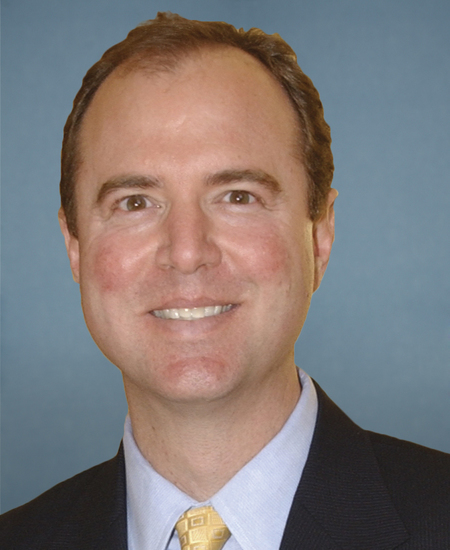
Adam B. Schiff
100% support rate
Top opponent
Ashley Moody
0% support rate
Ranked legislators
10
5 support · 5 oppose
Key legislators

Who's moving conservation in United States

Legislators moving conservation in United States
Legislator Party Stance Support rate Votes
Adam B. Schiff
Adam B. Schiff Senate
D
Strong +
100% 9
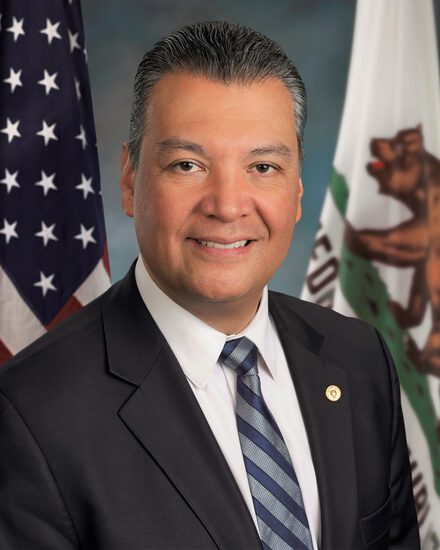
Alex Padilla
Alex Padilla Senate
D
Strong +
100% 9
Amy Klobuchar
Amy Klobuchar Senate
D
Strong +
100% 9
Andy Kim
Andy Kim Senate
D
Strong +
100% 9
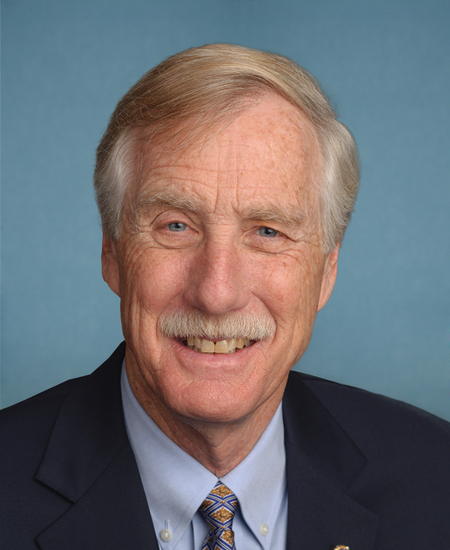
Angus S. King, Jr.
Angus S. King, Jr. Senate
I
Strong +
100% 9
Ashley Moody
Ashley Moody Senate
R
Strong −
0% 9
Bernie Moreno
Bernie Moreno Senate
R
Strong −
0% 9
Bill Cassidy
Bill Cassidy Senate
R
Strong −
0% 9
Bill Hagerty
Bill Hagerty Senate
R
Strong −
0% 9
Chuck Grassley
Chuck Grassley Senate
R
Strong −
0% 9
Showing 151–160 of 304 bills

All environment bills

in committee · United States · House Apr 1, 2025

HR 2537: Deschutes River Conservancy Reauthorization Act of 2025

HR 2537 reauthorizes the Deschutes River Conservancy Working Group through 2032, extending its existing program. The bill specifies the working group must include 10-15 members representing environmental groups, irrigated agriculture, the Confederated Tribes of Warm Springs, hydroelectric producers, federal agencies, Oregon state agencies (like fish and water departments), and local governments in the Deschutes River Basin. It increases the administrative cost cap from 5% to 10% of funds and updates the program’s expiration date from 2016 to 2032. This bill directly affects water management stakeholders in Oregon's Deschutes River Basin by continuing their collaborative conservation work.
Sub-Topics Conservation
in committee · United States · Senate Feb 5, 2025

S 416: Marsh-Billings-Rockefeller National Historical Park Establishment Act Amendments Act of 2025

S 416 amends the Marsh-Billings-Rockefeller National Historical Park Act to expand the park’s boundaries, incorporating specific areas like the historic mansion complex, Billings Farm and Museum, and the King Farm (split between historic and protection zones). It clarifies land acquisition rules, allowing the National Park Service to acquire land via donation, purchase, or exchange, and specifies that the King Farm must be used for agriculture, conservation, and educational purposes that maintain its historic character. The bill also establishes the National Park Service Stewardship Institute at the park to promote workshops and best practices in conservation stewardship. These changes directly affect park management, landowners within the expanded boundaries, and the ongoing operations of the King Farm and Billings Farm.
in committee · United States · House Nov 7, 2025

HR 5970: Save Our Ships Act

This bill creates the Historic Naval Ship Preservation Grant Program under the Department of the Interior to fund the physical preservation of decommissioned military vessels displayed at public sites like museums and memorials. It authorizes $5 million annually for competitive grants to state/local governments or nonprofits managing these "covered sites," covering vessel repairs, environmental protection, and education programs related to shipbuilding and submarine careers. The program directly supports organizations that maintain historic military vessels, ensuring public access to these educational resources. It does not alter existing vessel ownership or military operations but provides dedicated funding for their upkeep and educational use.
Sub-Topics Conservation
in committee · United States · House Jan 13, 2026

HR 4892: Seedlings for Sustainable Habitat Restoration Act of 2025

This bill authorizes the U.S. Forest Service to fund contracts and grants with state forestry agencies, local nonprofits, universities, tribal governments, and regional coalitions to collect native seeds and produce seedlings for ecosystem restoration. It specifically directs these funds toward activities like maintaining seed orchards and growing seedlings for replanting vegetation in degraded landscapes. The law modifies existing programs under the Infrastructure Investment and Jobs Act and the Public Land Management Act to include these seed and seedling initiatives. This directly supports organizations working on restoring forests, grasslands, and other habitats using locally adapted native plant materials.
in committee · United States · House Aug 20, 2026

HR 6893: Chesapeake Bay Watershed Advancement for Training, Education, Restoration, and Science (WATERS) Act

HR 6893, the Chesapeake Bay Watershed Advancement for Training, Education, Restoration, and Science (WATERS) Act, reauthorizes and updates NOAA's Chesapeake Bay Office to better support Bay restoration. It establishes new programs including a watershed education initiative for students and teachers, a coastal habitat management program focused on species like oysters and blue crabs, and requirements for coordinated scientific monitoring of water quality and living resources. The bill mandates the Office Director to consult with the Chesapeake Executive Council, ensure peer-reviewed scientific merit for funded projects, and submit biennial reports to Congress on progress. This directly affects NOAA, Bay watershed states, educators, researchers, and conservation groups working on Bay restoration under the Chesapeake Bay Program.
in committee · United States · House Nov 19, 2025

HR 6075: Water Infrastructure Modernization Act of 2025

The Water Infrastructure Modernization Act of 2025 amends federal water law to define and support "intelligent water infrastructure technology," including real-time monitoring systems, AI-driven wastewater optimization tools, leak detection sensors, and advanced metering for conservation. It directly affects municipal water systems and utilities by expanding eligible uses for federal grants - allowing funds for implementing these technologies (like predictive aquifer recharge systems) while prohibiting grants for planning or maintenance. The bill increases annual grant funding from $25 million to $50 million (starting in 2028) and requires annual reports to Congress on funded projects and their resiliency improvements. This creates a clear pathway for communities, especially disadvantaged ones, to access federal support for modernizing aging water infrastructure through data-driven solutions.
in committee · United States · House Mar 20, 2026

HR 7474: Soil CARE Act of 2026

The Soil CARE Act of 2026 requires the Natural Resources Conservation Service (NRCS) to establish a training program for its staff and third-party providers (such as farming consultants, conservation groups, and land-grant universities) on soil health management. The program includes an online curriculum and in-person workshops delivered twice every two years in each NRCS region, covering topics like soil biology, regenerative farming systems, and conservation practices. It mandates biennial updates to the curriculum and authorizes $10 million in funding for fiscal years 2027-2032. This initiative aims to improve NRCS and partner support for agricultural producers adopting soil health practices, without directly affecting producers themselves.
in committee · United States · Senate Feb 4, 2026

S 291: Lower Colorado River Multi-Species Conservation Program Amendment Act of 2025

Lower Colorado River Multi-Species Conservation Program Amendment Act of 2025 This bill establishes an interest-bearing account for the nonfederal contributions for the Lower Colorado River Multi-Species Conservation Program, a cooperative effort between federal and nonfederal entities in Arizona, California, and Nevada. The program works to recover multiple species listed under the Endangered Species Act.
Sub-Topics Conservation Wildlife
in committee · United States · House Mar 20, 2025

HR 1459: Protect the West Act of 2025

The Protect the West Act of 2025 establishes a $60 billion Outdoor and Watershed Restoration Fund to support projects improving forest conditions, rangeland health, watershed function, and wildlife habitat on both Federal and non-Federal lands. The bill creates two main programs: a $20 billion grant program for planning and projects on non-Federal land (with priority for wildfire risk reduction and community collaboration), and a $40 billion Partnership Program for restoration projects on Federal land, with at least $20 billion specifically allocated for Federal land projects. Eligible entities including states, tribes, local governments, and nonprofits can apply for funding to carry out projects that address wildfire risk, improve habitat, and create outdoor jobs while complementing existing conservation programs. The bill requires projects to follow best available science, prohibits work in wilderness areas, and mandates annual reporting to Congress on fund usage and outcomes.
in committee · United States · House Jun 24, 2025

HR 4108: Refuge From Cruel Trapping Act

HR 4108, the Refuge From Cruel Trapping Act, bans the possession or use of body-gripping traps (traps that kill or severely injure wildlife) in National Wildlife Refuges. It directly affects visitors, hunters, and trappers using such traps within refuge boundaries, with limited exceptions for federal agencies managing invasive species or endangered wildlife, dismantling traps, Alaska-specific use, and tribal subsistence hunting. The bill includes penalties of up to $500 per trap, potential jail time, and forfeiture of traps or captured wildlife for violations. It requires the Secretary of the Interior to issue implementing regulations within 120 days but takes effect 120 days after enactment.
Sub-Topics Conservation Wildlife
Showing 151 to 160 of 304 bills
Previous 1 15 16 17 31 Next