Issue · Environment

Environment

Every environment bill, vote, and legislator stance in United States, automatically classified by Maddy, our AI policy reader.

Total bills
1,479
119th Congress
Top supporter
Martin Heinrich
84% support rate
Top opponent
Marsha Blackburn
11% support rate
Ranked legislators
10
5 support · 5 oppose
Key legislators

Who's moving environment in United States

Legislators moving environment in United States
Legislator Party Stance Support rate Votes
Martin Heinrich
Martin Heinrich Senate
D
Strong +
84% 215
Adam B. Schiff
Adam B. Schiff Senate
D
Support
79% 231
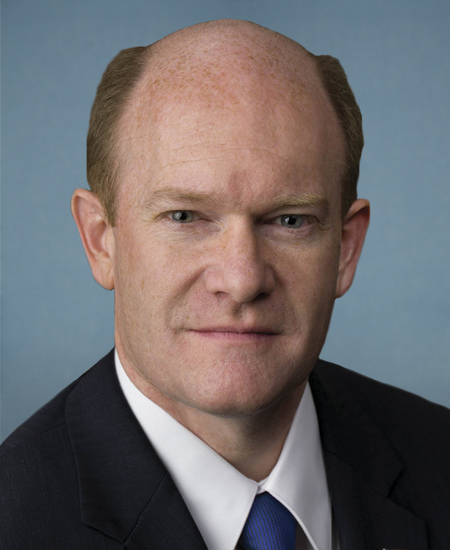
Christopher A. Coons
Christopher A. Coons Senate
D
Support
79% 229
Jeanne Shaheen
Jeanne Shaheen Senate
D
Support
78% 232
Alex Padilla
Alex Padilla Senate
D
Support
78% 232
Marsha Blackburn
Marsha Blackburn Senate
R
Strong −
11% 211
Ted Budd
Ted Budd Senate
R
Strong −
20% 220
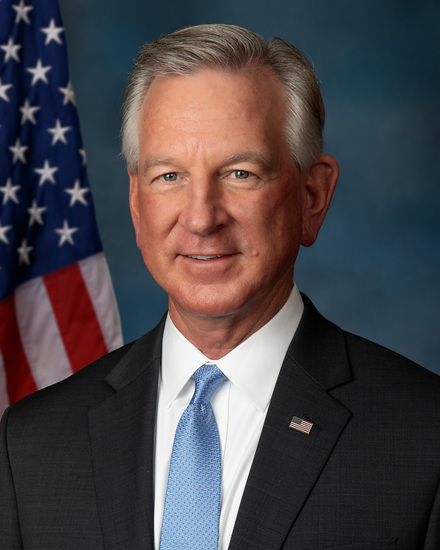
Tommy Tuberville
Tommy Tuberville Senate
R
Oppose
21% 229
Bill Cassidy
Bill Cassidy Senate
R
Oppose
22% 221
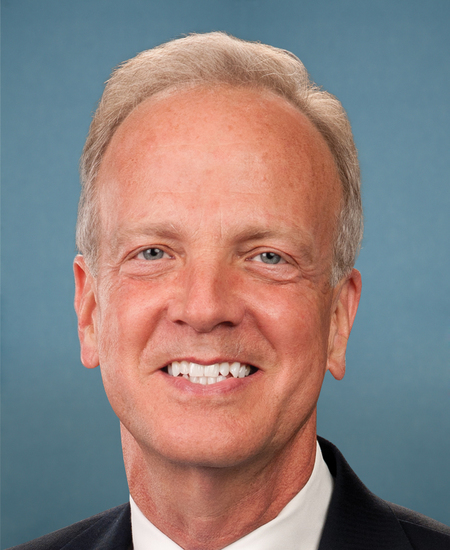
Jerry Moran
Jerry Moran Senate
R
Oppose
23% 228
Showing 1,471–1,479 of 1,479 bills

All environment bills

in committee · United States · Senate Mar 5, 2026

SJRES 113: A joint resolution providing congressional disapproval under chapter 8 of title 5, United States Code, of the rule submitted by the Office of the Comptroller of the Currency relating to "Rescission of Principles for Climate-Related Financial Risk Management for Large Financial Institutions".

This bill (SJRES 113) is a congressional disapproval resolution targeting a rule proposed by the Office of the Comptroller of the Currency (OCC). It seeks to block the OCC's rule that would have removed existing requirements for large financial institutions to manage climate-related financial risks. If passed, the resolution would prevent this rule from taking effect, meaning current climate risk management principles would remain in place for major banks. The bill directly affects large financial institutions subject to the OCC's regulations, keeping their climate risk management obligations unchanged.
in committee · United States · Senate Feb 5, 2026

S 3800: ePermit Act

The ePermit Act requires federal agencies to adopt standardized digital systems for environmental reviews and authorizations, creating a unified online portal for project sponsors to submit documents, track progress, and access real-time data. It mandates data standards for consistent information sharing, automated tools for screening projects and managing public comments, and a deadline for full implementation by December 2027. The bill directly affects federal agencies (like the EPA and Army Corps of Engineers), project developers seeking permits, and the public by replacing fragmented paper-based processes with a transparent, digital platform. Key provisions include requiring agencies to report on current systems within 90 days, implement minimum functional tools within 180 days, and prioritize vendor-neutral interoperability to reduce delays and redundancy.
Sub-Topics Digital Government
in committee · United States · Senate Jul 29, 2026

S 3738: MORE WATER Act

The MORE WATER Act reauthorizes and expands federal water recycling and reuse programs while establishing a new Water Conveyance Improvement Program to fund water infrastructure projects. It authorizes $450 million for water recycling projects and $500 million for conveyance projects from 2028-2032, with specific requirements for multi-benefit projects. The bill mandates that at least 50% of conveyance projects must provide environmental benefits or safe drinking water for low-income communities, with 50% of multi-benefit projects specifically providing each type of benefit. It requires projects to include specific water quality and environmental protections, including benefits for endangered species and low-income communities. The legislation aims to improve water infrastructure while ensuring projects address both community needs and environmental conservation.
in committee · United States · Senate Jan 24, 2025

SRES 36: A resolution expressing the sense of the Senate that the United States, States, cities, Tribal nations, businesses, institutions of higher education, and other institutions in the United States should work toward achieving the goals of the Paris Agreement.

SRES 36 is a non-binding Senate resolution expressing the Senate's support for the United States working with states, cities, Tribal nations, businesses, and institutions to achieve the goals of the Paris Agreement on climate change. It urges federal, state, and local policies to reduce emissions and align with the Paris Agreement's objectives. The resolution highlights existing climate actions by states, cities, and businesses (like renewable energy commitments and the Inflation Reduction Act) but does not create new laws or funding. It serves as a symbolic statement of bipartisan support for climate action, noting the U.S. has submitted updated emissions targets to meet Paris goals.
in committee · United States · Senate Dec 17, 2025

S 3530: Strategic Resources Non-discrimination Act

The Strategic Resources Non-discrimination Act (S 3530) amends the Defense Production Act to prohibit federal discrimination against energy companies based on their energy source. It adds a new provision stating the President cannot deny financial support under certain sections (301, 302, or 303) for energy production - excluding fossil fuel activities - unless the denial is for environmental protection reasons. This directly affects companies seeking federal financial assistance for energy projects, ensuring they cannot be blocked solely for working with fossil fuels. The bill does not change environmental regulations but clarifies that support decisions must not target specific energy sources.
Sub-Topics Oil & Gas
in committee · United States · Senate Jun 10, 2026

S 3693: Large-Scale Water Recycling Reauthorization Act

This bill reauthorizes a federal grant program that funds large-scale water recycling and reuse projects, directly affecting water utilities, municipalities, and environmental organizations applying for these grants. It extends the program's funding period from 5 to 10 years under the existing Infrastructure Investment and Jobs Act framework. The key provision simply modifies the duration of the competitive grant program without adding new requirements or eligibility changes. This change provides longer-term stability for grantees planning multi-year water recycling infrastructure projects.
in committee · United States · House Jul 22, 2025

HR 4493: Climate Health Emergency Act of 2025

HR 4493, the Climate Health Emergency Act of 2025, requires the Secretary of Health and Human Services to declare a public health emergency specifically for climate-related health risks under existing law. This bill directly affects the federal public health system by mandating this emergency declaration, based on findings that climate change drives over half of recent public health emergencies (like extreme weather and disease spread). The key mechanism is the formal declaration under the Public Health Service Act, aiming to mobilize federal resources and improve coordination for climate-driven health threats. It focuses on addressing the growing health impacts linked to climate change, as identified in congressional findings.
Sub-Topics Climate Change Natural Disasters Public Health Tags Emergency Management
in committee · United States · House Apr 24, 2025

HR 2995: Protection from Cumulative Emissions and Underenforcement of Environmental Law Act of 2025

This bill requires the EPA to develop a protocol assessing how multiple pollution sources and climate impacts (like extreme heat, air pollution, and water contamination) affect public health within 180 days, with public input through hearings. It also mandates identifying at least 100 communities with high environmental violations (often low-income or minority areas) and creating action plans to reduce violations significantly below national averages within two years. The EPA must finalize the protocol within a year and fully implement it by year three. This directly affects EPA operations and overburdened communities facing disproportionate pollution exposure.
in committee · United States · Senate May 22, 2025

SRES 248: A resolution expressing the need for the Federal Government to establish a national biodiversity strategy for protecting biodiversity for current and future generations.

This resolution (SRES 248) calls on the federal government to create a national biodiversity strategy to address accelerating biodiversity loss. It specifically urges the establishment of a coordinated strategy with key goals, including protecting at least 30% of U.S. lands and waters by 2030 (the "30x30" target), protecting endangered species, integrating climate action, and incorporating Indigenous knowledge. The strategy would require federal agencies to coordinate conservation efforts, collaborate with states, tribes, and communities, and ensure equitable access to nature for historically impacted groups like Tribal communities and communities of color. As a non-binding resolution, it directs agencies to develop this strategy but does not create new laws or funding.
Sub-Topics Conservation Wildlife Tags Tribal Nations
Showing 1,471 to 1,479 of 1,479 bills