Issue · Environment

Environment (Water Quality)

Every environment bill, vote, and legislator stance in United States, automatically classified by Maddy, our AI policy reader.

Total bills
213
119th Congress
Top supporter
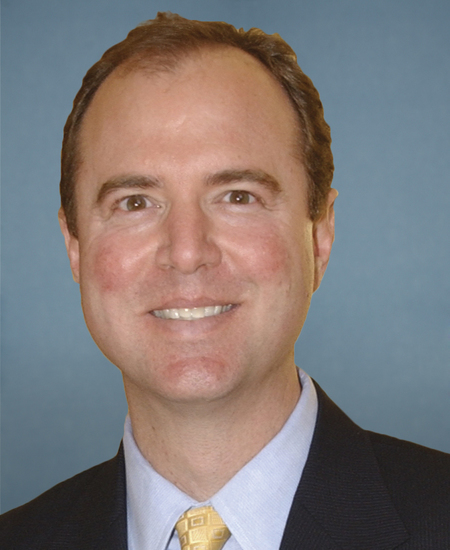
Adam B. Schiff
100% support rate
Top opponent
Alan Armstrong
0% support rate
Ranked legislators
10
5 support · 5 oppose
Key legislators

Who's moving water quality in United States

Legislators moving water quality in United States
Legislator Party Stance Support rate Votes
Adam B. Schiff
Adam B. Schiff Senate
D
Strong +
100% 3
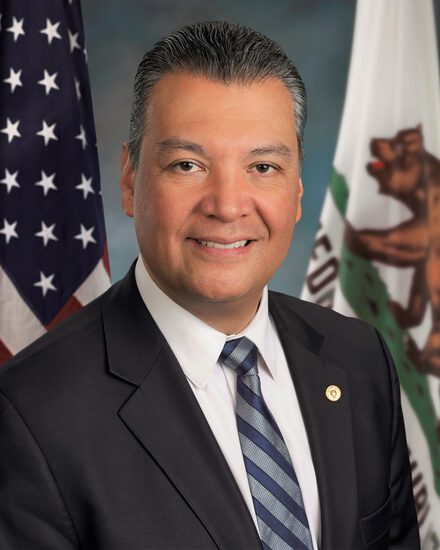
Alex Padilla
Alex Padilla Senate
D
Strong +
100% 3
Amy Klobuchar
Amy Klobuchar Senate
D
Strong +
100% 3
Andy Kim
Andy Kim Senate
D
Strong +
100% 3
Angela D. Alsobrooks
Angela D. Alsobrooks Senate
D
Strong +
100% 3
AA
Alan Armstrong Senate
R
Strong −
0% 3
Ashley Moody
Ashley Moody Senate
R
Strong −
0% 3
Bernie Moreno
Bernie Moreno Senate
R
Strong −
0% 3
Bill Cassidy
Bill Cassidy Senate
R
Strong −
0% 3
Bill Hagerty
Bill Hagerty Senate
R
Strong −
0% 3
Showing 131–140 of 213 bills

All environment bills

in committee · United States · House Feb 2, 2026

HR 6616: Clean Water Justice Act

HR 6616, the Clean Water Justice Act, amends criminal penalties under the Federal Water Pollution Control Act. It increases maximum fines for water pollution violations: from $5,000 to $25,000, $50,000 to $250,000, and $100,000 to $500,000. The bill also requires annual adjustments to these fines based on the Consumer Price Index, published in the Federal Register, to account for inflation. These changes directly affect polluters who violate federal water pollution laws. The provisions modify existing penalty structures without creating new regulations.
in committee · United States · Senate May 14, 2025

S 1765: Connecticut River Watershed Partnership Act

The Connecticut River Watershed Partnership Act establishes a federal program to coordinate habitat restoration, water quality improvement, and public access projects across the Connecticut River watershed (encompassing Connecticut, Maine, Massachusetts, New Hampshire, and Vermont). It creates a competitive grant program providing matching funds to states, tribes, nonprofits, and universities, with enhanced federal funding (up to 90%) for projects serving environmental justice communities - defined as communities of color, low-income areas, or Tribal groups facing disproportionate environmental risks. The program requires consultation with tribal governments, local entities, and affected communities to implement watershed-wide strategies focused on ecosystem health, climate resilience, and equitable access to natural spaces. It mandates annual congressional reports and authorizes funding for 2026-2030, prioritizing projects that restore fish/wildlife habitat, improve water quality, and support community engagement.
in committee · United States · House Jun 29, 2026

HR 3300: Forest Protection and Wildland Firefighter Safety Act of 2025

HR 3300 amends a permit requirement under the Federal Water Pollution Control Act to exempt certain aerial fire suppression applications from needing a permit. It specifically allows the use of fire control products listed on the Forest Service's current Qualified Products List without a permit during wildfire operations. This directly affects wildland firefighters and federal agencies like the Forest Service when deploying approved suppression materials. The change streamlines access to critical firefighting tools during emergencies by removing a specific regulatory barrier.
Sub-Topics Forestry Water Quality
in committee · United States · House Mar 20, 2026

HR 7376: Local Water Protection Act

HR 7376, the Local Water Protection Act, amends an existing provision in the Federal Water Pollution Control Act to extend the funding period for state nonpoint source management programs from fiscal years 2023-2027 to 2027-2031. This change directly affects states and local agencies that administer these programs, which address pollution from diffuse sources like agricultural runoff. The bill makes a procedural adjustment to the program's timeline without altering its core requirements or creating new policy.
Sub-Topics Water Quality
in committee · United States · Senate Jul 23, 2025

S 2415: Columbia River Clean-Up Act of 2025

This bill amends the Federal Water Pollution Control Act to extend the funding period for the Columbia River Basin Restoration program from 2020-2021 to 2026-2030. It directly affects the federal program responsible for managing cleanup efforts in the Columbia River Basin. The key change updates the timeframe for allocating funds toward river restoration projects, without altering the program's scope or requirements.
Sub-Topics Water Quality
in committee · United States · House Feb 5, 2026

HR 7408: Water Project Navigators Act

HR 7408 establishes the Water Project Navigators Program, which provides federal grants to eligible entities like states, tribes, local water districts, and nonprofits. The program funds "navigators" to help disadvantaged communities, rural areas, and tribal nations develop multi-benefit water projects that improve water access, climate resilience, and ecosystem health. Key provisions include prioritizing applications serving underserved communities, limiting federal funding to 75% of project costs (with waivers for financial hardship), and authorizing $15 million annually for fiscal years 2027-2032. Navigators assist with grant writing, project planning, and technical support to address water supply imbalances and infrastructure needs.
in committee · United States · House Dec 2, 2025

HR 5875: COWS Act of 2025

The COWS Act of 2025 creates a new program to help livestock and dairy farmers adopt manure management practices that reduce greenhouse gas emissions, such as composting, pasture-based systems, and technologies avoiding wet storage. It provides financial incentives (up to 100% of costs for planning, equipment, and implementation) with at least 50% paid upfront, prioritizing small/mid-sized operations, beginning farmers, and socially disadvantaged producers. The bill requires the Secretary to develop evaluation criteria focused on maximizing carbon sequestration, emissions reductions, and environmental benefits like improved water quality, while offering technical assistance for implementation.
Sub-Topics Climate Change Water Quality Tags Agriculture
passed · United States · House May 14, 2025

HR 167: Community Reclamation Partnerships Act of 2025

HR 167, the Community Reclamation Partnerships Act of 2025, allows states to create memoranda with federal agencies to address mine drainage pollution on abandoned mine lands. It establishes "Community Reclaimers" (non-responsible entities like companies not causing pollution) to implement cleanup projects, requiring states to assume liability for project costs and ensure public review. Key provisions mandate detailed project plans, water quality monitoring, technical capability verification, and contingency plans for emergencies. The bill amends the 1977 Surface Mining Act, with projects needing state memoranda approval and specific documentation, and expires September 30, 2032. It directly affects states, Community Reclaimers, and landowners near abandoned mine sites.
in committee · United States · Senate May 8, 2025

S 1672: Forest Protection and Wildland Firefighter Safety Act of 2025

S 1672, the Forest Protection and Wildland Firefighter Safety Act of 2025, modifies a permit rule under the Federal Water Pollution Control Act to streamline firefighting operations. It adds an exception allowing the aerial application of fire retardants listed on the Forest Service's Qualified Products List without requiring a separate pollution discharge permit during wildfires. This directly affects wildland firefighters and federal agencies (like the Forest Service) using these approved products during emergency fire suppression. The key change removes a bureaucratic barrier for using essential firefighting chemicals during active fire events.
Sub-Topics Forestry Water Quality
in committee · United States · Senate Mar 5, 2025

S 857: Water Conservation Rebate Tax Parity Act

This bill expands tax exclusions for homeowners by adding water conservation, storm water management, and wastewater management rebates to the existing tax-free treatment for energy efficiency subsidies. It directly affects residents receiving rebates from public utilities, local governments, or storm water providers for qualifying installations like low-flow fixtures, rain barrels, or septic system upgrades (with wastewater rebates limited to principal residences). Key provisions redefine "water conservation measure" and "storm water management measure" to clarify eligible upgrades and explicitly include water utilities and storm water providers under tax-exclusion rules. The changes apply to rebates received after December 31, 2021, without altering tax treatment for prior rebates.
Showing 131 to 140 of 213 bills
Previous 1 13 14 15 22 Next