Issue · Environment

Environment

Every environment bill, vote, and legislator stance in United States, automatically classified by Maddy, our AI policy reader.

Total bills
1,479
119th Congress
Top supporter
Martin Heinrich
84% support rate
Top opponent
Marsha Blackburn
11% support rate
Ranked legislators
10
5 support · 5 oppose
Key legislators

Who's moving environment in United States

Legislators moving environment in United States
Legislator Party Stance Support rate Votes
Martin Heinrich
Martin Heinrich Senate
D
Strong +
84% 215
Adam B. Schiff
Adam B. Schiff Senate
D
Support
79% 231
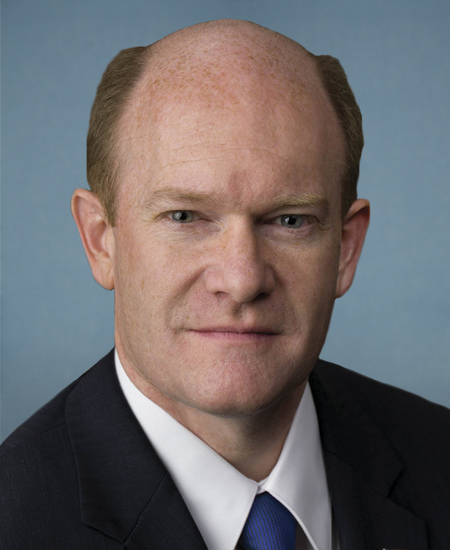
Christopher A. Coons
Christopher A. Coons Senate
D
Support
79% 229
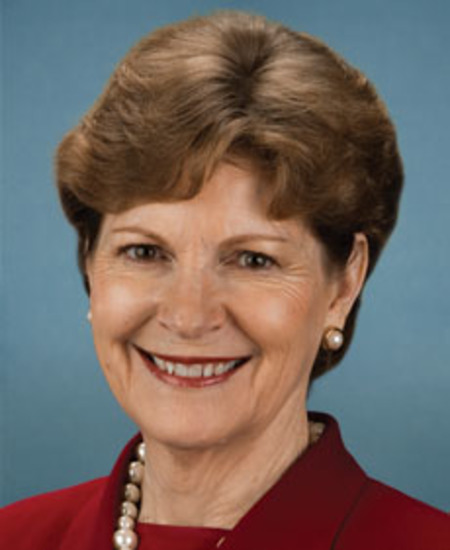
Jeanne Shaheen
Jeanne Shaheen Senate
D
Support
78% 232
Alex Padilla
Alex Padilla Senate
D
Support
78% 232
Marsha Blackburn
Marsha Blackburn Senate
R
Strong −
11% 211
Ted Budd
Ted Budd Senate
R
Strong −
20% 220
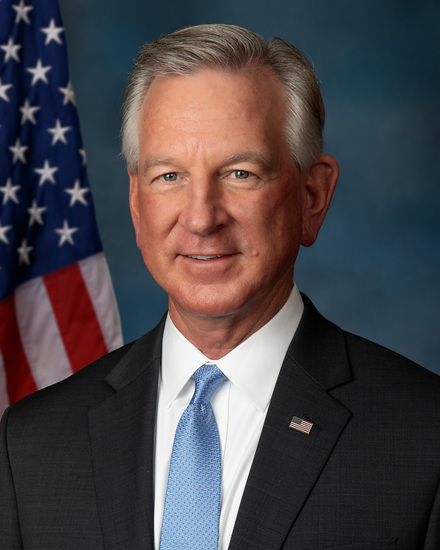
Tommy Tuberville
Tommy Tuberville Senate
R
Oppose
21% 229
Bill Cassidy
Bill Cassidy Senate
R
Oppose
22% 221
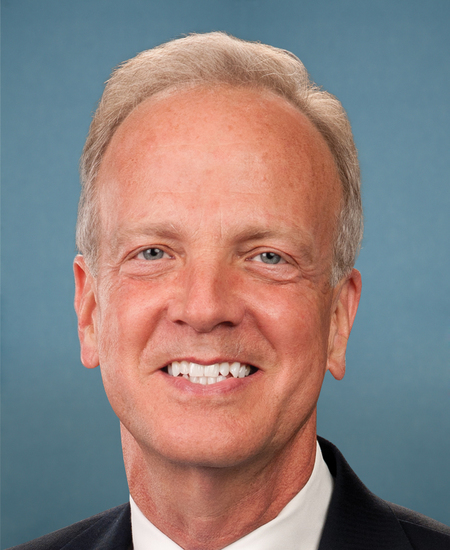
Jerry Moran
Jerry Moran Senate
R
Oppose
23% 228
Showing 1,371–1,380 of 1,479 bills

All environment bills

in committee · United States · House Apr 1, 2025

HR 1265: To amend the Save Our Seas 2.0 Act to expand eligibility for certain wastewater infrastructure grants, and for other purposes.

This bill expands eligibility for wastewater infrastructure grants under the Save Our Seas 2.0 Act. It allows states and Indian Tribes to directly apply for these grants - previously, only municipalities and local governments could apply. The changes specifically update two sections of the law to include "States," before "municipalities" and "units of local government" in grant application criteria. This means coastal states and tribal governments can now seek funding to improve wastewater systems and reduce ocean pollution. The policy change directly affects communities managing coastal water infrastructure seeking federal grant support.
in committee · United States · Senate Dec 11, 2025

S 3441: Nuclear Plant Decommissioning Act of 2025

The Nuclear Plant Decommissioning Act of 2025 establishes new requirements for nuclear power plant decommissioning activities, directly affecting nuclear plant operators, host states, tribal governments, and nearby communities within 50 miles of decommissioning facilities. Key provisions require licensees to consult with affected states and tribal governments before submitting decommissioning plans or transferring licenses, establish grant programs for community advisory boards to facilitate public input, and create economic recovery accounts funded by nuclear plant operators to support host communities during and after decommissioning. The bill also provides financial assistance to communities with stranded nuclear waste based on the amount of spent nuclear fuel stored at decommissioned plants. These measures aim to ensure public health and environmental protection while supporting communities affected by nuclear plant decommissioning.
in committee · United States · Senate Sep 18, 2025

S 2880: Great Lakes Mass Marking Program Act of 2025

This bill establishes the Great Lakes Mass Marking Program, requiring the U.S. Fish and Wildlife Service to tag hatchery fish (9-11 million annually) with automated markers to track their impact alongside wild fish. It directly affects state and tribal fish management agencies in eight Great Lakes states, providing them with data to adjust stocking rates, evaluate habitat restoration, and balance fish populations. Key provisions mandate collaboration with state, tribal, and federal agencies, make program data publicly available for management decisions, and authorize $5 million yearly for 2026-2030 to fund tagging equipment, personnel, and data analysis. The program aims to improve science-based management of Great Lakes fisheries, supporting both ecological health and the $7 billion regional economy dependent on fishing.
Sub-Topics Wildlife
in committee · United States · Senate Aug 1, 2025

S 2643: Seedlings for Sustainable Habitat Restoration Act of 2025

This bill amends existing federal laws to expand funding for ecosystem restoration projects focused on native seeds and seedlings. It authorizes the Secretary of Agriculture (via the Forest Service) to provide contracts, grants, or agreements to state forestry agencies, nonprofits, universities, tribes, and multistate coalitions for two specific activities: (1) collecting and maintaining native seeds (including from managed seed orchards), and (2) producing seedlings for revegetation. The funding supports habitat restoration efforts by directly enabling these entities to source and grow native plant materials. The bill does not create new programs but integrates seed and seedling production into current restoration frameworks under the Infrastructure Investment and Jobs Act and the Collaborative Forest Landscape Restoration Program.
Sub-Topics Conservation Forestry
in committee · United States · Senate Jun 26, 2025

S 2179: Canyon’s Law

S 2179, "Canyon’s Law," bans the use of M-44 devices (sodium cyanide-based poisoners) on public lands managed by federal agencies like the National Park Service, U.S. Fish and Wildlife Service, and Bureau of Land Management. The bill prohibits placing, deploying, or using these devices on public land and requires all existing devices to be removed within 30 days of enactment. It directly affects federal land management agencies and any entity currently authorized to use M-44s, such as state wildlife or livestock control programs. The law aims to prevent further harm to people, non-target wildlife (including endangered species like eagles and bears), and pets, following documented incidents of poisoning and animal deaths.
in committee · United States · House Apr 24, 2025

HR 2997: Green Climate Fund Authorization Act of 2025

HR 2997 authorizes $4 billion annually for fiscal years 2026-2027 to fund the Green Climate Fund (GCF), a UN-backed institution supporting climate projects in developing countries. The bill requires all funded projects to reduce greenhouse gas emissions or help communities adapt to climate impacts while prioritizing vulnerable groups, including communities of color, indigenous peoples, and low-income areas. It mandates that projects must incorporate gender equality, respect human rights, and obtain community consent before implementation. This authorization increases U.S. contributions to the GCF, which has received only $2 billion despite a $3 billion pledge, to fulfill international climate finance commitments.
Sub-Topics Climate Change
in committee · United States · Senate Dec 16, 2025

S 3506: Post-Wildfire Environmental Emergency Assistance Act

This bill (S 3506) allows the President to provide federal assistance for clearing wildfire debris from public and private lands and waters *without* requiring a formal major disaster declaration. It directly affects states and local governments managing post-wildfire cleanup, especially when hazardous waste (like chemicals or toxic materials) is involved. Key provisions include authorizing debris removal assistance under the Stafford Act and directing the EPA to provide resources (personnel, equipment, expertise) to help safely handle hazardous substances identified under federal environmental laws. The bill streamlines cleanup by enabling immediate federal support for debris removal and hazardous waste management after wildfires.
Sub-Topics Forestry Hazardous Materials Natural Disasters Tags Emergency Management
in committee · United States · House Jan 15, 2026

HR 6637: To advance bipartisan priorities.

This bill establishes a carbon tax on fossil fuel emissions starting at $35 per metric ton in 2027, with annual increases tied to inflation. It creates the Rebuilding Infrastructure and Solutions for the Environment (RISE) Trust Fund to distribute tax revenues toward infrastructure projects, climate adaptation, energy sector worker retraining, and carbon capture research. The bill also establishes a National Climate Commission to set emissions reduction goals and assess federal climate policies, while implementing border adjustments to prevent carbon leakage for imported goods. Additional sections address cancer research funding, PFAS contamination at defense sites, voting rights for unaffiliated voters, and restrictions on financial transactions for House members.
in committee · United States · Senate Sep 18, 2025

S 2905: Pipeline Accountability Act of 2025

The Pipeline Accountability Act of 2025 requires pipeline operators to install rupture-mitigation valves on pipelines in high consequence areas within five years, aiming to minimize product release during ruptures. It establishes an Office of Public Engagement to coordinate community outreach and provide transparency about pipeline safety, and mandates that pipeline operators disclose safety data including incident history, pipeline locations, and potential impact zones to the public. The bill prohibits pipeline releases that would require incident reporting and creates new pathways for private citizens to pursue civil actions for pipeline safety violations. These provisions apply to natural gas, hazardous liquid, and carbon dioxide pipeline operators, with specific requirements for both existing and new infrastructure.
in committee · United States · Senate Dec 17, 2025

S 3556: Wildlife Crossings Program Reauthorization Act of 2025

This bill reauthorizes a federal program providing funding for wildlife crossings - such as overpasses or underpasses - to help animals safely cross roads. It authorizes $100 million annually from 2027 through 2031 from the Highway Trust Fund, making the program permanent (removing "pilot" language). Key provisions include requiring 90% federal funding for projects in small, rural, or disadvantaged communities (up to 100% if financial hardship exists) and allocating 0.5% of funds yearly to help tribes and other eligible groups apply for and access program funding more efficiently. The bill directly affects communities and tribes seeking to build wildlife crossings near highways.
Showing 1,371 to 1,380 of 1,479 bills