Issue · Environment

Environment (Conservation)

Every environment bill, vote, and legislator stance in United States, automatically classified by Maddy, our AI policy reader.

Total bills
304
119th Congress
Top supporter
Adam B. Schiff
100% support rate
Top opponent
Ashley Moody
0% support rate
Ranked legislators
10
5 support · 5 oppose
Key legislators

Who's moving conservation in United States

Legislators moving conservation in United States
Legislator Party Stance Support rate Votes
Adam B. Schiff
Adam B. Schiff Senate
D
Strong +
100% 9
Alex Padilla
Alex Padilla Senate
D
Strong +
100% 9
Amy Klobuchar
Amy Klobuchar Senate
D
Strong +
100% 9
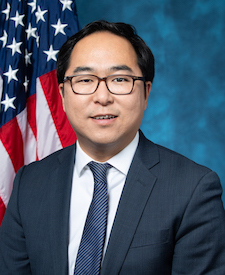
Andy Kim
Andy Kim Senate
D
Strong +
100% 9
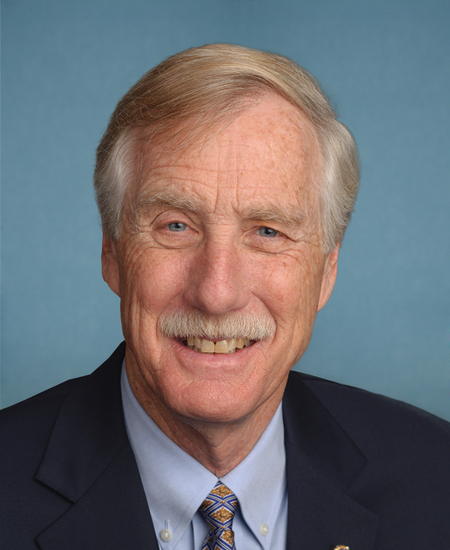
Angus S. King, Jr.
Angus S. King, Jr. Senate
I
Strong +
100% 9
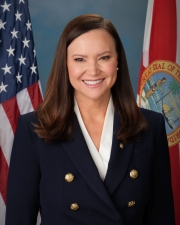
Ashley Moody
Ashley Moody Senate
R
Strong −
0% 9
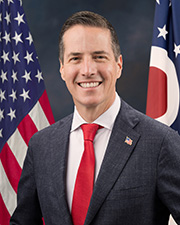
Bernie Moreno
Bernie Moreno Senate
R
Strong −
0% 9
Bill Cassidy
Bill Cassidy Senate
R
Strong −
0% 9
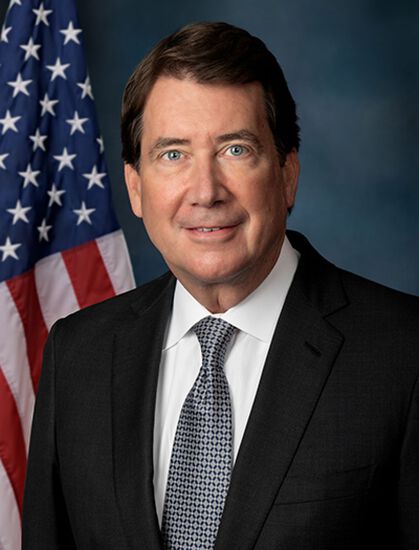
Bill Hagerty
Bill Hagerty Senate
R
Strong −
0% 9
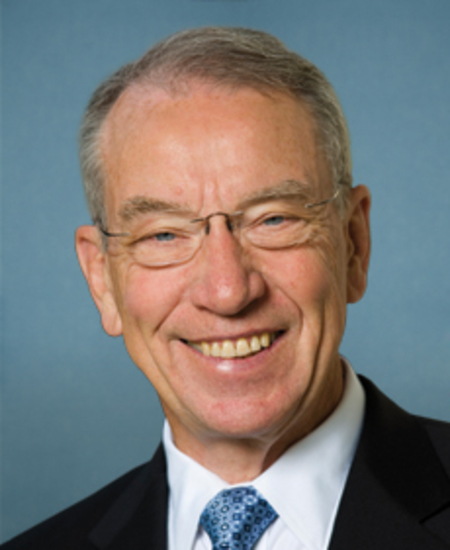
Chuck Grassley
Chuck Grassley Senate
R
Strong −
0% 9
Showing 111–120 of 304 bills

All environment bills

in committee · United States · House Jul 15, 2025

HR 4412: Joint Chiefs Reauthorization Act of 2025

This bill amends the Joint Chiefs Landscape Restoration Partnership program to expand its scope and improve coordination. It adds wildfire recovery and soil/water resource enhancement as eligible project purposes, requires the Natural Resources Conservation Service to coordinate with the Forest Service on science and management plans, and extends the program's authorization through 2031. The changes apply directly to federal agencies administering the program, including the Natural Resources Conservation Service and Forest Service, and affect projects managed under the partnership. Key provisions include updated wildfire risk assessments and alignment with state forest action plans. The bill makes concrete adjustments to existing program rules without creating new funding or altering core program eligibility.
Sub-Topics Conservation Forestry
in committee · United States · Senate Feb 4, 2025

S 392: Sloan Canyon Conservation and Lateral Pipeline Act

S 392 expands the Sloan Canyon National Conservation Area boundary from 48,438 to 57,728 acres. It grants the Southern Nevada Water Authority a right-of-way (without fees) to build a water pipeline outside the Conservation Area, including provisions for excavating materials and disposing of excess earth. The bill requires the pipeline to avoid wilderness areas and not permanently harm conservation resources, while preserving existing utility corridors and rights-of-way. This directly affects the Southern Nevada Water Authority’s infrastructure plans and the management of the Conservation Area under federal land laws.
in committee · United States · Senate Apr 9, 2025

S 1395: NO TIME TO Waste Act);

The NO TIME TO Waste Act (S 1395) establishes a new Office of Food Loss and Waste within the Department of Agriculture to coordinate federal efforts to reduce food waste. The bill creates grant programs for states, local governments, and nonprofits to collect data on food waste policies and develop model approaches for reducing waste, with a goal of cutting food loss and waste by 50% by 2030. It requires federal contractors to report on their food waste prevention efforts and funds public-private partnerships to help communities reduce food loss and waste. The legislation also creates a national education campaign to teach consumers about food safety, preservation, and upcycled food products. The bill mandates annual reports tracking progress toward the 2030 goal and sets funding levels for these programs through 2030.
Sub-Topics Conservation
in committee · United States · House Mar 18, 2025

HR 2176: Saving NEMO Act of 2025

The Saving NEMO Act of 2025 prohibits the trade and possession of certain vulnerable coral reef species within the United States. It designates species (like those listed under international trade agreements) as "covered" and bans their take, import, export, or sale without authorization, directly affecting businesses in the aquarium and curio trade. Exceptions exist for scientific research, approved breeding programs, and aquaculture facilities meeting strict conservation standards, but not for species collected using destructive methods like explosives or poison. Violations can trigger civil penalties up to $25,000 per incident or criminal charges, and citizens can sue to enforce the law.
Sub-Topics Conservation
passed · United States · House Jun 3, 2026

HR 3831: Florida Safe Seas Act of 2025

HR 3831, the Florida Safe Seas Act of 2025, amends an existing federal law to specifically include Florida in a prohibition against feeding sharks within the exclusive economic zone off the Florida coast. The bill modifies Section 317 of the Magnuson-Stevens Fishery Conservation and Management Act to replace "the State" with "the States" and add "and Florida" after Hawaii, ensuring Florida is explicitly covered under the current rule. This is a technical correction to clarify that Florida's waters are included in the existing federal ban on shark feeding, which already applied to Hawaii. The bill does not create new restrictions but formally extends the existing prohibition to Florida's exclusive economic zone. It directly affects activities involving shark feeding by vessels operating in Florida's offshore waters under federal jurisdiction.
Sub-Topics Conservation
in committee · United States · House Jun 4, 2025

HR 3718: Sustaining America’s Fisheries for the Future Act of 2025

# Summary of Proposed Magnuson-Stevens Fishery Conservation and Management Act Amendments This comprehensive legislative proposal contains numerous amendments to the Magnuson-Stevens Fishery Conservation and Management Act, with the following key provisions: ## Fisheries Science and Data Modernization - Establishes a national strategic plan for fisheries data with user-centric systems - Mandates electronic monitoring and reporting in fisheries (replacing or complementing human observers) - Creates an electronic technologies innovation prize competition to accelerate data collection technology development - Requires standardized bycatch reporting program to assess bycatch across fisheries - Establishes a recreational data improvement program to improve timeliness, accuracy, and validation of recreational catch data ## Essential Fish Habitat and Ecosystem Management - Redefines "adverse effect" on essential fish habitat - Creates "habitat areas of particular concern" with specific criteria - Requires Councils to develop habitat protection plans with quantitative targets - Requires consideration of both fishing and non-fishing impacts on habitat ## Forage Fish Conservation - Defines "forage fish" (species that function as a main pathway for energy transfer in marine ecosystems) - Requires Councils to develop lists of unmanaged forage fish and recommend prohibitions on new directed fisheries - Mandates that annual catch limits for forage fish consider diet needs of higher trophic level species ## Bycatch Reduction - Requires conservation and management measures to minimize bycatch - Establishes a national standardized bycatch reporting program - Creates a bycatch reduction engineering program with technical assistance and outreach ## Fishery Management Improvements - Requires objective and measurable criteria for identifying overfished stocks - Mandates development of rebuilding plans with specific timeframes and measurable criteria - Requires consideration of climate change impacts in management decisions - Establishes a "Zeke Grader Fisheries Conservation and Management Fund" for research and adaptation ## International Fisheries Management - Proposes changes to U.S. representation on international fisheries commissions (Atlantic Tunas Convention, Western and Central Pacific Fisheries Convention, Inter-American Tropical Tuna Commission) ## Funding - Authorizes specific funding amounts for 2026-2030 ($698 million to $765 million annually) This legislation represents a significant modernization of U.S. fisheries management, with strong emphasis on data-driven decision making, ecosystem-based management, climate resilience, and technological innovation in fisheries monitoring and management.
in committee · United States · House Sep 4, 2025

HR 5134: Appalachian Trail Centennial Act

The Appalachian Trail Centennial Act designates the Appalachian Trail Conservancy as the official "Designated Operational Partner" for the Appalachian National Scenic Trail, establishing a formal framework for federal-volunteer partnerships in trail management. It creates processes for developing "land and resource protection priority lists" to guide federal funding decisions for trail conservation, while ensuring volunteer organizations can continue their crucial role in trail maintenance and stewardship. The bill also requires regular economic impact assessments for communities near the trail ("gateway communities") and sets protocols for determining visitor capacity on specific trail segments. This legislation codifies and enhances the longstanding partnership model that has successfully maintained the Appalachian Trail for over a century, with potential application to other national scenic and historic trails.
in committee · United States · House Nov 19, 2025

HR 1514: Mississippi River Basin Fishery Commission Act of 2025

HR 1514 establishes the Mississippi River Basin Fishery Commission within the Department of the Interior to coordinate management of interjurisdictional fisheries across 31 U.S. states, two Canadian provinces, federal agencies, and tribal nations. The Commission oversees six sub-basin management plans, develops strategies to control invasive carp (like bighead and silver carp), and administers grant programs for conservation projects. It provides $30 million annually (2027-2029) and $50 million annually (2030-2032) to fund collaborative efforts, with grants prioritizing projects aligned with the existing MICRA Joint Strategic Plan. The Commission’s authority is nonbinding, requiring consensus among member entities but not overriding state or federal management laws.
Sub-Topics Conservation
in committee · United States · House May 13, 2025

HR 3361: Collaborative Forest Landscape Restoration Program Reauthorization Act of 2025

HR 3361 reauthorizes the Collaborative Forest Landscape Restoration Program through 2034, doubling its annual funding cap from $4 million to $8 million. It directly affects collaborative groups working on forest restoration across federal, state, tribal, and private lands. Key changes include expanding eligible projects to address wildfire risk reduction across multiple land ownerships, enhance watershed health, and improve monitoring standards. The bill also requires federal staffing plans for supporting these collaboratives and adds new mechanisms like conservation finance agreements for implementation.
in committee · United States · House Dec 17, 2025

HR 6777: Oregon Owyhee Wilderness and Community Protection Act

This bill designates approximately 924,440 acres of federal land in Malheur County, Oregon as wilderness areas and creates two special management areas that allow for grazing, fire management, and invasive species control. It establishes the Malheur County Grazing Management Program to provide operational flexibility for livestock grazing permittees, including seasonal adjustments and water source modifications. The bill creates the Malheur C.E.O. Group, consisting of representatives from grazing permittees, businesses, conservation organizations, and tribes, to propose and manage projects related to ecological restoration, range improvements, and invasive species management. Additionally, it transfers specific land parcels to the Burns Paiute Tribe in trust while protecting ongoing livestock grazing and fire suppression activities on designated lands.
Showing 111 to 120 of 304 bills
Previous 1 11 12 13 31 Next