Issue · Environment

Environment

Every environment bill, vote, and legislator stance in United States, automatically classified by Maddy, our AI policy reader.

Total bills
1,481
119th Congress
Top supporter
Aisha Wahab
100% support rate
Top opponent
Marsha Blackburn
11% support rate
Ranked legislators
10
5 support · 5 oppose
Key legislators

Who's moving environment in United States

Legislators moving environment in United States
Legislator Party Stance Support rate Decisive votes
Aisha Wahab
Aisha Wahab House · District 14
D
Strong +
100% 7
Everton Blair Jr.
Everton Blair Jr. House · District 13
D
Strong +
89% 9
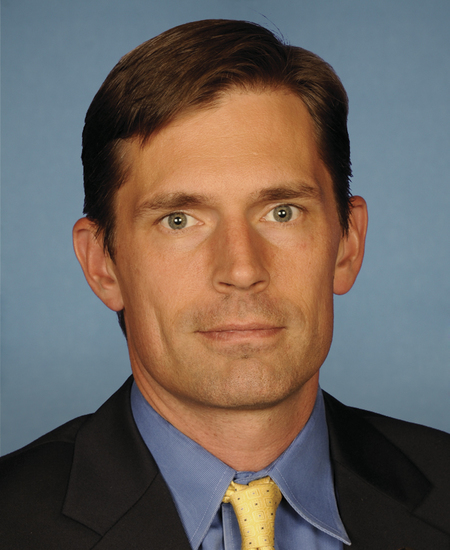
Martin Heinrich
Martin Heinrich Senate
D
Strong +
84% 37
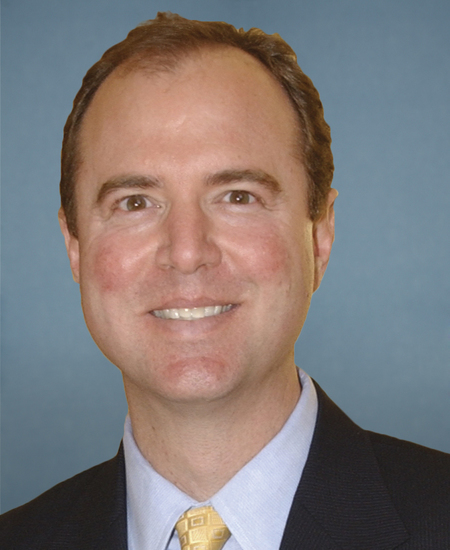
Adam B. Schiff
Adam B. Schiff Senate
D
Support
79% 53
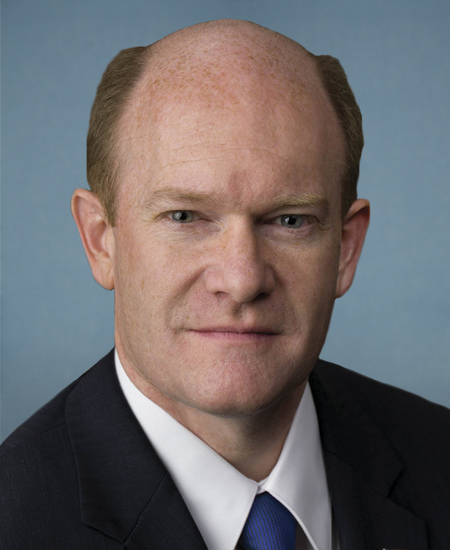
Christopher A. Coons
Christopher A. Coons Senate
D
Support
79% 52
Marsha Blackburn
Marsha Blackburn Senate
R
Strong −
11% 36
Ted Budd
Ted Budd Senate
R
Strong −
20% 40
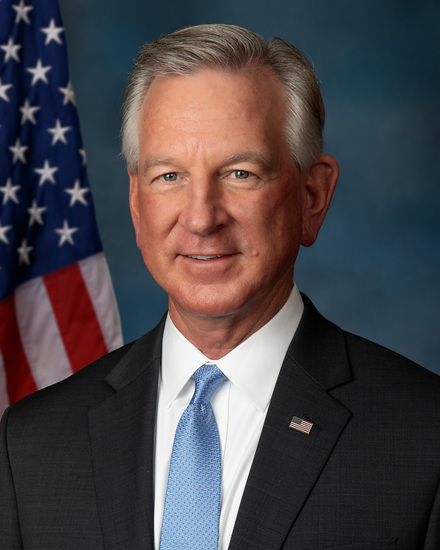
Tommy Tuberville
Tommy Tuberville Senate
R
Oppose
21% 53
Bill Cassidy
Bill Cassidy Senate
R
Oppose
22% 54
Jerry Moran
Jerry Moran Senate
R
Oppose
23% 53
Showing 1,181–1,190 of 1,481 bills

All environment bills

in committee · United States · House Feb 11, 2025

HR 1213: Forest Data Modernization Act of 2025

The Forest Data Modernization Act of 2025 requires the U.S. Forest Service to update its forest data collection methods, including new timber product studies and woodland owner surveys. It mandates improved tracking of forest carbon (including soil carbon), standardized definitions for "forest" reporting, and integration of remote sensing technologies like LiDAR. The bill affects the Forest Service, woodland owners, and private sector entities that use forest data for planning or business decisions. Key provisions include strategic plans for data consistency, biennial public statistics reports, and enhanced data accessibility while protecting confidential information like plot locations.
Sub-Topics Forestry
in committee · United States · House Mar 28, 2025

HR 1858: Flooding Prevention, Assessment, and Restoration Act

HR 1858, the Flooding Prevention, Assessment, and Restoration Act, requires the Secretary of Agriculture to conduct a national study on flood risks to agricultural lands within two years, analyzing economic losses, downstream effects, and existing data on various flood types. The bill expands watershed restoration authority by allowing the Secretary to implement long-term protective measures beyond immediate repairs if they are cost-effective and benefit watershed health. It also increases federal funding for rehabilitating aging structural flood measures from 65% to 90% of project costs. This legislation directly affects agricultural producers and watershed management programs by mandating new assessments and modifying funding thresholds for flood prevention infrastructure.
in committee · United States · Senate May 6, 2025

S 1618: Precision Agriculture Loan Act of 2025

S 1618, the Precision Agriculture Loan Act of 2025, amends existing farm loan programs to specifically include funding for precision agriculture. It expands loan eligibility for farmers to adopt precision agriculture practices (like GPS-guided equipment) and acquire related technologies (such as soil sensors). The bill adds new provisions allowing these loans to also support participation in environmental incentive programs under the Food Security Act of 1985. It streamlines administration by enabling the Farm Service Agency's Deputy Administrator to handle these loans and simplifying approvals with conservation agencies. This directly affects farmers seeking to modernize operations with technology, with the program now authorized through 2029.
Sub-Topics Conservation Tags Agriculture
in committee · United States · Senate Mar 13, 2025

S 1029: Snow Survey Northeast Expansion Act of 2025

This bill expands the Natural Resources Conservation Service's (NRCS) existing snow survey and water supply forecasting program to cover the Northeastern United States. It defines the Northeast as Maine, New Hampshire, Vermont, New York, and any other states the Secretary of Agriculture designates. The key provision directs the NRCS Chief to extend this program's geographic scope to serve these states. This change directly affects water resource managers and communities in the covered northeastern states by improving regional snowpack and water supply data collection.
Sub-Topics Conservation
in committee · United States · House Apr 24, 2025

HR 3002: Homeland Security Climate Change Coordination Act

HR 3002, the Homeland Security Climate Change Coordination Act, creates a new Climate Coordinating Council within the Department of Homeland Security (DHS). The council, composed of at least 20 senior DHS officials from offices like FEMA, Customs, Coast Guard, and Cybersecurity, must identify climate impacts across DHS operations and develop risk-based strategies to address them. It will also report annually to Congress for ten years on actions taken, ensuring DHS aligns its efforts with Executive Order 14008 on climate. The bill directly affects DHS programs, assets, and personnel by mandating coordinated climate adaptation planning.
Sub-Topics Climate Change Natural Disasters Tags Emergency Management
in committee · United States · House Jan 23, 2025

HR 644: Harmful Algal Bloom and Hypoxia Research and Control Amendments Act of 2025

This bill amends the Harmful Algal Bloom and Hypoxia Research and Control Act of 1998 to strengthen federal efforts addressing harmful algal blooms (HABs) and hypoxia events. It requires a federal Task Force to develop a comprehensive Action Strategy every five years examining causes, ecological impacts, and economic consequences of HABs across marine, estuarine, and freshwater systems, including the Great Lakes and coastal waters. The bill establishes a National-Level Incubator Program to fund innovative prevention and control strategies, with priority given to solutions protecting public health, biodiversity, and vulnerable communities. It mandates enhanced coordination among federal agencies, states, Indian tribes, and local communities to improve monitoring, forecasting, and response capabilities for HAB events. The bill authorizes $19.5 million annually for NOAA and $8 million annually for EPA to implement these provisions from 2026-2030.
in committee · United States · Senate Jun 18, 2025

SRES 289: A resolution recognizing the importance of pollinators to ecosystem health and agriculture in the United States by designating June 15 through June 22, 2025, as "National Pollinator Week".

SRES 289 designates June 15-22, 2025, as "National Pollinator Week" to recognize pollinators' critical role in U.S. agriculture and ecosystems. The resolution highlights that pollinators support over 100 crops and contribute more than $18 billion annually to U.S. crop production. It encourages the public to observe the week through conservation and educational activities. As a symbolic resolution, it does not create new laws or funding but aims to raise awareness about declining pollinator populations.
Sub-Topics Conservation Wildlife
passed · United States · Senate Oct 28, 2025

SRES 454: A resolution expressing support for the designation of the week of October 24, 2025, to October 31, 2025, as "Bat Week".

This resolution (SRES 454) expresses Senate support for designating October 24-31, 2025, as "Bat Week" to raise public awareness about bats' ecological and economic value. It highlights bats' role in controlling insect pests (saving U.S. farmers over $3.7 billion annually), pollinating crops, and maintaining healthy ecosystems, while acknowledging threats like white-nose syndrome. The resolution encourages public events during Bat Week and commits the Senate to continuing conservation efforts for bats and combating the disease. As a non-binding resolution, it does not create new laws but aims to foster public engagement with bat conservation.
Sub-Topics Conservation
in committee · United States · House Nov 21, 2025

HR 6256: Floodplain Enhancement and Recovery Act

HR 6256, the Floodplain Enhancement and Recovery Act, simplifies regulatory processes for communities and landowners undertaking projects to restore natural floodplain functions. It exempts such projects from standard flood insurance map change fees and allows limited increases in flood levels (up to 1 foot) in designated floodways, provided projects don’t harm critical infrastructure and communities submit post-completion analysis within 180 days. The bill amends existing flood insurance law to prioritize ecosystem restoration by adjusting fee and approval requirements, directly affecting local governments managing floodplains and developers working on restoration projects.
in committee · United States · Senate Sep 18, 2025

S 2890: GREEN Streets Act

The GREEN Streets Act (S 2890) requires states and metropolitan areas to establish specific targets for reducing vehicle miles traveled and greenhouse gas emissions from transportation systems. It mandates that states set minimum standards for decreasing per capita vehicle miles traveled through investments in transit, sidewalks, bike lanes, and land use planning that supports multimodal transportation. States failing to meet these targets must obligate 33% of their federal highway funds toward meeting the targets, with this requirement increasing by 2% annually until targets are achieved. The bill also requires analysis of projects that increase traffic capacity, particularly those affecting environmental justice communities, and establishes new performance measures for transit accessibility and multimodal transportation options.
Showing 1,181 to 1,190 of 1,481 bills