Issue · Environment

Environment (Forestry)

Every environment bill, vote, and legislator stance in United States, automatically classified by Maddy, our AI policy reader.

Total bills
223
119th Congress
Top supporter
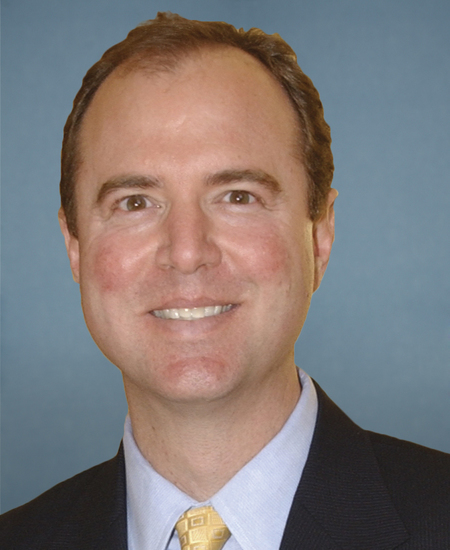
Adam B. Schiff
100% support rate
Top opponent
Alan Armstrong
0% support rate
Ranked legislators
10
5 support · 5 oppose
Key legislators

Who's moving forestry in United States

Legislators moving forestry in United States
Legislator Party Stance Support rate Votes
Adam B. Schiff
Adam B. Schiff Senate
D
Strong +
100% 3
Alex Padilla
Alex Padilla Senate
D
Strong +
100% 3
Amy Klobuchar
Amy Klobuchar Senate
D
Strong +
100% 3
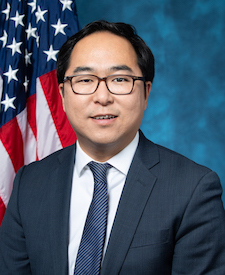
Andy Kim
Andy Kim Senate
D
Strong +
100% 3
Angela D. Alsobrooks
Angela D. Alsobrooks Senate
D
Strong +
100% 3
AA
Alan Armstrong Senate
R
Strong −
0% 3
Ashley Moody
Ashley Moody Senate
R
Strong −
0% 3
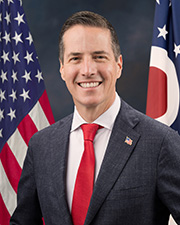
Bernie Moreno
Bernie Moreno Senate
R
Strong −
0% 3
Bill Cassidy
Bill Cassidy Senate
R
Strong −
0% 3
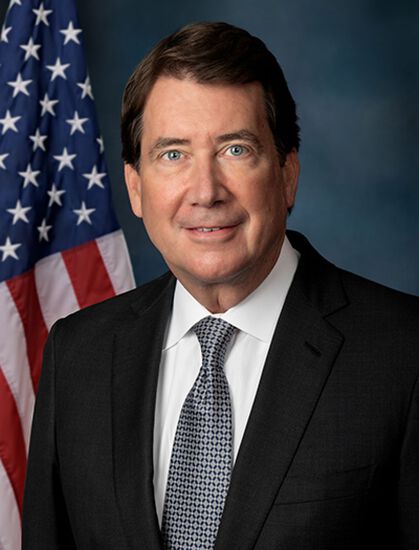
Bill Hagerty
Bill Hagerty Senate
R
Strong −
0% 3
Showing 91–100 of 223 bills

All environment bills

in committee · United States · House Jun 10, 2025

HR 3444: Tribal Self-Determination and Co-Management in Forestry Act of 2025

This bill requires federal land agencies (like the Bureau of Land Management and National Park Service) to develop Tribal Co-Management Plans within one year, enabling federally recognized tribes to partner with agencies on forest and grassland management activities - such as restoration, planning, and recreation - on lands historically connected to those tribes. Tribes can enter agreements with the Forest Service to carry out these activities, with federal staff receiving training on indigenous knowledge and tribal history. The bill authorizes $50 million (2026-2030) to support these agreements, mandates consultation to protect tribal data sovereignty, and requires agencies to consider tribal cultural ties when evaluating partnership proposals.
Sub-Topics Forestry Parks & Recreation Public Lands Tags Tribal Nations
in committee · United States · House Mar 5, 2026

HR 3553: BRUSH Fires Act

HR 3553, the BRUSH Fires Act, requires the U.S. Forest Service to conduct a study evaluating wildfire mitigation methods in shrubland ecosystems (like chaparral and sagebrush) to reduce fire risk and damage to nearby communities. The study will assess fuel management practices, invasive species control, ember ignition prevention, and factors hindering effective wildfire management. It mandates a report within 90 days of study completion, identifying best practices, research gaps, and opportunities to improve Forest Service coordination with local entities. The bill directly affects communities near shrublands and Forest Service managers by gathering data to inform future fire prevention strategies. This is a procedural study bill, not a policy change, with no direct funding or regulatory requirements.
in committee · United States · House Feb 14, 2025

HR 389: Southern Border Farmers and Ranchers Protection Act

HR 389, the Southern Border Farmers and Ranchers Protection Act, creates a new program to provide annual payments to agricultural producers in specific Texas counties along the southern border. It directs the Secretary to fund conservation practices that repair damage to farmland and farming infrastructure caused by natural resource issues in those counties. The program applies to producers in 35 designated border counties (including El Paso, Hidalgo, and Webb) and requires one-year contracts for payments. This bill directly affects farmers and ranchers in these counties by offering financial support for land restoration through conservation efforts.
Sub-Topics Conservation Forestry
passed · United States · House Mar 6, 2025

HR 471: Fix Our Forests Act

HR 471, the Fix Our Forests Act, establishes a new system for identifying and managing high-risk wildfire areas called "firesheds" and creates a centralized Fireshed Center to coordinate wildfire risk management across federal agencies. The bill streamlines environmental reviews for wildfire risk reduction projects, allowing for faster implementation of hazardous fuels management activities in designated areas. It includes provisions for community wildfire risk reduction programs, water source protection, and specific initiatives for restoring white oak forests. The legislation also includes litigation reforms to expedite forest management projects and reduce delays from legal challenges. These provisions aim to reduce wildfire risk and improve forest health through more coordinated, data-driven management approaches.
in committee · United States · Senate Dec 2, 2025

S 945: Smith River National Recreation Area Expansion Act

This bill expands the Smith River National Recreation Area to include specific parcels of land in Oregon, adding approximately 555 acres of the Cedar Creek Parcel. It designates 24 specific river segments in Oregon as "wild" or "recreational" under the Wild and Scenic Rivers Act, including tributaries of the North Fork Smith River. The bill requires the Secretary to conduct a 5-year study of the expanded area focusing on natural resources like streams, wetlands, and native plants, followed by management plan revisions to protect these values. The legislation also includes provisions for tribal consultation and access to cultural sites while maintaining existing protections for the Kalmiopsis Wilderness and the Northwest Forest Plan.
in committee · United States · House Sep 3, 2025

HR 5104: Preventing HEAT Illness and Deaths Act of 2025

The Preventing HEAT Illness and Deaths Act of 2025 establishes a National Integrated Heat Health Information System (NIHHIS) within NOAA to coordinate federal efforts on heat-related health risks. It creates an interagency committee to develop a strategic plan for improving data sharing, forecasting, and decision support tools for heat events, with a focus on communities disproportionately affected by extreme heat. The bill authorizes a Community Heat Resilience Program that provides grants to states, tribes, and local governments for projects like urban forestry, cooling centers, and heat action plans, requiring at least 40% of funds to target communities with environmental justice concerns. The legislation also mandates a study to identify gaps in heat information and response capabilities across the country. This comprehensive approach aims to reduce heat-related health impacts, particularly for vulnerable populations including older adults, outdoor workers, and communities of color.
in committee · United States · House Mar 20, 2026

HR 7518: To amend the Food, Agriculture, Conservation, and Trade Act of 1990 to ensure adequate staffing and resources for the Institute of Tropical Forestry and the Institute of Pacific Islands Forestry.

HR 7518 amends the 1990 Food, Agriculture, Conservation, and Trade Act to establish minimum staffing requirements for two federal forestry research institutes. It mandates that the Institute of Tropical Forestry in Puerto Rico maintain a staff of at least 50 individuals, and the Institute of Pacific Islands Forestry must have at least 30 staff members, both with adequate resources. These provisions require the Secretary of Agriculture to ensure sufficient staffing to advance scientific research, demonstration, and knowledge exchange related to tropical and Pacific Island forestry. The bill directly affects these two federally funded research institutes and their operational capacity.
Sub-Topics Conservation Forestry
in committee · United States · House Jan 31, 2025

HR 903: Smoke and Heat Ready Communities Act of 2025

HR 903, the Smoke and Heat Ready Communities Act of 2025, creates federal grant programs to help communities prepare for wildfire smoke and extreme heat events. It funds air pollution control agencies to monitor air quality, deploy monitoring equipment, equip public buildings with air filtration, and distribute protective gear like N95 masks. The bill also establishes university research centers to study health impacts and develop community response strategies, and provides competitive grants for local governments, tribes, and Native Hawaiian organizations to create collaborative community plans. These programs target communities most vulnerable to poor air quality from wildfire smoke and extreme heat, with priority given to areas impacted by these events.
Sub-Topics Air Quality Forestry
in committee · United States · Senate Dec 2, 2025

S 1341: Sarvis Creek Wilderness Completion Act

This bill designates approximately 6,817 acres in Routt National Forest as part of the Sarvis Creek Wilderness, adding it to the existing wilderness area established by the 1993 Colorado Wilderness Act. It directly affects the land itself by protecting it from development like logging or mining, while clarifying that tribal treaty rights and traditional cultural uses remain unaffected. The bill includes administrative provisions allowing the Forest Service to manage fire, insects, and disease within the area and permits tribes access for religious and cultural purposes under existing law. This is a procedural land designation bill with no direct impact on people beyond the protected land management and tribal access terms.
passed · United States · House Mar 17, 2026

HR 528: Post-Disaster Reforestation and Restoration Act

Post-Disaster Reforestation and Restoration Act of 2025 This bill directs the Department of the Interior to carry out a program for post-disaster reforestation and restoration.  Interior must identify covered lands requiring reforestation and restoration following unplanned disturbances that are unlikely to experience natural regeneration without assistance. Covered land means (1) any federal land or interest in land administered by the National Park Service, the U.S. Fish and Wildlife Service, the Bureau of Land Management, the Bureau of Reclamation, the Forest Service, or the Bureau of Indian Affairs; and (2) any Indian Forest Land or Rangeland. Interior must propose a list that prioritizes projects for reforestation and restoration for each fiscal year. Interior may (1) carry out priority projects through grants, contracts, or cooperative agreements; and (2) support any grant contract or cooperative agreement that may be necessary to ensure adequate and appropriate seed and seedling availability to further the objectives of priority projects.
Showing 91 to 100 of 223 bills
Previous 1 9 10 11 23 Next