Key legislators
Who's moving environment in United States
Legislators moving environment in United States
| Legislator |
Party |
Stance |
Support rate |
Votes |
|
|
D |
|
84% |
215 |
|
|
D |
|
79% |
231 |
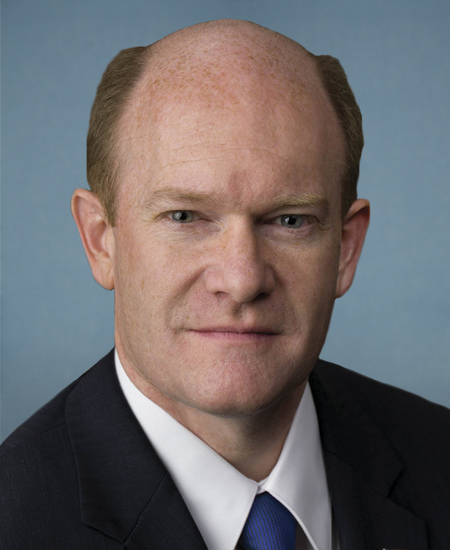
Christopher A. Coons
Senate
|
D |
|
79% |
229 |
|
|
D |
|
78% |
232 |
|
|
D |
|
78% |
232 |
|
|
R |
|
11% |
211 |
|
|
R |
|
20% |
220 |
|
|
R |
|
21% |
229 |
|
|
R |
|
22% |
221 |
|
|
R |
|
23% |
228 |
Showing 5 of 5
bills
All environment bills
This joint resolution seeks to officially disapprove a specific rule issued by the Environmental Protection Agency regarding PFAS chemical reporting. The bill directly affects the EPA by declaring the rule invalid and preventing it from taking legal effect. It aims to stop the agency from changing the timeline for when businesses must submit data about per- and polyfluoroalkyl substances. If passed, the EPA would be unable to enforce the modified submission period outlined in the original regulation.
This joint resolution seeks to officially disapprove a specific rule issued by the Environmental Protection Agency regarding emissions from coal- and oil-fired power plants. If passed, the measure would prevent the EPA's proposed repeal of existing national emission standards for hazardous air pollutants from taking effect. The legislation directly impacts the EPA and the electric utility industry by maintaining current regulatory requirements for these power generation units. It operates as a legislative veto, allowing Congress to reject a federal agency's rule without passing new laws.
This joint resolution seeks to disapprove a rule issued by the Environmental Protection Agency regarding Colorado's regional haze air quality plan. If passed, it would nullify the EPA's decision to disapprove Colorado's second implementation period plan for reducing air pollution from distant sources. The measure directly affects the state of Colorado and the EPA by preventing the federal agency from enforcing its disapproval of the state's air quality strategy. Under this legislation, the EPA's rule would have no legal force or effect, leaving the status of Colorado's air plan unchanged.
HJRES 140 is a procedural resolution seeking congressional disapproval of a Bureau of Land Management (BLM) rule published in the Federal Register (88 Fed. Reg. 6308, January 31, 2023). The resolution targets Public Land Order No. 7917, which proposed withdrawing federal lands in Cook, Lake, and Saint Louis Counties, Minnesota. If passed, this resolution would block the BLM rule from taking effect by invoking the disapproval process under Chapter 8 of Title 5, U.S. Code. It directly affects the implementation of the land withdrawal proposal but does not alter the underlying land status or create new policy.
This bill (SJRES 107) seeks congressional disapproval of an Internal Revenue Service (IRS) rule that sets requirements for when construction must begin on wind and solar facilities to qualify for federal tax credits. The rule, IRS Notice 2025-42, would have determined how developers meet "beginning of construction" criteria to maintain eligibility for clean energy production and investment tax credits. If passed, this resolution would block the IRS rule from taking effect, directly affecting wind and solar project developers who rely on these tax credits. The bill does not create new policy but halts an existing regulatory requirement under federal law.