Key legislators
Who's moving environment in United States
Legislators moving environment in United States
| Legislator |
Party |
Stance |
Support rate |
Votes |
|
|
D |
|
84% |
215 |
|
|
D |
|
79% |
231 |
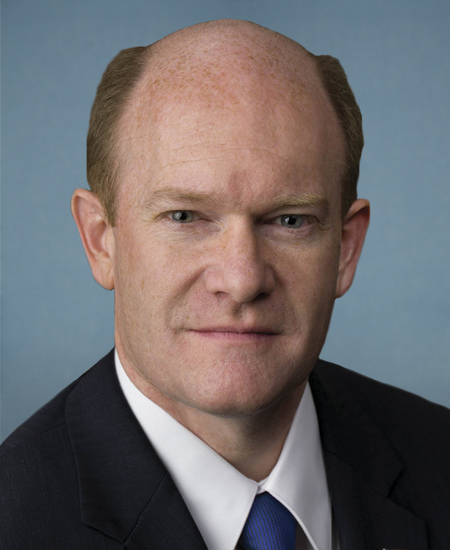
Christopher A. Coons
Senate
|
D |
|
79% |
229 |
|
|
D |
|
78% |
232 |
|
|
D |
|
78% |
232 |
|
|
R |
|
11% |
211 |
|
|
R |
|
20% |
220 |
|
|
R |
|
21% |
229 |
|
|
R |
|
22% |
221 |
|
|
R |
|
23% |
228 |
Showing 3 of 3
bills
All environment bills
The Protecting Domestic Mining Act of 2025 amends the FAST Act to explicitly include mining projects in the definition of those eligible for streamlined permitting under the law. It prohibits the Federal Permitting Improvement Steering Council from finalizing, implementing, or enforcing a specific proposed rule (published as 88 Fed. Reg. 65350) that would have revised the scope of mining projects covered under the FAST Act. This bill directly affects domestic mining operations by ensuring their projects are covered under the existing permitting process without requiring new rulemaking. The key mechanism is the amendment to the definition, which makes the proposed rule unnecessary and blocks its implementation.
This bill extends the deadline for specific regulations protecting the North Atlantic right whale from 2028 to 2035. The change directly affects the U.S. government agencies responsible for enforcing these conservation rules, such as the National Marine Fisheries Service. By updating the Consolidated Appropriations Act, 2023, the legislation ensures that current protective measures remain in effect for an additional seven years. This adjustment allows regulators more time to gather data and potentially develop new strategies before the regulations expire.
This bill increases financial assistance for farmers and forest landowners affected by emergencies. It raises upfront payments to 75% of costs for replacing damaged farm infrastructure (like fencing) and 50% for repairs, with a 180-day deadline instead of 60 days for using funds. The bill also expands wildfire eligibility to include fires spread by natural causes or caused by the federal government. These changes apply to the Emergency Conservation Program (Section 401) and Emergency Forest Restoration Program (Section 407) under the Agricultural Credit Act of 1978.