Issue · Energy

Energy

Every energy bill, vote, and legislator stance in United States, automatically classified by Maddy, our AI policy reader.

Total bills
605
119th Congress
Top supporter
Martin Heinrich
75% support rate
Top opponent
Marsha Blackburn
26% support rate
Ranked legislators
10
5 support · 5 oppose
Key legislators

Who's moving energy in United States

Legislators moving energy in United States
Legislator Party Stance Support rate Decisive votes
Martin Heinrich
Martin Heinrich Senate
D
Support
75% 24
John W. Hickenlooper
John W. Hickenlooper Senate
D
Support
74% 38
Frederica S. Wilson
Frederica S. Wilson House · District 24
D
Support
74% 34
Brendan F. Boyle
Brendan F. Boyle House · District 2
D
Support
73% 49
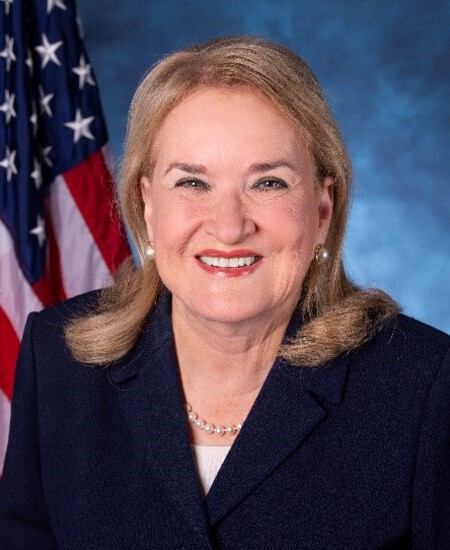
Sylvia R. Garcia
Sylvia R. Garcia House · District 29
D
Support
72% 47
Marsha Blackburn
Marsha Blackburn Senate
R
Oppose
26% 23
Chip Roy
Chip Roy House · District 21
R
Oppose
27% 52
Ted Budd
Ted Budd Senate
R
Oppose
27% 26
Gregory F. Murphy
Gregory F. Murphy House · District 3
R
Oppose
28% 46
Mike Johnson
Mike Johnson House · District 4
R
Oppose
28% 46
Showing 171–180 of 605 bills

All energy bills

in committee · United States · House Apr 23, 2026

HRES 1210: Expressing the sense of the House of Representatives in support of the International Atomic Energy Agency's (IAEA) nuclear security role.

This resolution expresses the House of Representatives' support for the International Atomic Energy Agency's (IAEA) crucial role in global nuclear security and safety. It encourages the United States and other IAEA member states to ensure the Agency has reliable and sufficient resources, including financial contributions to its Nuclear Security Fund, to successfully carry out its duties.
Sub-Topics Nuclear
in committee · United States · House Apr 22, 2026

HRES 1208: Expressing support for honoring Earth Day, and for other purposes.

House Resolution 1208 expresses the House of Representatives' support for honoring Earth Day and its historical role in promoting environmental protection and action. It encourages American citizens to engage in environmental stewardship and urges the President and the U.S. Government to take immediate action to address climate change, environmental injustices, and rejoin international climate agreements.
Sub-Topics Climate Change
in committee · United States · Senate Apr 14, 2026

S 4284: Nuclear Energy Innovation and Deployment Act of 2026

The Nuclear Energy Innovation and Deployment Act of 2026 aims to accelerate the development and deployment of advanced nuclear technologies in the United States. It expands the Department of Energy's (DOE) authority to regulate certain nuclear facilities and activities, including commercial ones on federal land or for federal purposes, and requires the Nuclear Regulatory Commission to revise related regulations. The bill establishes a "Nuclear Energy Launch Pad" program where private companies can test and demonstrate advanced nuclear reactors and fuel cycle technologies in designated federal zones, providing streamlined pathways to commercial licensing. Additionally, it allows Federal power marketing administrations to purchase, transmit, and market electricity from nuclear facilities. Finally, it creates a new program to repurpose surplus plutonium for use as fuel in advanced reactors, terminating the previous "dilute and dispose" program. These changes primarily affect the Department of Energy, private nuclear technology developers, federal power marketing agencies, and the Nuclear Regulatory Commission.
Sub-Topics Nuclear
passed · United States · House Apr 22, 2026

HRES 1182: Expressing support for rural communities across the United States as stewards of the environment, major suppliers of United States energy resources, critical providers of food production and manufacturing capacity, and drivers of national economic stability, and recognizing the work of the House of Representatives in the 119th Congress in support of those vital communities.

This resolution states that the House of Representatives has demonstrated support for U.S. prosperity and economic growth, especially in rural communities, through policies related to energy, health care, manufacturing, and broadband connectivity.
Tags Rural Communities
in committee · United States · House Apr 14, 2026

HR 8277: To amend the Internal Revenue Code of 1986 to designate copper as an applicable critical mineral and to include ore extraction costs for purposes of the advanced manufacturing production credit.

This bill amends the tax code to expand the advanced manufacturing production credit for critical minerals. It designates copper as an "applicable critical mineral," making its production eligible for this tax credit. Additionally, the bill allows companies to include the costs of extracting ore that is subsequently refined into an applicable critical mineral when calculating the credit. These extraction costs are eligible only if the ore is from the United States, or, if foreign, is a type not commercially extracted in the U.S. and not from a "foreign country of concern." These changes primarily affect mining and manufacturing companies involved in critical mineral supply chains, applying to minerals produced or costs incurred after December 31, 2025.
Sub-Topics Tax Credits
in committee · United States · House Apr 15, 2026

HR 8308: CERTAIN Act

The CERTAIN Act aims to expedite federal permitting and environmental reviews for infrastructure projects by imposing strict timelines on federal agencies. It limits an agency's ability to revoke existing project authorizations unless specific conditions are met, such as a court order or immediate harm. The bill mandates deadlines for agencies to process applications, determine completeness, and conduct environmental reviews, with routine authorizations automatically approved if agencies miss their deadlines.
in committee · United States · House Apr 14, 2026

HR 8262: Build More Power Act

The "Build More Power Act" expands and extends a federal loan guarantee program to support electric generating facilities, particularly those critical for energy reliability. It makes power plants that are required by government orders to continue generating electricity during emergencies eligible for these loan guarantees, even if they might otherwise cease operations, and mandates the Secretary of Energy to solicit applications from them. The bill extends the program's authority until 2032 and sets aside at least $20 billion in loan guarantee capacity specifically for projects at facilities operating under such emergency directives. This impacts owners and operators of power plants, especially those under emergency orders, and the Department of Energy, which must also report to Congress on the program's impact and recommendations for upgrading aging coal facilities.
in committee · United States · House Apr 22, 2026

HR 8448: Energy Affordability and Reliability Act of 2026

This bill establishes an Office of Energy Affordability within the Department of Energy, directly affecting the Department's policy-making process and indirectly aiming to influence energy costs for consumers. The Office's primary duty is to review proposed Department regulations or policies related to energy transitions, analyzing their effects on energy affordability, economic costs, and reliable energy access. It must also identify strategies to mitigate negative impacts and promote cost-effective solutions. The Office provides advice and guidance based on its reviews, which must be completed within 30 days, but it cannot prevent the issuance of any regulation. Finally, the Office is mandated to submit annual reports to Congress detailing its findings and recommendations.
in committee · United States · House Apr 16, 2026

HR 8350: No Taxes on Utility Bills Act

HR 8350, the "No Taxes on Utility Bills Act," amends the Internal Revenue Code to create a new federal income tax deduction. This bill allows taxpayers to deduct from their taxable income all taxes and state-mandated surcharges that appear on their gas or electric utility bills. This change directly affects individuals and businesses who pay these utility bills, potentially lowering their federal tax liability. The new deduction would apply to taxable years beginning after the bill becomes law.
in committee · United States · House Feb 25, 2026

HR 7684: SCOPE Act of 2026

The SCOPE Act of 2026 directs the Environmental Protection Agency (EPA) to conduct a study and issue guidance for specific industrial facilities, referred to as "direct emitters," regarding the calculation and reporting of their "scope 3 emissions." Scope 3 emissions are defined as indirect greenhouse gas emissions resulting from activities throughout a company's upstream and downstream value chain. Within one year of the bill's enactment, the EPA Administrator must publish comprehensive guidance for these direct emitters. This guidance will include recommended reporting thresholds, standardized calculation methodologies, advice on monitoring frequency, data quality assurance, and recordkeeping requirements for these indirect emissions.
Sub-Topics Climate Change
Showing 171 to 180 of 605 bills
Previous 1 17 18 19 61 Next