Issue · Budget & Taxes

Budget & Taxes (State Budget)

Every budget & taxes bill, vote, and legislator stance in United States, automatically classified by Maddy, our AI policy reader.

Total bills
55
119th Congress
Top supporter
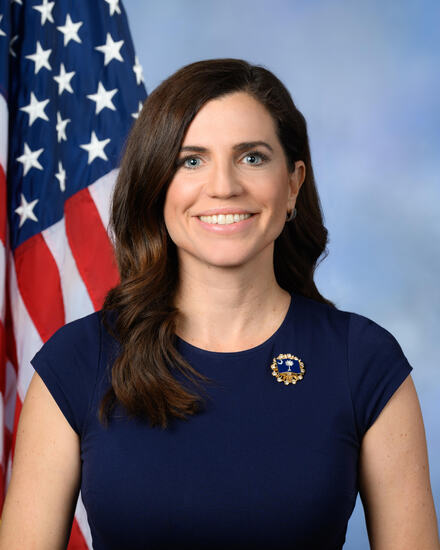
Anna Paulina Luna
100% support rate
Top opponent
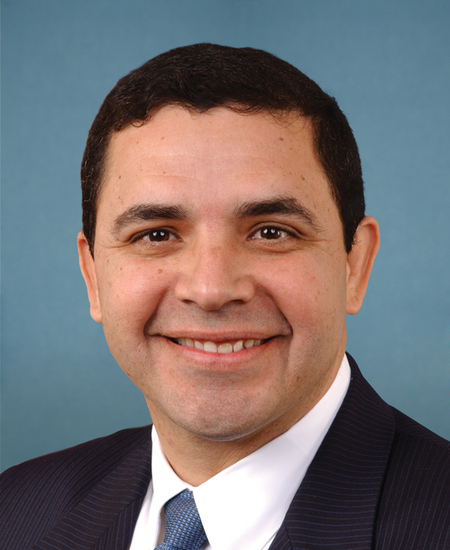
Henry Cuellar
0% support rate
Ranked legislators
10
5 support · 5 oppose
Key legislators

Who's moving state budget in United States

Legislators moving state budget in United States
Legislator Party Stance Support rate Votes
Anna Paulina Luna
Anna Paulina Luna House · District 13
R
Strong +
100% 3
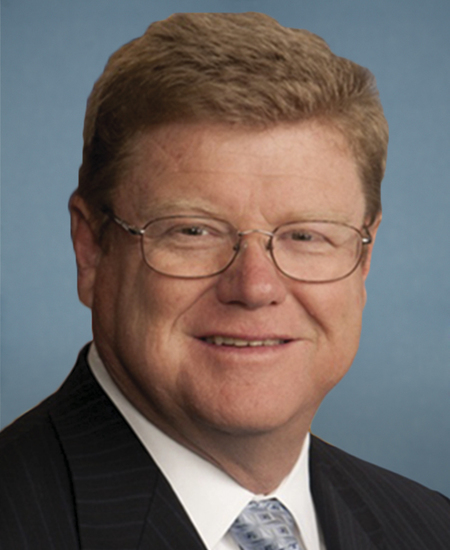
Mark E. Amodei
Mark E. Amodei House · District 2
R
Strong +
100% 3
Mike Carey
Mike Carey House · District 15
R
Strong +
100% 3
Nancy Mace
Nancy Mace House · District 1
R
Strong +
100% 3
Pat Fallon
Pat Fallon House · District 4
R
Strong +
100% 3
Henry Cuellar
Henry Cuellar House · District 28
D
Strong −
0% 4
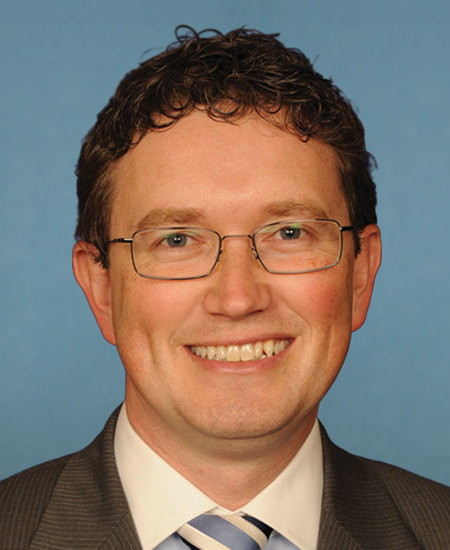
Thomas Massie
Thomas Massie House · District 4
R
Strong −
0% 4
Jake Auchincloss
Jake Auchincloss House · District 4
D
Strong −
0% 3
Kim Schrier
Kim Schrier House · District 8
D
Strong −
0% 3
Raja Krishnamoorthi
Raja Krishnamoorthi House · District 8
D
Strong −
0% 3
Showing 31–40 of 55 bills

All budget & taxes bills

in committee · United States · Senate Jan 9, 2025

S 45: Balanced Budget Accountability Act

S 45, the Balanced Budget Accountability Act, requires Congress to pass annual budgets that balance by 2035 or face consequences for members' pay. If Congress fails to adopt a balanced budget for fiscal years 2026 or 2027 by April 16 of the prior year, members' salaries are placed in escrow until a balanced budget is certified or the current Congress ends. For fiscal years 2028 and beyond, failure to balance the budget would reduce members' pay to $1 annually. The bill also mandates a 3/5 vote (supermajority) in each chamber to pass any bill increasing revenue. This directly affects all House and Senate members by linking their compensation to budget balance outcomes.
Sub-Topics State Budget
in committee · United States · Senate Apr 14, 2026

S 2378: SAFEGUARDS Act of 2025

The SAFEGUARDS Act of 2025 ensures that revenue from the 9/11 Security Fee (paid by airline passengers) is used exclusively for aviation security, ending its diversion to other government purposes by 2027. It creates two dedicated funds: the Aviation Security Capital Fund (receiving $250 million annually through 2025, then $500 million annually starting in 2026) for general security improvements, and the Aviation Security Checkpoint Technology Fund (receiving $250 million annually starting in 2026) specifically for security screening technology like baggage scanners and exit lanes. The bill requires the Transportation Security Administration (TSA) to collect sufficient fees to fund these amounts and allows retroactive grants for security technology projects implemented since 2023. This directly affects TSA operations, airports, and passenger fees, with no new taxes or fees imposed.
Sub-Topics State Budget
failed · United States · House Mar 18, 2026

HJRES 139: Proposing an amendment to the Constitution of the United States requiring a balanced budget for the Federal Government.

This joint resolution proposes a constitutional amendment prohibiting total federal expenditures for a year from exceeding the average annual federal receipts collected in the three prior years, adjusted for changes in the population of U.S. citizens and inflation. Expenditures for payment of debt and receipts derived from borrowing are excluded. Under the amendment, Congress may authorize specific expenditures in excess of the limit with (1) a roll call vote of two-thirds of each chamber, or (2) a roll call vote for any year in which a declaration of war is in effect. The amendment also prohibits any bill to levy a new tax or increase the rate of any tax from becoming law unless it has been approved by a roll call vote of two-thirds of the whole number of each chamber of Congress. The requirements take effect in the fifth year beginning after ratification of the amendment.
in committee · United States · House May 8, 2025

HR 3311: Eliminating Leftover Expenses for Campaigns from Taxpayers (ELECT) Act of 2025

HR 3311, the ELECT Act of 2025, ends taxpayer funding for presidential campaigns by terminating two key provisions. It stops using income tax payments to finance presidential elections after December 31, 2024, and dissolves the existing Presidential election campaign fund. Any remaining funds in that account will be transferred to the Treasury’s general fund to reduce the deficit. The bill directly affects presidential candidates and campaigns by eliminating automatic taxpayer support for these elections starting in 2025.
in committee · United States · House Jan 7, 2025

HR 222: Sustainable Budget Act of 2025

The Sustainable Budget Act of 2025 would establish a 18-member National Commission on Fiscal Responsibility and Reform to develop budget recommendations. The Commission would include members appointed by the President and congressional leadership, with specific requirements for approval of its reports (requiring 12 members, including 4 from each major party). The Commission would need to propose policies to balance the budget within 10 years (excluding interest payments) and address entitlement spending and revenue gaps. After submitting reports to Congress, the President would transmit a proposed joint resolution implementing the recommendations, which would then undergo expedited consideration in both houses with limited debate and no amendments allowed. This bill creates a process for developing budget recommendations but does not directly change current fiscal policies.
Sub-Topics State Budget
in committee · United States · House Oct 10, 2025

HR 5738: No Budget, No Pay Act

HR 5738, the "No Budget, No Pay Act," requires Congress to approve a budget resolution and pass all annual appropriations bills by October 1 each fiscal year. If Congress misses this deadline, members of Congress (excluding the Vice President) lose pay for the period of non-compliance, as determined by the House and Senate Budget and Appropriations Chairs. The bill specifies that no retroactive pay is allowed for any period during which Congress was out of compliance. This directly affects all elected members of Congress by linking their pay to timely budget passage, creating a financial incentive for meeting the October 1 deadline.
in committee · United States · Senate Feb 12, 2025

S 538: Eliminating Leftover Expenses for Campaigns from Taxpayers (ELECT) Act of 2025

S 538, the ELECT Act of 2025, ends taxpayer funding for presidential election campaigns after 2024. It terminates the existing system where income tax payments financed campaigns by amending the tax code to stop this practice starting in 2025. Any remaining funds in the Presidential election campaign fund will be transferred to the general Treasury to reduce the federal deficit. This bill directly affects future presidential campaigns and the federal budget by removing taxpayer subsidies for campaign expenses.
in committee · United States · House Jan 7, 2026

HRES 981: Expressing the sense of the House of Representatives that the United States should reduce and maintain the Federal unified budget deficit at or below 3 percent of gross domestic product.

This resolution expresses the sense of the House of Representatives that (1) Congress should adopt a fiscal target to reduce the federal budget deficit to 3% of gross domestic product or less as soon as possible and no later than the end of FY2030; and (2) after the target is achieved, Congress should continue to pursue further deficit reduction with the goal of achieving a balanced federal budget.
Sub-Topics State Budget
in committee · United States · Senate Jun 26, 2025

S 2187: Pay Down the Debt Act

S 2187, the "Pay Down the Debt Act," requires federal grant funds not accepted by states or local governments to be automatically rescinded from the federal budget. These rescinded funds must then be deposited into the Treasury's general fund specifically for reducing the national deficit. The bill directly affects states and local governments that decline federal grant offers, creating a new mechanism to redirect unclaimed federal resources toward deficit reduction without creating new programs or altering existing grant terms.
in committee · United States · House Jan 15, 2025

HR 446: Endowment Tax Fairness Act

This bill increases the tax rate on investment income earned by private colleges and universities from 1.4% to 21%. It directly affects private institutions with significant endowments, requiring them to pay a higher tax on their investment returns. The revenue generated must be deposited into the federal Treasury to reduce the national deficit and debt. The tax applies to taxable years beginning after the bill's enactment date.
Sub-Topics Sales Tax State Budget
Showing 31 to 40 of 55 bills
Previous 1 3 4 5 6 Next