Issue · Budget & Taxes

Budget & Taxes (State Budget)

Every budget & taxes bill, vote, and legislator stance in United States, automatically classified by Maddy, our AI policy reader.

Total bills
55
119th Congress
Top supporter
Anna Paulina Luna
100% support rate
Top opponent
Henry Cuellar
0% support rate
Ranked legislators
10
5 support · 5 oppose
Key legislators

Who's moving state budget in United States

Legislators moving state budget in United States
Legislator Party Stance Support rate Votes
Anna Paulina Luna
Anna Paulina Luna House · District 13
R
Strong +
100% 3
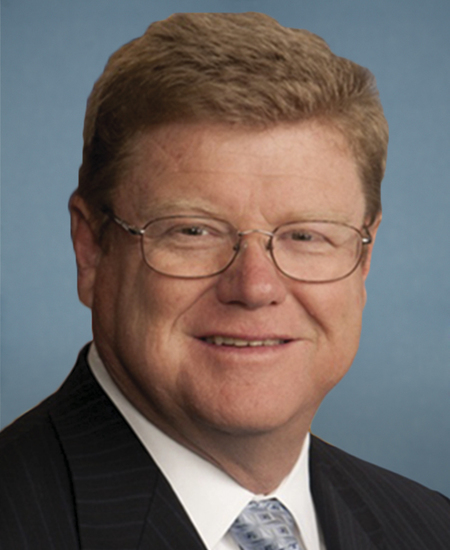
Mark E. Amodei
Mark E. Amodei House · District 2
R
Strong +
100% 3
Mike Carey
Mike Carey House · District 15
R
Strong +
100% 3
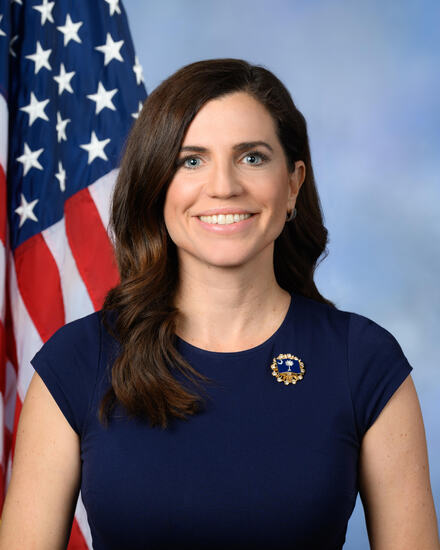
Nancy Mace
Nancy Mace House · District 1
R
Strong +
100% 3
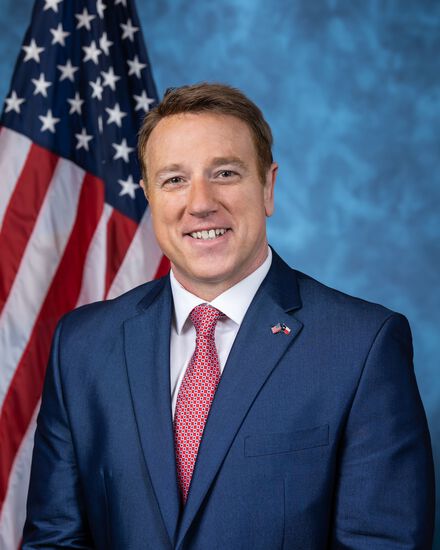
Pat Fallon
Pat Fallon House · District 4
R
Strong +
100% 3
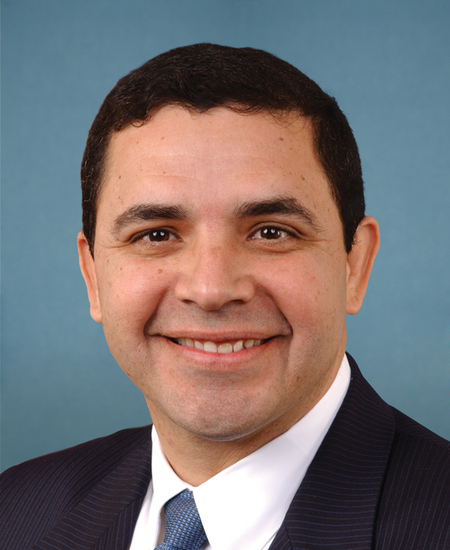
Henry Cuellar
Henry Cuellar House · District 28
D
Strong −
0% 4
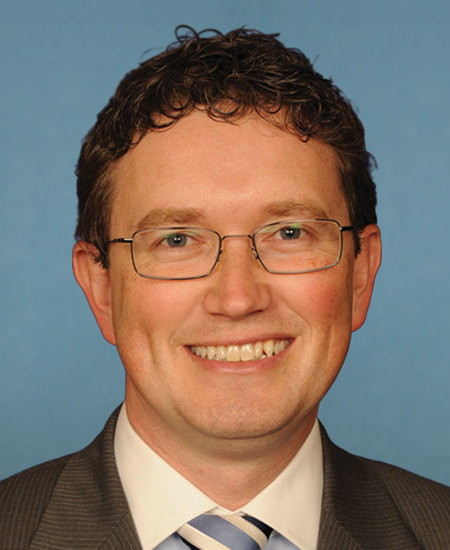
Thomas Massie
Thomas Massie House · District 4
R
Strong −
0% 4
Jake Auchincloss
Jake Auchincloss House · District 4
D
Strong −
0% 3
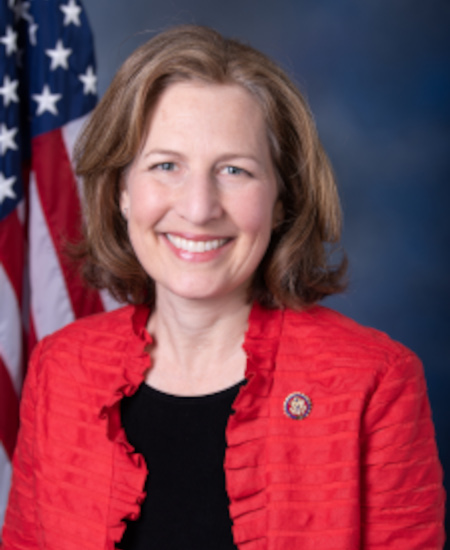
Kim Schrier
Kim Schrier House · District 8
D
Strong −
0% 3
Raja Krishnamoorthi
Raja Krishnamoorthi House · District 8
D
Strong −
0% 3
Showing 21–30 of 55 bills

All budget & taxes bills

in committee · United States · House Jun 5, 2025

HR 3785: Forgotten Funds Act

The Forgotten Funds Act permanently rescinds unobligated discretionary funds from fiscal years 2021 and prior, directing these amounts to the Treasury's general fund specifically for deficit reduction. This affects federal agencies that held unused budget allocations, requiring them to return the unspent money rather than carry it forward. The bill makes no new program changes but redirects existing, uncommitted funds toward reducing the federal deficit.
in committee · United States · House Sep 4, 2025

HR 5153: TRUST Act

Tariff Revenue Used to Secure Tomorrow Act or TRUST Act This bill establishes the Tariff Trust Fund within the Treasury and requires certain revenues collected from duties (e.g., tariffs) to be deposited into the fund and used for deficit reduction. If the federal government maintains a budget deficit for any fiscal year beginning with FY2026 and continues to maintain a budget deficit for the subsequent fiscal year, the bill requires amounts collected from the imposition of duties for the subsequent fiscal year that exceed the amounts collected from duties for FY2025 to be deposited into the fund established by this bill.  Any amounts deposited into the fund must be transferred to the general fund of the Treasury and may only be used for deficit reduction.
Sub-Topics State Budget
in committee · United States · House Mar 26, 2026

HR 7605: African Development Foundation Termination Act of 2026

HR 7605, the African Development Foundation Termination Act of 2026, abolishes the U.S. African Development Foundation (ADF) 120 days after enactment. The bill requires the Foundation to cease all new grants, loans, or agreements immediately, wind down operations within 120 days, and transfer all remaining funds to the Treasury’s general fund and assets/records to the Department of State for managing existing multi-year grants until completion. It also repeals the law creating the ADF (the African Development Foundation Act) and mandates a report to Congress for technical adjustments to the U.S. Code. This directly affects the ADF’s operations, employees (who would face reductions in force), and current grant recipients whose projects continue under State Department oversight.
Sub-Topics State Budget
in committee · United States · House Feb 12, 2026

HR 7555: Audit the Pentagon Act of 2026

This bill requires the Department of Defense to obtain a clean audit opinion for its financial statements or face automatic spending reductions. If the Pentagon fails to achieve this by fiscal year 2026, non-exempt programs would lose 0.5% of funding in the first year of failure and 1% annually thereafter, with cuts applied across all programs within the affected department. Military personnel, reserve, National Guard, and Defense Health Program accounts are exempt from these reductions. Any funds saved through these cuts would be deposited into the General Fund for deficit reduction, not redirected to military operations.
in committee · United States · Senate Feb 11, 2025

S 511: Protecting Taxpayers’ Wallets Act of 2025

S 511 requires federal labor organizations (like unions representing government employees) to pay quarterly fees for using agency resources and union time. Fees are calculated based on the agency's hourly pay rate for employees (including benefits) for union time, plus market rates for resources like office space, equipment, or parking. Non-payment triggers penalties: denial of union time after 90 days, termination of union allotments after 180 days, and loss of exclusive representation certification after 365 days. The bill aims to offset costs of federal resources used for union activities, with fees deposited into the Treasury general fund.
passed · United States · Senate Mar 18, 2025

S 1077: District of Columbia Local Funds Act, 2025

This bill authorizes the District of Columbia to use local funds from its General Fund for fiscal year 2025, matching the programs and spending levels set in the District's Fiscal Year 2025 Local Budget Act (D.C. Law 25-218). It sets a strict spending cap, limiting total operating expenses to either the budgeted amount or the District's total projected revenues for 2025, whichever is lower. The bill allows limited one-time increases for emergencies or unexpected needs, but only if approved by local law and following reserve rules. It also prohibits reprogramming funds from bond proceeds (used for capital projects) to cover regular operating costs, requiring the Chief Financial Officer to manage fund distribution accordingly.
in committee · United States · Senate Jan 14, 2025

S 88: No Budget, No Pay Act

This bill requires Congress to pass the annual budget resolution and all funding bills by October 1 each year. If Congress misses this deadline, members of Congress (excluding the Vice President) would not receive salary for the period of non-compliance, and this pay would not be retroactively issued. The Budget Chairs of each chamber would determine compliance and certify pay withholding. The law takes effect on September 29, 2027.
in committee · United States · Senate Apr 3, 2025

S 1276: American Innovation Act

The American Innovation Act (S 1276) authorizes multi-year funding for key federal science and technology agencies, including the National Science Foundation, Department of Energy's Office of Science, Department of Defense science programs, National Institute of Standards and Technology, and NASA's Science Mission Directorate. It sets specific annual funding levels from fiscal years 2026 through 2035, with automatic annual increases starting in 2036 based on the Consumer Price Index to adjust for inflation. The bill also exempts these appropriations from automatic budget cuts (sequestration) under the Balanced Budget Act. This funding directly affects the operations and research capabilities of these federal agencies.
Sub-Topics State Budget
in committee · United States · House Mar 31, 2025

HR 2524: REPEAL CBO Requirements Act

HR 2524, the "REPEAL CBO Requirements Act," would allow congressional committees (excluding Appropriations committees) to replace Congressional Budget Office (CBO) budget estimates with estimates from private accounting firms. Specifically, committee chairs could obtain budget cost estimates from the top 10 accounting firms by revenue instead of the CBO for any bill or resolution, using these private estimates for budget enforcement under key laws like the Balanced Budget Act and Pay-As-You-Go rules. The bill requires that if a private firm's estimate is used, the CBO would no longer prepare an estimate for that measure. This change would shift the responsibility for budget scoring from the nonpartisan CBO to for-profit accounting firms for most legislative measures.
in committee · United States · House Jan 3, 2025

HJRES 11: .Proposing a balanced budget amendment to the Constitution requiring that each agency and department's funding is justified.

HJRES 11 proposes a constitutional amendment requiring the federal government to maintain a balanced budget by ensuring annual spending does not exceed revenue, with specific spending limits tied to gross domestic product (GDP). It mandates that every federal agency and department must justify each line item in its budget request, including how funding supports its mission and its impact on GDP, and provide a reduced funding alternative for critical functions. The amendment includes exceptions for declared wars, military conflicts, or major natural disasters, requiring a two-thirds congressional vote for waivers. This would directly affect all federal agencies by imposing new budget justification requirements and spending caps, though it remains a proposed amendment awaiting state ratification.
Showing 21 to 30 of 55 bills
Previous 1 2 3 4 6 Next