Issue · Budget & Taxes

Budget & Taxes (Government Spending)

Every budget & taxes bill, vote, and legislator stance in United States, automatically classified by Maddy, our AI policy reader.

Total bills
20
119th Congress
Top supporter
Anna Paulina Luna
100% support rate
Top opponent
Henry Cuellar
0% support rate
Ranked legislators
10
5 support · 5 oppose
Key legislators

Who's moving government spending in United States

Legislators moving government spending in United States
Legislator Party Stance Support rate Decisive votes
Anna Paulina Luna
Anna Paulina Luna House · District 13
R
Strong +
100% 5
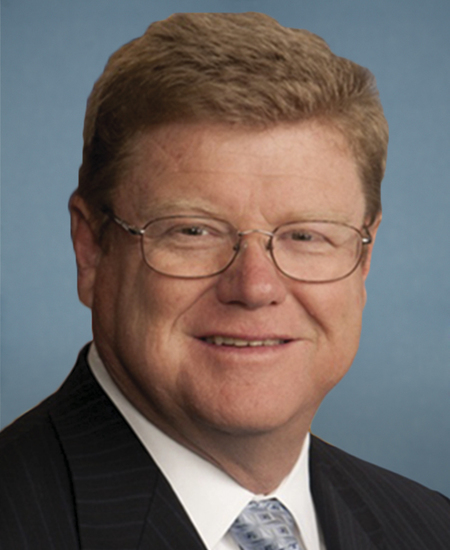
Mark E. Amodei
Mark E. Amodei House · District 2
R
Strong +
100% 5
Mike Carey
Mike Carey House · District 15
R
Strong +
100% 5
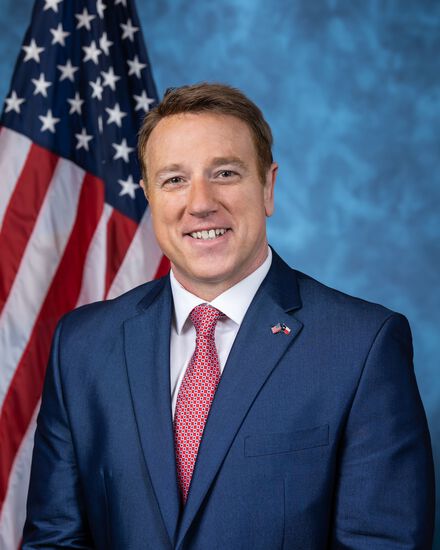
Pat Fallon
Pat Fallon House · District 4
R
Strong +
100% 5
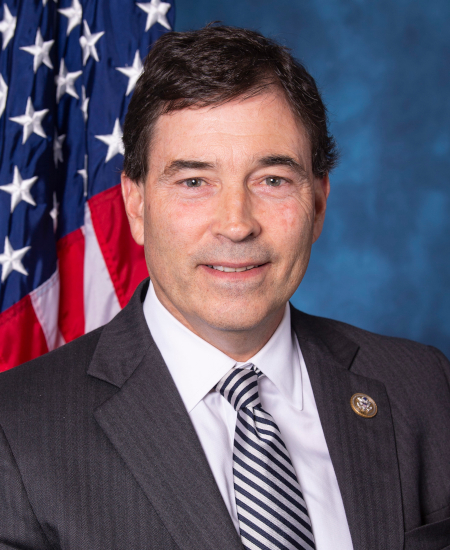
Troy Balderson
Troy Balderson House · District 12
R
Strong +
100% 5
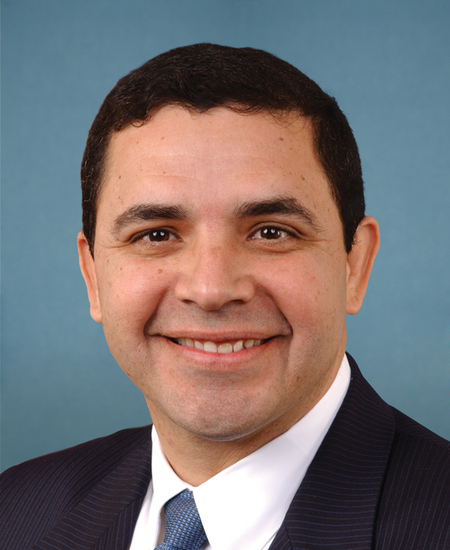
Henry Cuellar
Henry Cuellar House · District 28
D
Strong −
0% 6
Jake Auchincloss
Jake Auchincloss House · District 4
D
Strong −
0% 5
Kim Schrier
Kim Schrier House · District 8
D
Strong −
0% 5
Raja Krishnamoorthi
Raja Krishnamoorthi House · District 8
D
Strong −
0% 5
Robin L. Kelly
Robin L. Kelly House · District 2
D
Strong −
0% 5
Showing 11–20 of 20 bills

All budget & taxes bills

in committee · United States · Senate Feb 11, 2025

S 515: A bill to repeal the Impoundment Control Act of 1974.

S 515 would repeal the Impoundment Control Act of 1974, a federal law that restricted the president's ability to withhold funds Congress had appropriated. This bill directly affects the executive branch (the president) and Congress by removing requirements for the president to seek congressional approval before deferring or reducing spending on specific programs. The key mechanism is the complete removal of the legal framework established by the 1974 Act, which previously mandated that the president notify Congress and obtain its consent to withhold funds. This change would allow the president greater unilateral authority over budget execution without congressional approval for deferrals.
in committee · United States · House Jan 3, 2025

HR 199: Implementing DOGE Act

This bill requires automatic, across-the-board spending cuts to nonsecurity federal programs for fiscal years 2026 and beyond. It targets nonsecurity discretionary spending (like education, transportation, and environmental programs) by rescinding the percentage of growth above 1% compared to the previous year's funding. The cuts apply proportionally to all nonsecurity programs after appropriations are made available for the fiscal year (by September 30). Security-related spending (such as defense) is excluded from these reductions.
failed · United States · House Mar 18, 2026

HJRES 139: Proposing an amendment to the Constitution of the United States requiring a balanced budget for the Federal Government.

This joint resolution proposes a constitutional amendment prohibiting total federal expenditures for a year from exceeding the average annual federal receipts collected in the three prior years, adjusted for changes in the population of U.S. citizens and inflation. Expenditures for payment of debt and receipts derived from borrowing are excluded. Under the amendment, Congress may authorize specific expenditures in excess of the limit with (1) a roll call vote of two-thirds of each chamber, or (2) a roll call vote for any year in which a declaration of war is in effect. The amendment also prohibits any bill to levy a new tax or increase the rate of any tax from becoming law unless it has been approved by a roll call vote of two-thirds of the whole number of each chamber of Congress. The requirements take effect in the fifth year beginning after ratification of the amendment.
in committee · United States · Senate Sep 29, 2025

S 2930: Smarter Approaches to Nuclear Expenditures Act

This bill, S 2930, directly affects U.S. nuclear spending by imposing specific caps and prohibitions on weapons programs to reduce costs. It limits deployed strategic warheads to 1,000 (aligned with New START Treaty levels), caps submarine purchases at eight Columbia-class vessels, restricts ICBMs to 150, and bans funding for new systems like the LGM-35 Sentinel ICBM, F-35 nuclear capability, low-yield warheads, and the Uranium Processing Facility. The bill requires annual reports to Congress on implementation and cost savings, aiming to cut projected nuclear modernization costs by billions over the next decade. These changes apply to the Department of Defense and Energy budgets starting in fiscal year 2026.
Sub-Topics Government Spending
in committee · United States · House Jun 12, 2025

HR 3787: Emergency Spending Accountability Act

HR 3787, the Emergency Spending Accountability Act, requires the Office of Management and Budget to implement mandatory spending cuts equal to 20% of all emergency spending approved in a fiscal year. These cuts would occur over five years (starting October 1 of the next fiscal year) and apply to most federal programs, though they exempt Social Security benefits, national defense (budget function 050), Department of Veterans Affairs programs, and Medicare. The bill also mandates that any congressional measure containing emergency spending must include a detailed justification explaining why the spending qualifies as "emergency" under existing budget laws. This aims to create accountability for spending that bypasses standard budget limits.
Sub-Topics Appropriations Government Spending Tags Emergency Management
in committee · United States · House Jan 13, 2025

HRES 36: Finding Federal Savings Committee Resolution

HRES 36 creates a new House committee, the Committee on the Elimination of Nonessential Federal Programs, to review and recommend cutting underperforming or unnecessary federal programs. The committee, composed of 14 members (including four from key committees and a bipartisan chair/vice chair), must annually report findings and propose specific legislation to eliminate targeted programs. It establishes expedited rules for such legislation, including a 10-hour debate limit and no amendments, while dissolving after the 120th Congress. This resolution directly affects House procedures and future budget decisions by streamlining program-cutting efforts.
Sub-Topics Government Spending
in committee · United States · Senate Jan 22, 2025

S 181: A bill to require agencies submit zero-based budgets.

S 181 requires most federal agencies to submit zero-based budgets every six years, analyzing current operations, exploring alternatives, and ranking programs by importance. These budgets must cover the next fiscal year and the following four years, submitted to the Office of Management and Budget and congressional budget committees. Agencies (excluding Defense and the National Nuclear Security Administration) must also recommend specific program cuts totaling at least a 2% reduction in non-defense discretionary spending from the prior year. The bill directly affects how federal agencies plan and justify their funding, aiming to improve budget efficiency through systematic review.
in committee · United States · Senate Feb 3, 2025

S 360: A bill to provide for across-the-board rescissions of nonsecurity discretionary spending.

S 360 would automatically reduce nonsecurity federal spending by specific percentages each fiscal year: 1% for 2026, 2% for 2027, and 5% annually starting in 2028. It directly affects nonsecurity discretionary programs like education, transportation, and scientific research (excluding defense and intelligence), as defined by the bill. The reductions apply pro rata across all such programs funded through annual appropriations. The Office of Management and Budget must report these cuts to Congress annually after each fiscal year ends.
in committee · United States · House Jul 23, 2025

HJRES 110: Proposing a balanced budget amendment to the Constitution of the United States.

This joint resolution proposes a constitutional amendment that requires federal expenditures and receipts to be balanced, which may occur over more than one year. Under the amendment, expenditures include all federal expenditures except those for payment of debt. Receipts do not include receipts derived from borrowing. The amendment requires Congress to achieve balance within 10 years of the ratification of the amendment. In an emergency situation, two-thirds of the House of Representatives and the Senate may authorize additional expenditures that are not otherwise permitted by the amendment. The additional expenditures must be for a limited time, and debts incurred from the expenditures must be paid as soon as practicable.
in committee · United States · House Jan 3, 2025

HJRES 3: Proposing an amendment to the Constitution of the United States relative to balancing the budget.

This bill proposes a constitutional amendment requiring the federal government to balance its annual budget, meaning spending cannot exceed revenue unless overridden by a two-thirds vote in both House and Senate. It also caps annual spending at 18% of GDP unless a similar two-thirds vote approves an exception. The amendment mandates the President submit a balanced budget proposal each year and requires a two-thirds vote to pass new taxes or increase tax revenue. These rules would directly affect all federal spending decisions, including defense, social programs, and debt management, with limited exceptions for declared wars or national security threats.
Showing 11 to 20 of 20 bills