Maddy summaryS 3267, the ASAP Act, would require Medicare to cover early detection screening tests for Alzheimer's disease and related dementias starting January 1, 2028. The bill defines these tests as FDA-cleared or approved blood, genomic, or imaging-based screenings for pre-symptomatic or early-stage detection. It directly affects Medicare beneficiaries aged 65+ who may be at risk for Alzheimer's, ensuring coverage for these specific tests once approved. The key provision adds these screenings to Medicare's payment system under Section 1833(h)(1)(A) of the Social Security Act.
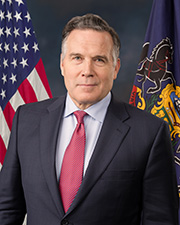
Sen. David McCormick
Sponsored bills
Maddy summaryThe RECAPTURE Act (S 3259) changes how leftover federal broadband funding is handled under the Infrastructure Investment and Jobs Act. It requires that any unspent funds from the Broadband Equity, Access, and Deployment (BEAD) program not specifically designated for a project must be deposited into the federal Treasury to reduce the deficit, while funds designated for specific projects remain available to the grant recipient. This applies directly to states and local governments that received BEAD grants but have unused funds. The bill ensures unallocated broadband funds are redirected toward deficit reduction rather than remaining unspent.
Maddy summaryThis bill amends U.S. immigration law to expand the definition of "aliens engaged in terrorist activity" under the Immigration and Nationality Act. It adds specific groups - Hamas, Palestine Islamic Jihad, Hezbollah, Al-Qaeda, and ISIS - to the list of entities whose members or supporters would be barred from entering the U.S. The change replaces a prior reference to the Palestine Liberation Organization's spokesperson with a broader inclusion of these designated groups and their affiliates. Individuals who are members of these groups, act as their spokespersons, or endorse their terrorist activities would now be subject to immigration inadmissibility. This directly affects foreign nationals associated with these organizations seeking U.S. visas or entry.
Maddy summaryThis bill prohibits Medicare-approved medical residency programs from requiring residents to undergo abortion-related training without their voluntary opt-in. It specifically bans programs from mandating such training or discriminating against residents who choose not to participate in abortion care (including counseling or referrals). The law applies directly to medical residents in Medicare-funded postgraduate training programs. Key provisions ensure residents can opt out without penalty and prevent programs from penalizing those who decline abortion-related instruction.
Maddy summaryThis bill changes federal rules for detaining defendants before trial. It creates a new rule that non-citizen defendants (including non-permanent residents) are presumed to be a flight risk unless they provide strong proof they won't flee or pose a danger to others. Family ties or employment in the U.S. cannot be used to challenge this presumption. The change applies only to non-citizens, not U.S. citizens.
Maddy summaryS 3216, the Greenlighting Growth Act, exempts emerging growth companies (EGCs) from certain historical financial reporting requirements under federal securities laws. Specifically, it removes the need for EGCs to present acquired company financial statements for periods before their IPO's earliest audited period, both during their initial public offering and after they no longer qualify as EGCs. This applies to filings under the Securities Act of 1933 and Securities Exchange Act of 1934, waiving requirements in SEC regulations (17 CFR §210.3-05 and §210.8-04) for prior periods. The bill directly affects EGCs, defined as companies with under $1 billion in annual revenue, by simplifying their financial disclosure obligations during and after their IPO transition. This is a procedural change to securities reporting rules, not a new policy.
Maddy summaryThe Skills Investment Act of 2025 renames "Coverdell education savings accounts" to "Coverdell lifelong learning accounts" and expands their use to cover career training and skill development expenses for people aged 16 and older. It allows account funds to be used for training services, career education programs, youth workforce activities, and adult literacy courses, rather than just traditional education. The bill increases the account limit to $10,000 after age 30 (from $2,000), extends the contribution age limit to 70 (from 18), and creates a new 25% tax credit for employers who contribute to these accounts. It also allows beneficiaries aged 18 and older to deduct contributions to these accounts on their tax returns. These changes take effect in 2026, with some provisions applying to contributions made after December 2025.
Maddy summaryThe REVOKE Act requires the Secretary of Defense to revoke security clearances for retired or separated military members or Defense Department civilians who lobby for specific Chinese military-linked companies. It targets lobbying activities on behalf of entities listed in the Treasury's "Non-SDN Chinese Military-Industrial Complex Companies List" or identified under a 2021 defense law. The law automatically revokes clearances for such lobbying, with limited 180-day waivers possible only if the Secretary certifies it serves national security. This directly affects former defense personnel engaging in lobbying for designated Chinese entities, aiming to prevent potential security risks from classified information access.
Maddy summaryThe UNLOCK Housing Act (S 3169) updates federal housing law to expand eligibility for existing funding. It allows metropolitan cities, counties, states, local governments, insular areas, and tribes receiving Section 106 housing funds to build new residential housing for low- and moderate-income people. This change applies directly to jurisdictions already managing federal housing assistance programs. The bill adds this specific housing type as an approved use of funds, without requiring nonprofit partnerships, making it easier to develop affordable housing options.
Shutdown Fairness Act This bill provides appropriations to pay federal employees who work during a government shutdown. Specifically, the bill provides appropriations for federal agencies to provide standard rates of pay, allowances, pay differentials, benefits, and other payments to excepted employees for work performed during any period in which interim continuing appropriations or full-year appropriations are not in effect for a fiscal year (i.e., a government shutdown). An excepted employee is an employee who is required to work during a government shutdown. Under current law, excepted employees are not paid until the government shutdown is over. This bill provides appropriations to pay excepted employees during a government shutdown. The bill also specifies that the term excepted employee includes certain contractors who support federal employees during a government shutdown and members of the Armed Forces who are on active duty. A federal agency may not use the funds provided by this bill during any period in which continuing appropriations are in effect for the purpose of paying excepted employees of the agency. The bill must take effect as if it had been enacted on September 30, 2025.