Maddy summaryThis concurrent resolution formally recognizes the significant wage gap between Black women and white, non-Hispanic men in the United States. The document cites data showing that Black women earn roughly 65 cents for every dollar earned by white men and highlights how this disparity impacts their ability to support families and accumulate wealth. By referencing existing laws like the Equal Pay Act and the Civil Rights Act, the bill reaffirms Congress's support for equal pay for equal work without proposing new legislation or policy changes. Ultimately, the measure serves as a symbolic acknowledgment of the economic challenges faced by Black women due to dual discrimination based on race and gender.
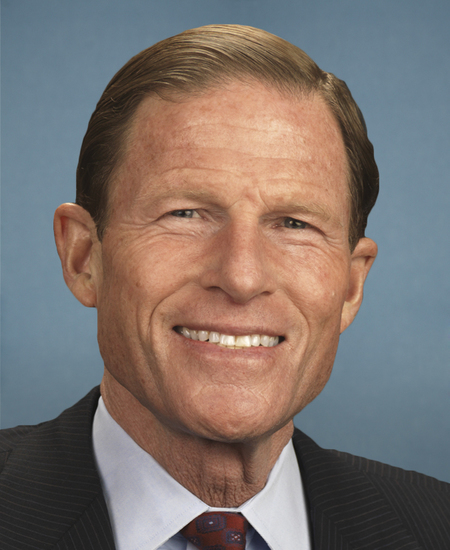
Sen. Richard Blumenthal
Sponsored bills
Maddy summaryThis resolution designates June 15, 2026, as World Elder Abuse Awareness Day and the month of June 2026 as Elder Abuse Awareness Month. It formally recognizes the efforts of various professionals, including judges, social workers, and law enforcement, who work to prevent and address abuse against older adults. The bill also encourages the public and government agencies to continue collaborating on awareness campaigns and to report cases of elder abuse, neglect, and financial exploitation.
Maddy summaryThis resolution directs the Senate Legal Counsel to file a lawsuit on behalf of the Senate to enforce the Foreign Emoluments Clause of the U.S. Constitution, which prohibits the President from accepting gifts or payments from foreign governments without Congressional approval. The bill specifically targets alleged violations by President Donald J. Trump, citing instances such as accepting a refurbished aircraft from Qatar, cryptocurrency investments from foreign-linked entities, and real estate deals in various countries that generated income for the President and his family. By seeking a court injunction, the measure aims to stop the President from accepting these specific benefits unless Congress provides its consent.
Maddy summaryThe Social Security 2100 Act proposes significant changes to the U.S. retirement system, aiming to strengthen benefits, consolidate the trust fund, and improve service delivery. To directly affect current and future beneficiaries, the bill increases monthly payments for low earners, adjusts cost-of-living calculations to better reflect inflation, and extends eligibility for children in college. It also introduces new credits for caregivers, removes waiting periods for some disability claims, and allows higher earnings to count toward future benefits. To fund these enhancements, the legislation repeals the cap on taxable wages for Social Security taxes and creates a single, unified Social Security Trust Fund. Finally, the act mandates stricter data privacy protections, prohibits the wrongful invalidation of Social Security numbers, and requires the agency to maintain a robust workforce and keep field offices open.
Maddy summaryThis bill would establish the Julius Rosenwald and Rosenwald Schools National Historical Park, a unit of the National Park System, to honor philanthropist Julius Rosenwald and the Rosenwald Schools that educated over 600,000 African American children in the segregated South from 1912 to 1932. The park would include three restored schools (in Maryland, South Carolina, and Virginia) and a visitor center in Chicago, Illinois, to preserve these sites and share their history through exhibits and educational programs. It also creates a national network to connect remaining Rosenwald Schools, enabling coordinated interpretation and resource-sharing across the country.
Maddy summaryThis bill limits how many patents brand-name drug companies can use to block generic versions of biological drugs (biologics). It caps the number of patents a brand company can assert in lawsuits against generic manufacturers at 20, with no more than 10 being patents issued after a specified date. Courts may allow more patents only in specific cases, such as if the generic company fails to provide required information or if there are material changes to the product. The law applies to new applications submitted after enactment and aims to reduce patent-related delays for cheaper generic biologics.
Maddy summaryThe Judicial Integrity Act amends federal law to clarify how financial conflicts of interest apply to judges and Supreme Court justices. It requires that any financial interests held by these officials be evaluated against a new regulatory exemption process managed by the Judicial Conference. Under this bill, a financial interest can only be considered too small to matter if the Judicial Conference issues a public rule explicitly exempting it after a notice and comment period. This change ensures that exemptions are formalized through official regulations rather than being assumed without review.
Maddy summaryThe Judicial FOIA Expansion Act requires federal courts to release specific records to the public under the Freedom of Information Act. This law mandates the disclosure of attorney disciplinary actions, complaints against judges, meeting minutes, jury selection forms, and performance reports, while explicitly excluding information about ongoing cases. The bill also directs courts to provide this data in machine-readable formats and authorizes $10 million in funding to establish an office within the Administrative Office of the United States Courts to manage these requirements.
Maddy summaryThe Justice is BLIND Act of 2026 requires federal judges, including justices, magistrate judges, and bankruptcy judges, along with their spouses and dependent children, to place specific financial investments into blind trusts within 90 days of assuming office. This rule applies to covered financial interests such as stocks, commodities, and derivatives, while explicitly excluding widely held mutual funds, U.S. Treasury securities, and compensation earned by spouses or children from their own employers. Once established, these trusts must remain intact for at least 180 days after the judge leaves office, and the judges must publicly attest to the trust's creation or confirm they hold no such interests on a searchable government database.
Maddy summaryThis resolution honors the life and legacy of the late Senator Lindsey Olin Graham from South Carolina. It formally acknowledges his extensive career in the military, state government, and Congress, noting his service as a Senator and his roles as Chairman of the Judiciary and Budget committees. The Senate expresses its sorrow over his death and requests that this tribute be shared with the House of Representatives and Graham's family.